Corfu Island – emerald green, full of history and surrounded by turquoise sea, it manages to be both a resort destination and a living island with traditions and soul. Whether you are looking for a secluded beach, wide sandy stretches or a stroll through the Venetian streets of Kerkyra – Corfu will charm you.
Corfu is not just beautiful – it is colourful and diverse. For centuries it has been the crossroads of empires: Venetians, French, British – each has left something. The result is an island with character, which you will hardly find elsewhere in Greece.
In this guide, we will share how to organise a beach holiday to Corfu on your own, what the main sights in Corfu are, where to stay on the island and many other tips for a self-planned trip and sea holiday in Corfu.
Basic Facts about Corfu
- Transport to the island – Direct flight or by car and ferry from Igoumenitsa
- Best time to visit: June to early September
- Recommended stay: 5-10 days
- Budget: Medium-high
How to Get to Corfu
There are 2 main ways to reach Corfu island – by car or by plane.
If you decide to travel by car, the most convenient way is to travel to Igoumenitsa and from there catch a ferry to Corfu. For a car and 2 people, the ferry costs around €40 one way and takes about 2 hours. We search for timetables and prices on the website https://ferries.gr, and usually buy tickets about a week in advance.
Car Rental in Corfu
This section is mainly for people who have arrived on the island by plane and have rented a car. We strongly encourage you to rent a car, because the most beautiful beaches and views on the island are outside the capital Kerkyra. Be prepared that the roads in Corfu are not in the best condition and are relatively narrow for the heavy summer traffic.
When renting a car, we compare prices on the DiscoverCars platform, where you can directly see indicative prices:
Where to Stay in Corfu
Corfu is small enough to cross by car in two hours – but diverse enough that depending on where you stay, you will experience a completely different island. Before booking a hotel in Corfu, we recommend getting acquainted with the different regions of the island and the characteristics of each one.
Kerkyra (Corfu Town) Area – For Those Without a Car and Unwilling to Miss Anything
The capital is the logical choice for first-time visitors. Everything is within walking distance: sights, restaurants, museums, nightlife. Bus lines connect you with the whole island, and if you decide to rent a car – here is the easiest place. Accommodation varies from modest apartments in the old streets to boutique hotels in restored Venetian buildings. As a disadvantage we note that Kerkyra does not have a very nice town beach and accommodation is relatively expensive.
The most preferred resort in the Kerkyra area is Dassia, just 12km north of the capital, an excellent base if you want to be close to the capital but away from the noise. Here you will find family beaches with shallow water, good restaurants along the coastal road and a peaceful evening atmosphere. Nearby is Gouvia – a larger resort village with a marina full of yachts, and a wide choice of hotels, including luxury ones. A little further north, Ipsos offers lively beach life with bars and restaurants – popular with younger crowds.
Northeast Coast – Seclusion and Mediterranean Exoticism
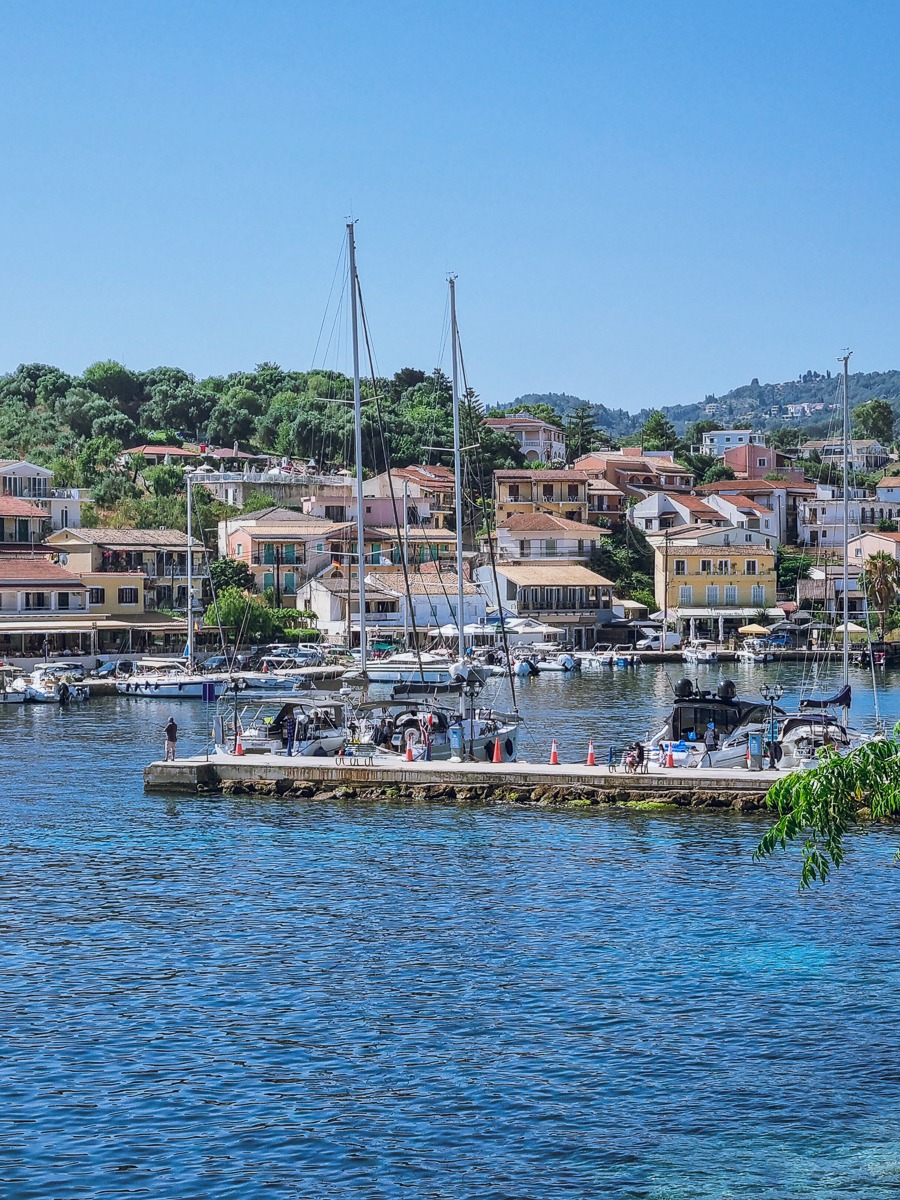
In the northeastern part of the island, the tone is different – quieter, more refined, closer to the authentic. Barbati is among the idyllic coastal villages in this area – a pebble beach at the foot of Mount Pantokrator, with deep blue water and views towards the hills of Albania. Further up is Nissaki – a small, semi-hidden village with crystal water and underwater rocks, loved by divers. And Kassiopi is perhaps the most charming fishing village on the island: a working harbour with colourful boats, ruins of a Byzantine fortress and waterfront tavernas where at night the lights reflect in the sea. Ideal for couples seeking romance without crowds. It is precisely in Kassiopi that our favourite beach on the island is located.
West Coast of Corfu – Breathtaking Views and Great Beaches
Paleokastritsa is perhaps the most beautiful area of the island: dramatic cliffs, turquoise water and a series of small coves, each with a different character. Staying here means waking up with a view of the sea and pine forest. It is touristy, yes – but not in the way that authenticity is lost. A little to the south is Agios Gordios: a wide golden beach at the foot of green hills, famous for exceptional sunsets and great hotels and tavernas.
North Coast – Perfect for Families
The north coast is more developed in terms of tourist infrastructure – with sandy beaches, water parks and facilities for families. Sidari is the centre of the northern resorts – lively, with beach bars, easy access to Canal d’Amour and Cape Drastis. Acharavi and Roda are two neighbouring villages, a quieter option in this direction: small coastal villages with crystal water, a row of Greek tavernas along the shore and mainly family apartments instead of mass resorts, with more reasonable prices and local atmosphere accordingly.
We stayed precisely in Sidari – on one hand we liked it because it had all the amenities, but on the other it was a bit strange because the main contingent of tourists were British and the Greek charm of the village was somewhat lost.
South Coast – The Less Touristy Part of the Island
Southern Corfu is more authentic and less touristy than the north – with hillier terrain, hidden coves and quieter villages. Here the landscape is wilder, the beaches less crowded and the feeling – closer to Greek life in its natural form. A big exception is Kavos – at the very southern edge of the island, known as a party resort, attracting mainly young British tourists in “all inclusive + nightlife” mode. If you are looking for peace, Kavos is not for you.
Most Beautiful Beaches in Corfu
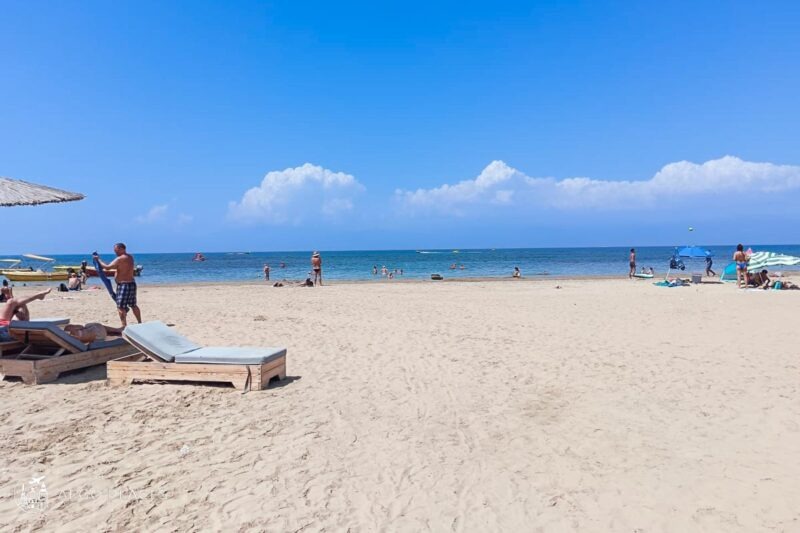
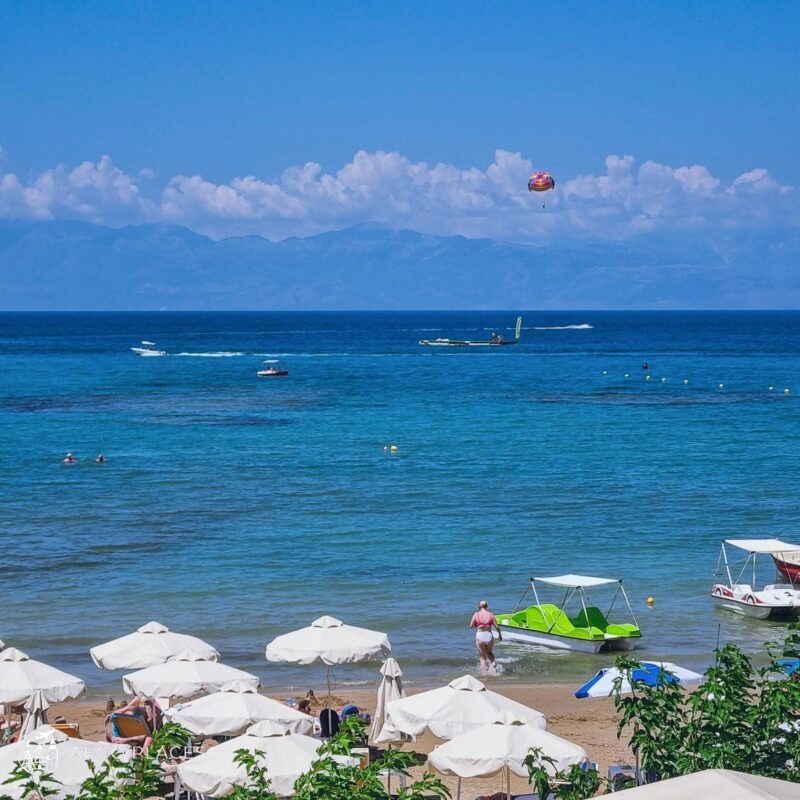
One of the things that distinguish Corfu from other islands is the incredible combination of beautiful towns and villages and picturesque beaches. Many people associate Corfu only with its charming capital, but for us the true wealth of the island is the diversity of its turquoise beaches – sandy, rocky, wild, organised, there is something for everyone.
Paralia Mpataria (Bataria Beach) – Our Favourite Beach in Corfu
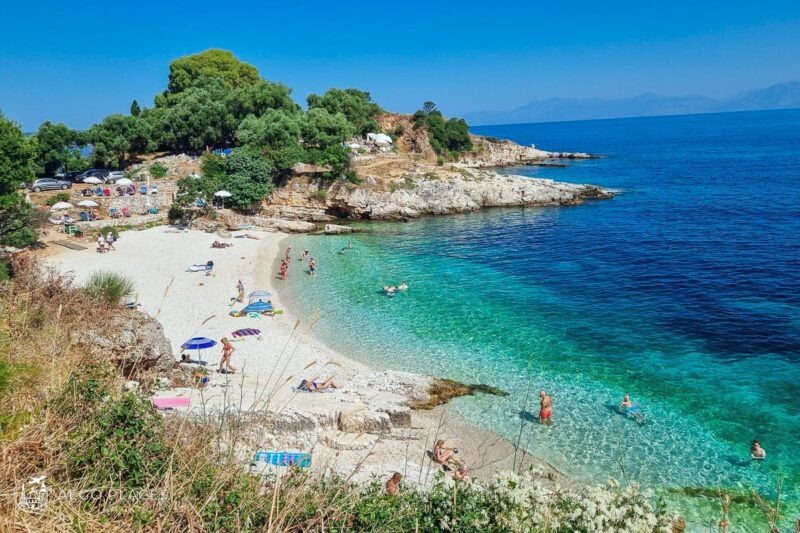
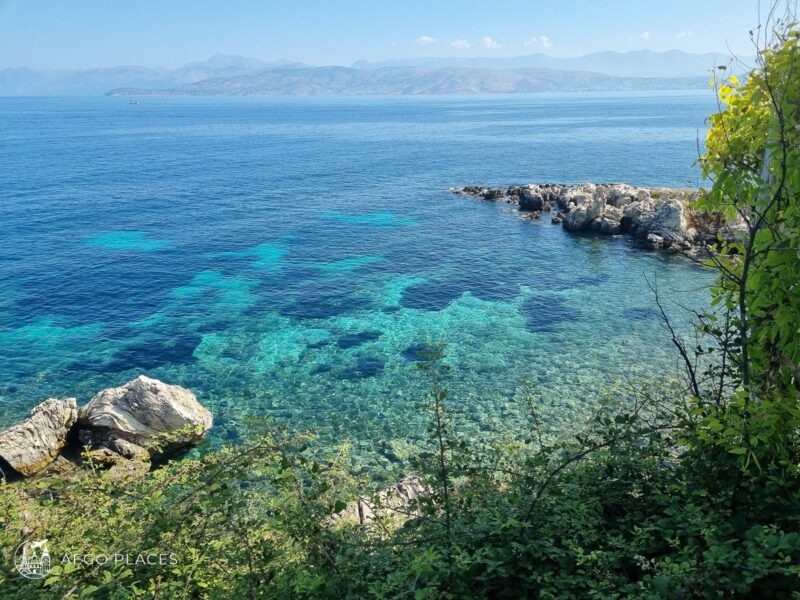
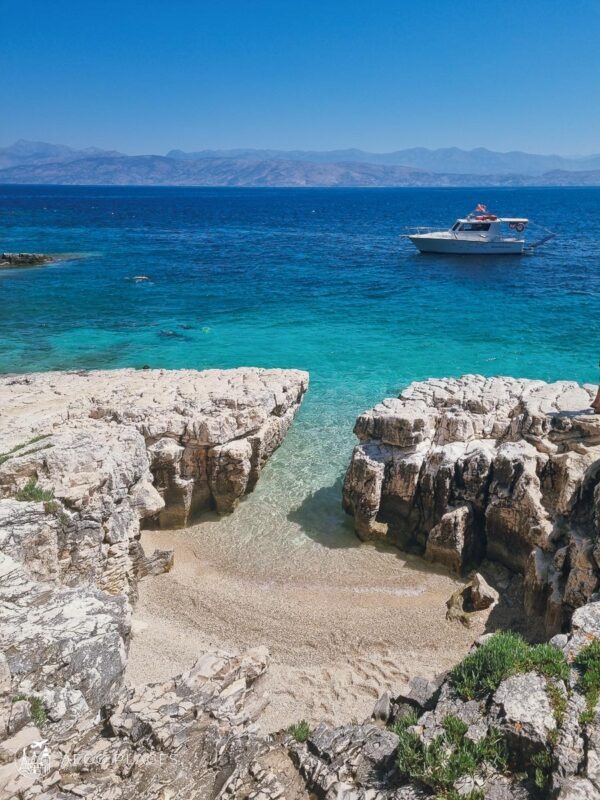
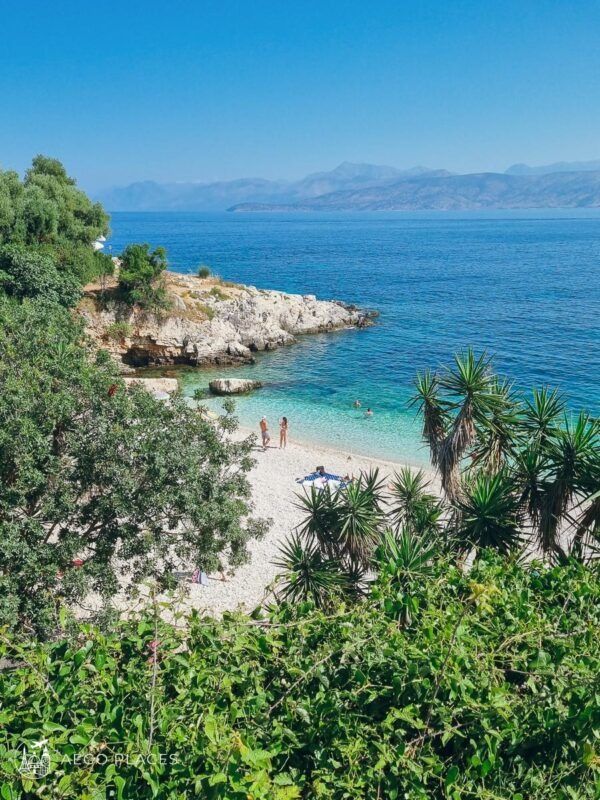
We cannot help but start with our absolute favourite – Paralia Mpataria (Bataria Beach). It is located in the northern part of the island, on a small cape, in the village of Kassiopi, and just metres from it, there are several more beaches – Kanoni Beach, Pipitos Beach and others. The water is turquoise blue, ideal for snorkelling with many fish underwater, and the views from there towards the mountains of Albania are fantastic. Right next to the beach there are 2 small car parks and a taverna and café, and the cherry on the cake are the sun loungers under the olive trees on a small hill, which provide you with all-day shade and the opportunity to enjoy several nearby beaches, great views and seclusion and silence. Although it is not sandy, but rather rocky, Paralia Mpataria is a collective image of the beauty and charm of Corfu.
Porto Timoni – Corfu’s Postcard
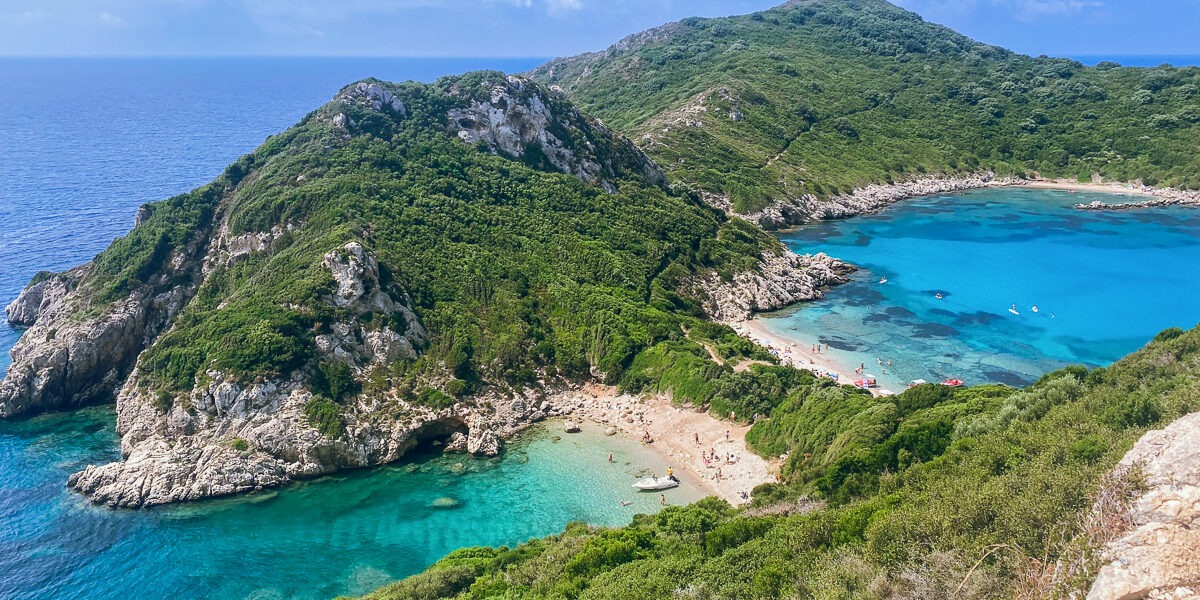
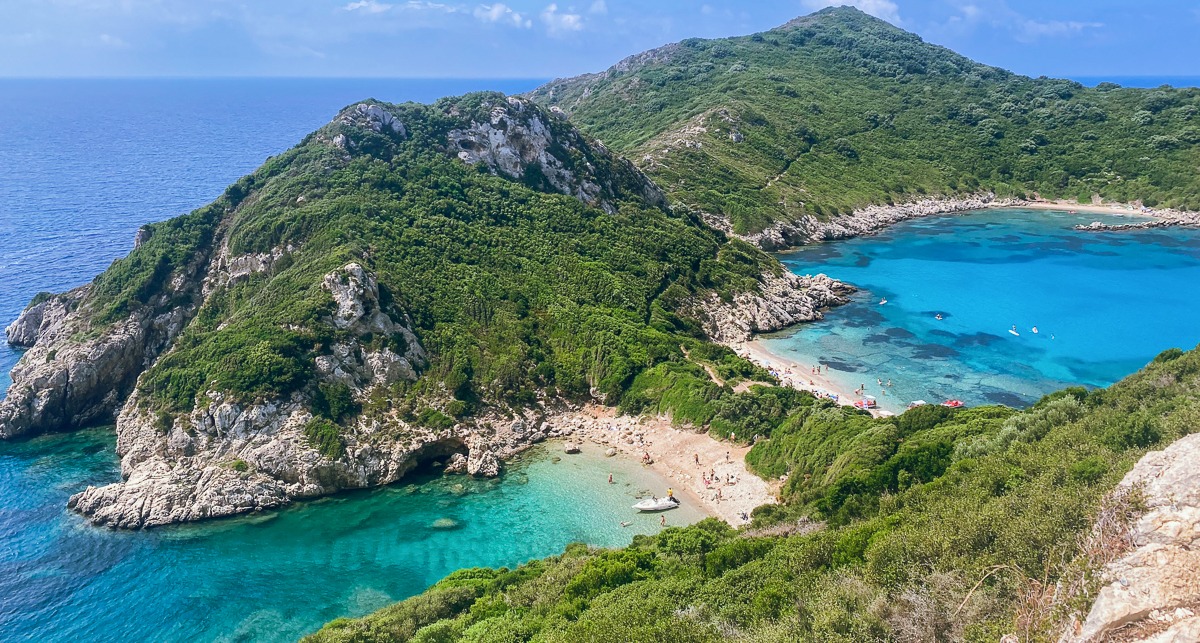
Porto Timoni is a double beach on the northwest coast of Corfu, famous for its unique natural configuration: two sandy-pebbly coves, separated by a narrow rocky isthmus, surrounded by steep green hills and crystal-blue water. If you have seen photos of Corfu on the internet – you have almost certainly seen this very view.
For better or worse, reaching Porto Timoni is relatively difficult – one option is on foot, with a steep 20-minute descent in the open under the scorching sun. The big advantage here is that you will be able to enjoy the fantastic panoramic view of the beach from high up. If you choose to reach it on foot, definitely bring suitable shoes, water and, if you will be spending more time on the beach, an umbrella.
The other option to reach Porto Timoni is by boat from neighbouring villages.
Glyfada – Large Sandy Beach with All Amenities
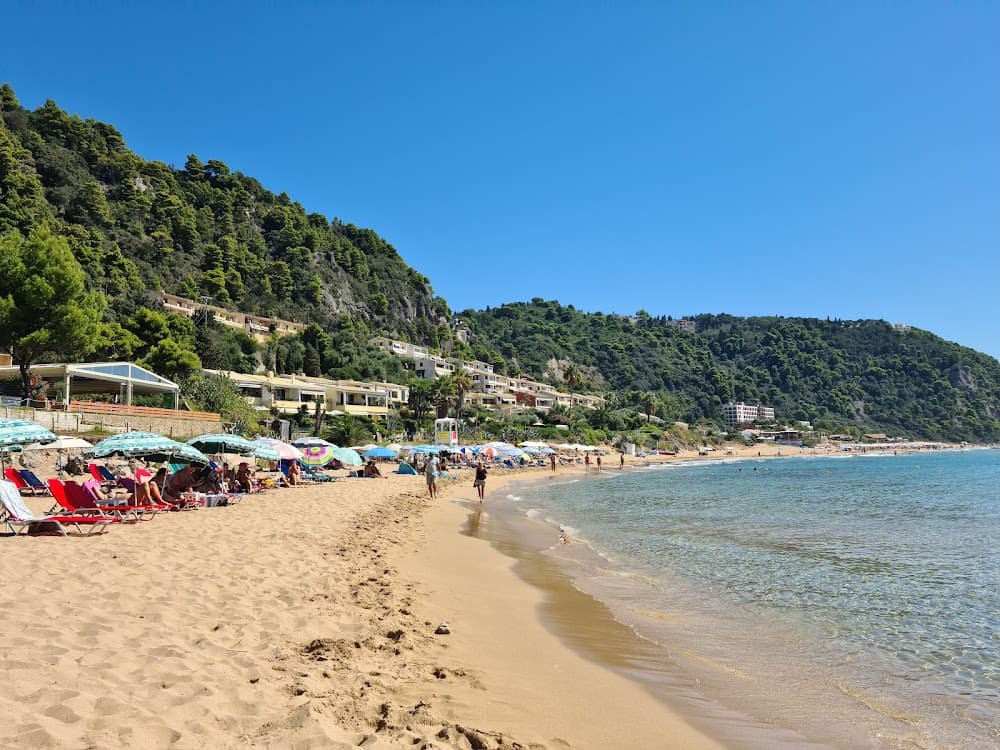
If you are looking for the complete package: wide and long sandy beach, sun loungers, beach bars, water sports and an incredible sunset. Around Glyfada Beach there are also tavernas, supermarkets and all the amenities to spend a whole day at the beach. It is located in the central part of the island, opposite Kerkyra on the west coast.
Paleokastritsa – The 7 Iconic Beaches of Corfu
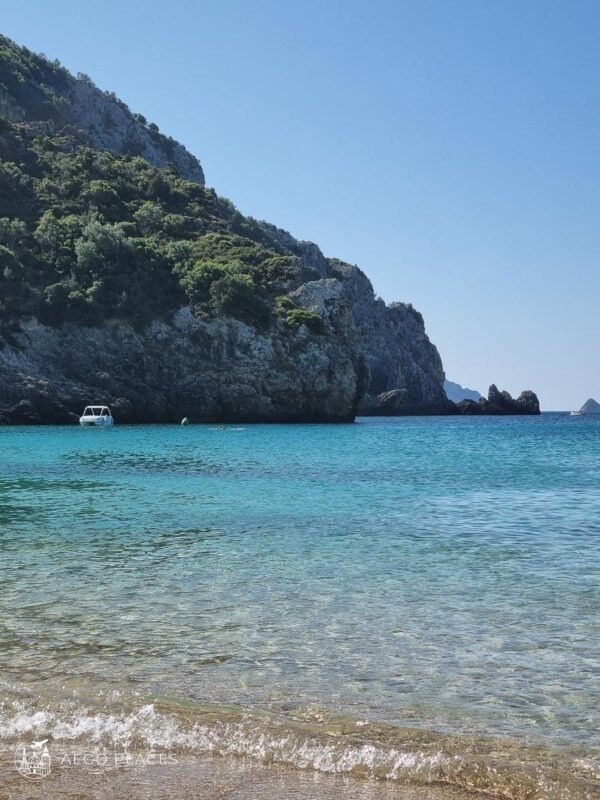
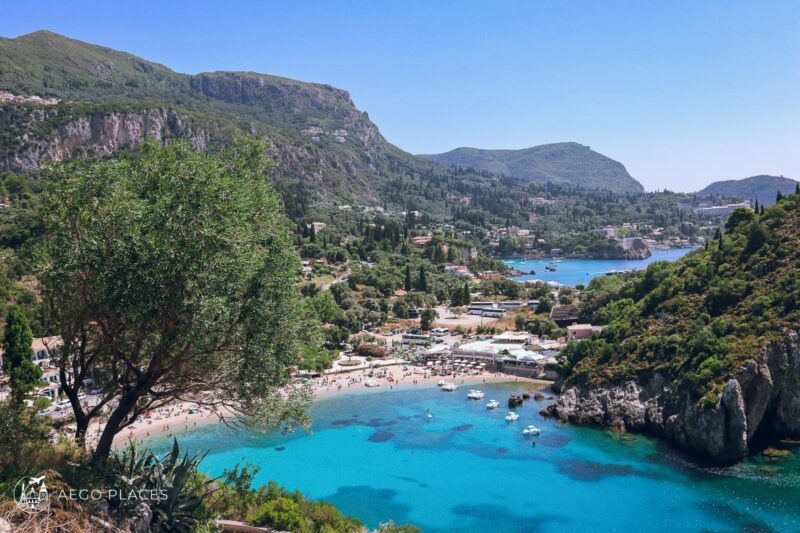
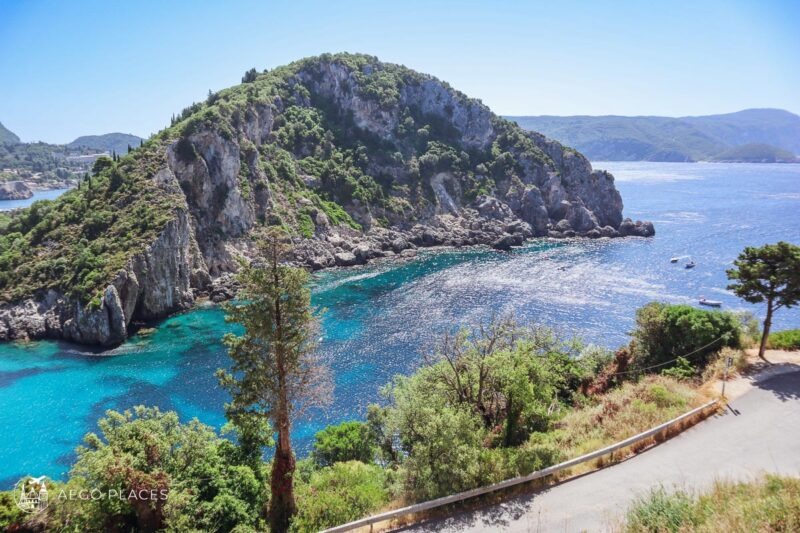
Paleokastritsa is not just one place – it is a collection of interconnected bays, surrounded by hills and steep cliffs, with a unique microclimate where underground springs meet the sea and make the water exceptionally clear, although refreshingly cool even in the height of summer. A total of seven beaches are hidden between the two peninsulas of the area and each has a different character. The beaches are pebbly and not particularly large, with both free areas and areas with umbrellas and sun loungers. There is also a great variety of cafés etc. We swam at Agios Spiridon and did not like the fact that at lunchtime the beach gets very full, and directly above us there is a road that fills up with cars and buses, which was not a particularly pleasant experience, so we would rather recommend Ampelaki, Agios Petros or Alipa Beach. Another disadvantage is that the cove quickly fills up with boats, but the shore is well secured.
Klimatia – One of Corfu’s Most Beautiful Wild Beaches
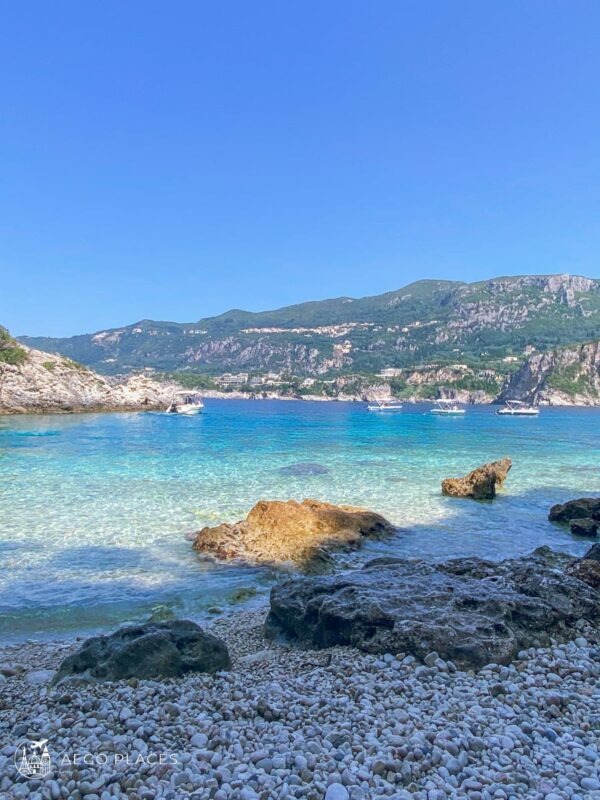
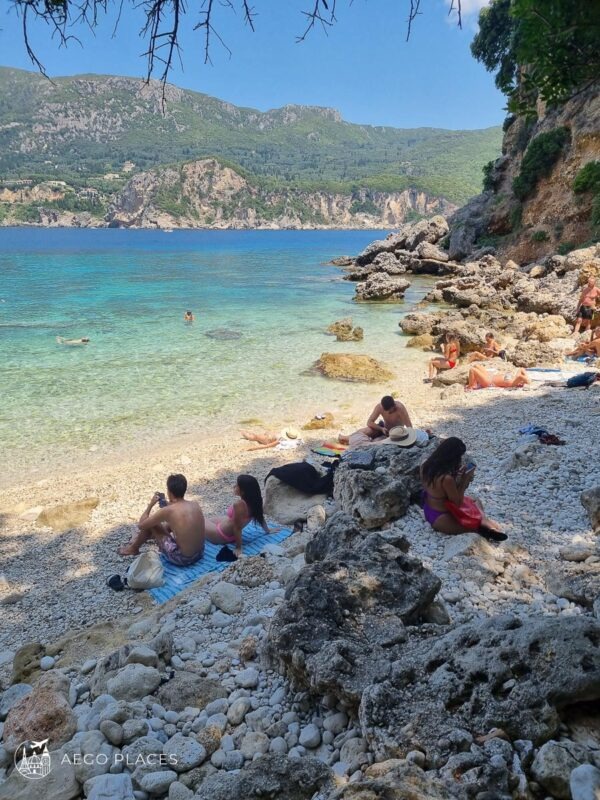
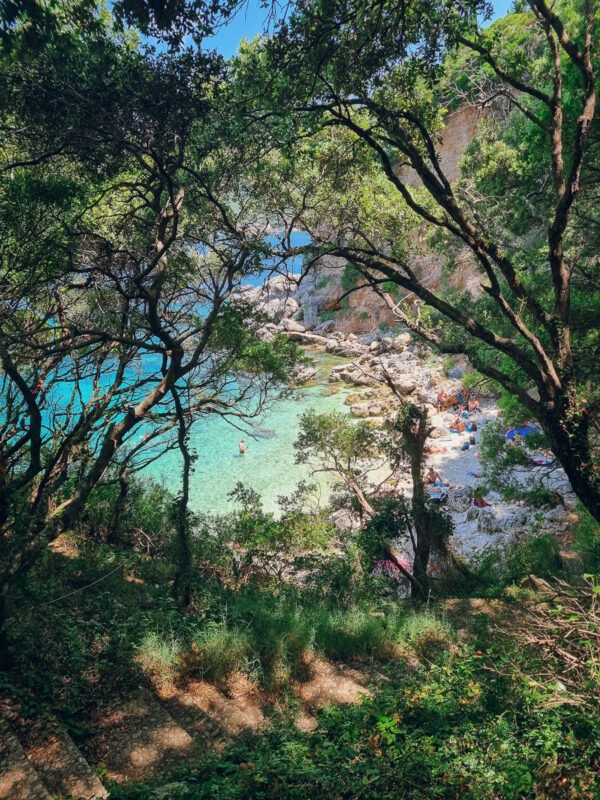
Klimatia is a small pebbly wild beach, not far from Paleokastritsa, and is a true hidden gem of Corfu. You get there along a narrow road by car and about 10 minutes walking through an olive grove. The views from there are stunning, the water is clear, and early in the morning there is a chance there will be no one there except you. Early in the morning it is shady and only after noon is the beach bathed in sunlight.
Sidari Beach – Perfect for Families with Children
If you are with children and are staying in the northern part of Corfu, we strongly recommend Sidari beach. The beach is sandy, the water is very shallow and there are all the amenities for swimming – showers, cafés, tavernas, shops etc.
Main Sights of Corfu
Here we will list which sights are worth visiting in Corfu with useful information about each of the places.
Kerkyra – The Most Italian-looking City in Greece
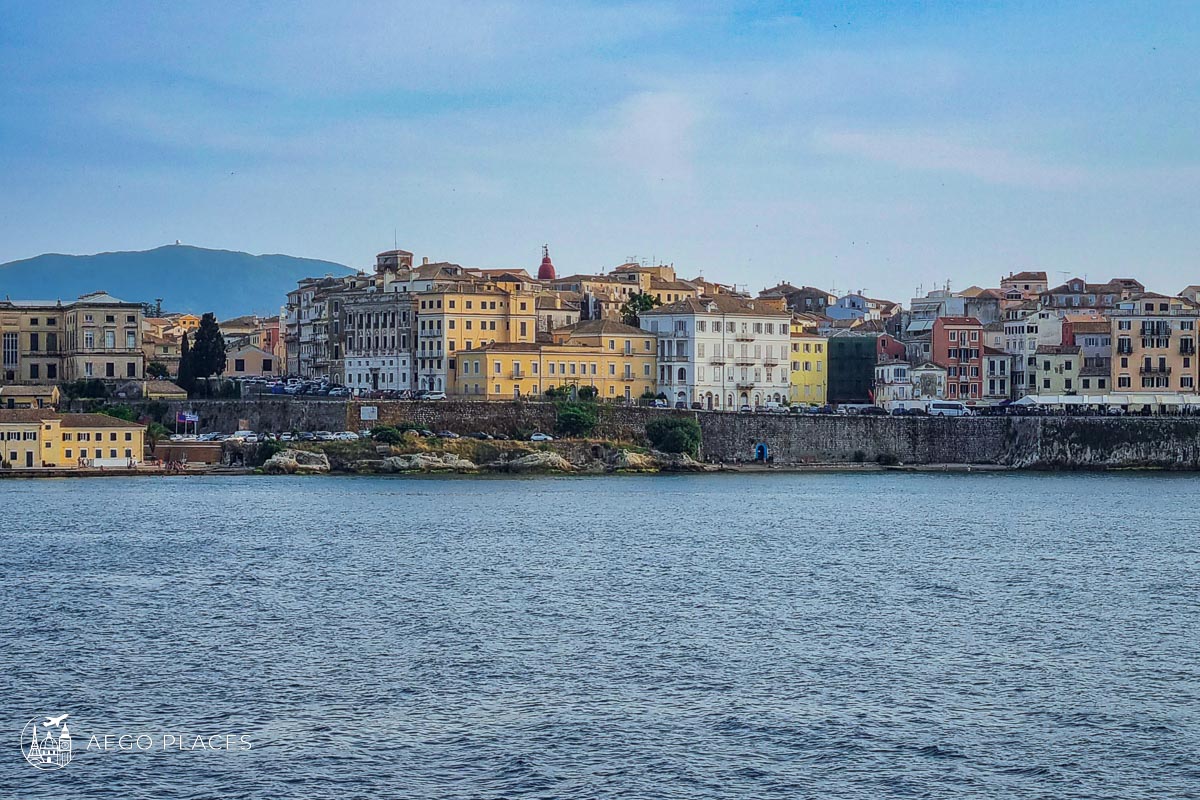
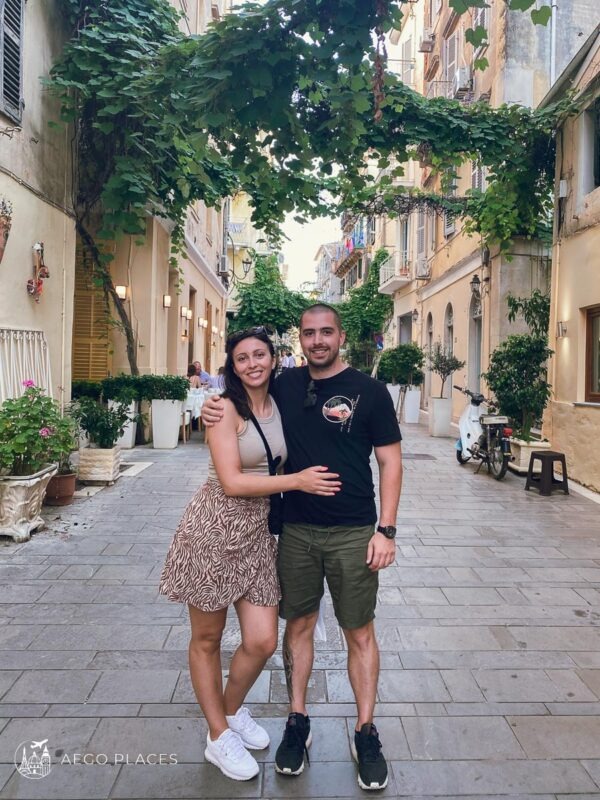
Kerkyra is the capital, port and soul of the island – all in one. Unlike many other Greek island towns, it is not built in white and blue, but in ochre, peach and faded pink. The Venetians ruled the island for nearly four centuries and built it in their own image – with narrow alleys, arcades and palatial facades, from which Italy is closer than Athens. Later came the French, then the British – and each added something. The result is a city with layered identity, which you will rarely find in all of Greece.
The historic core of Kerkyra is declared a UNESCO World Heritage Site and is one of the best-preserved medieval urban centres in the Mediterranean. But Kerkyra is not just an open-air museum – it is a living city. Locals drink coffee under the arcades of Liston, fishermen unload their catch at the harbour, and in the evening the narrow streets fill with people. For tourists it is both a base and an attraction – convenient for getting around, rich in restaurants and hotels of every category, and small enough to get to know it on foot in a day or two.
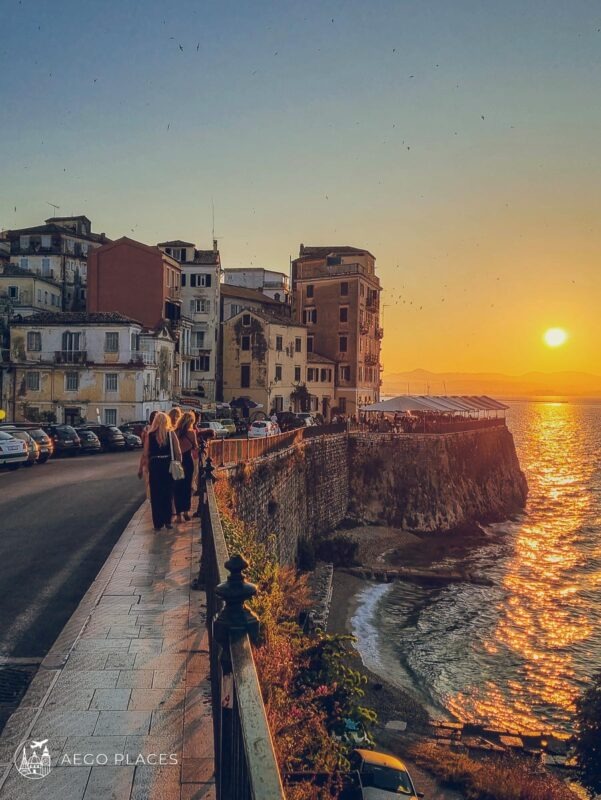
If you are not staying in Kerkyra, we recommend visiting it at sunset; the city becomes even more beautiful, walks around the sea become even more pleasant and the tavernas start to fill up.
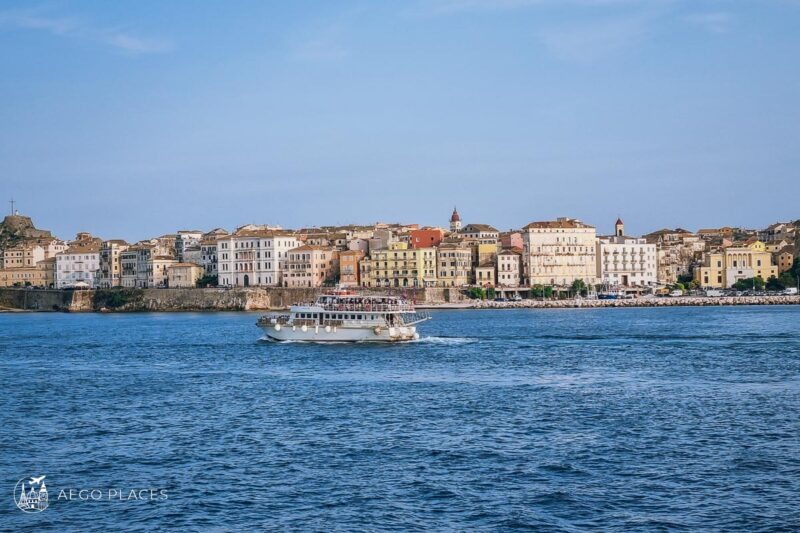
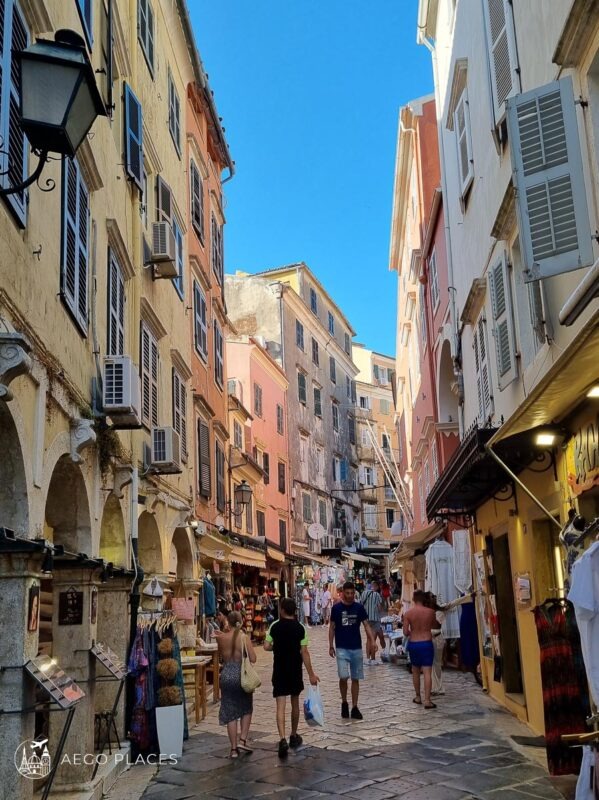
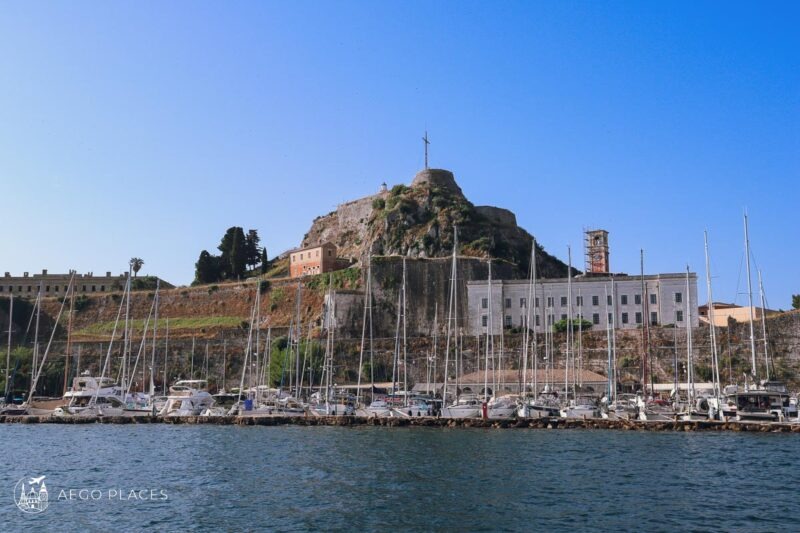
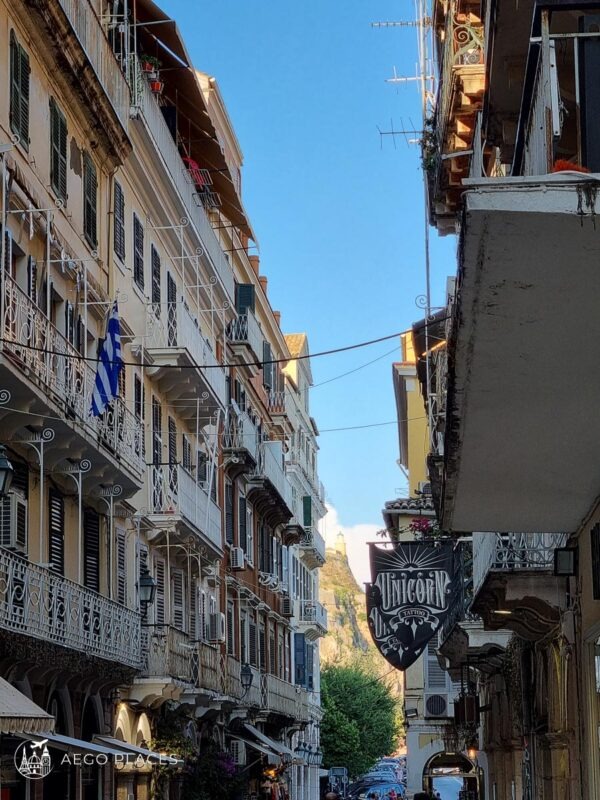
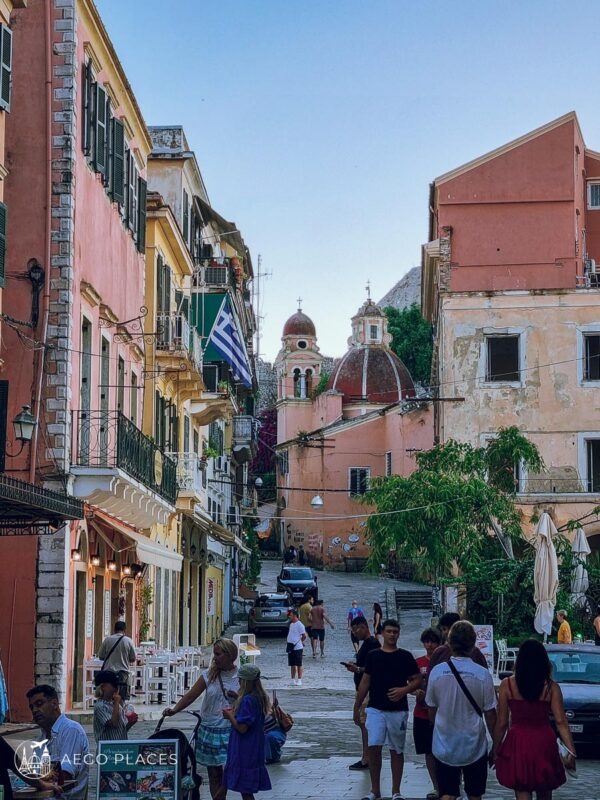
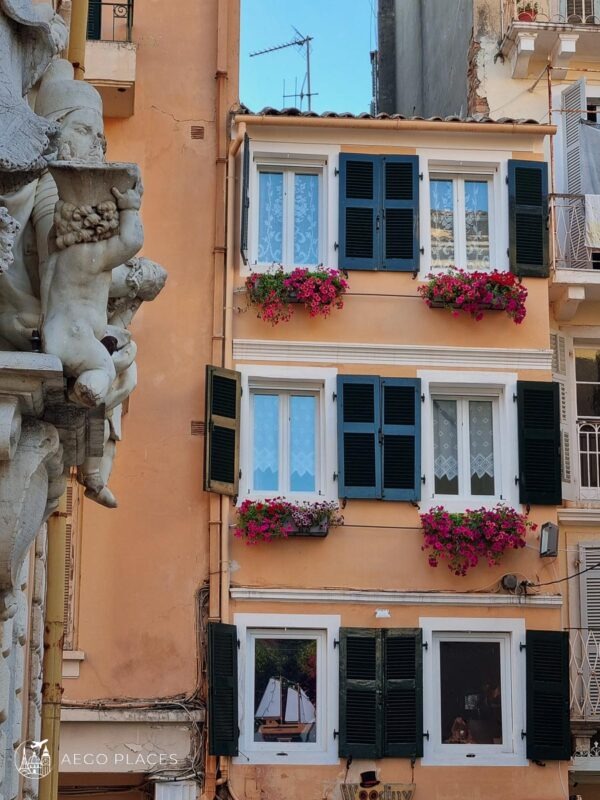
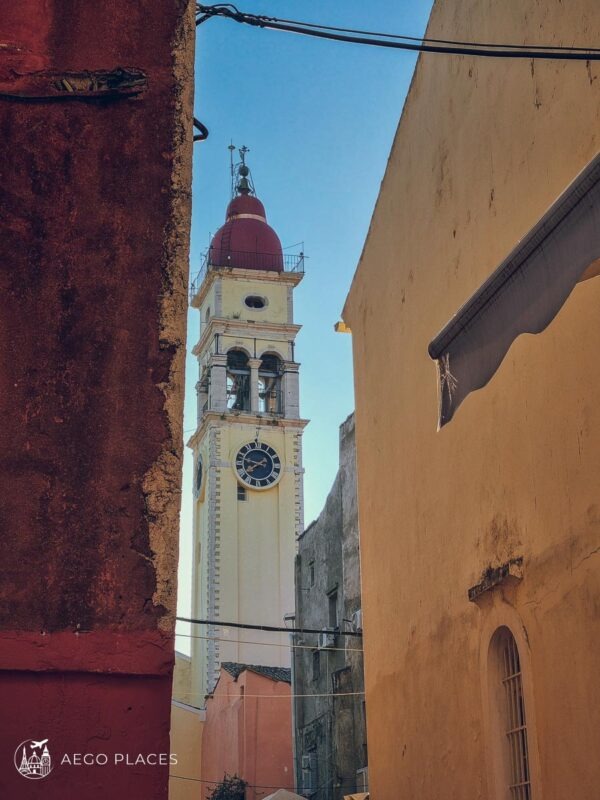
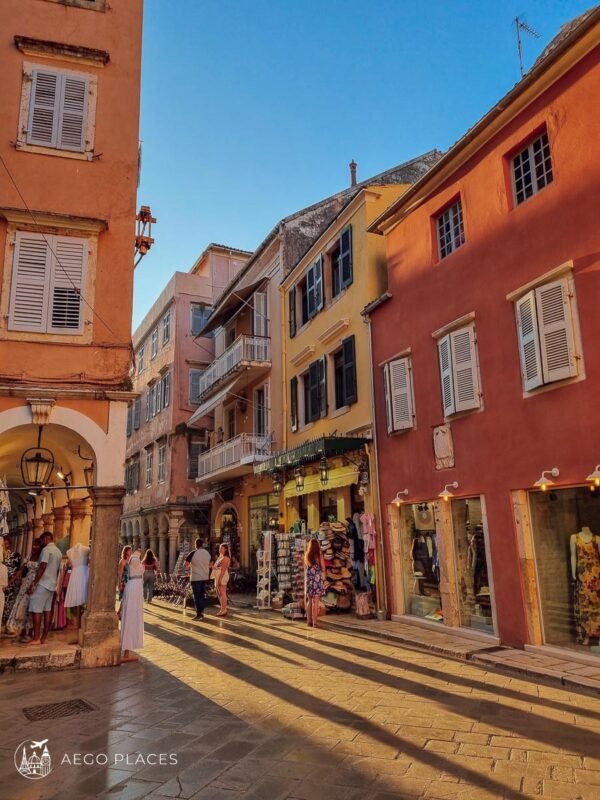
Here are the Main Sights in Kerkyra
- Old Fortress (Paleo Frourio): A symbol of the city from the 15th century, located on a rocky peninsula with a moat; offers panoramic views and is often a venue for concerts.
- New Fortress (Neo Frourio): An impressive 16th-century fortress near the cathedral, with fortifications and historic buildings for walking.
- Spianada Square: The largest square in the Balkans, the centre of the city with French architecture, cricket pitches and concerts.
- Liston: An arcaded promenade for aristocratic walks, ideal for coffee in a romantic setting.
- Church of St. Spyridon: Characteristic with a red dome from the 16th century, dedicated to the island’s patron saint.
Holy Monastery of Panagia Vlacherna and “Mouse Island”
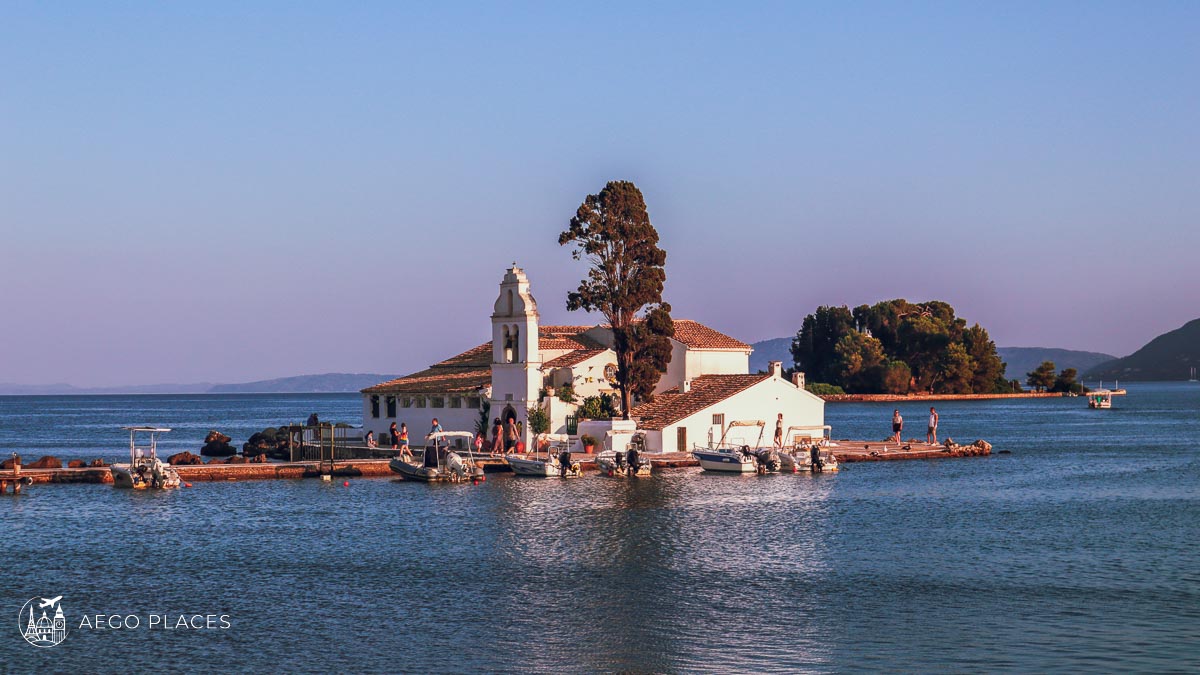
Just about 15 minutes by car from Kerkyra, you can see one of Corfu’s most iconic landmarks – the Monastery of Panagia Vlacherna.
The Monastery of Panagia Vlacherna was built in the 17th century on a small rocky island off the Kanoni peninsula. Connected to the shore via a narrow pedestrian bridge, it is one of Corfu’s most emblematic symbols with bright white walls, red tiles and a tall bell tower. It functioned as a female monastery until 1980, and today is open to visitors and used for certain religious celebrations.
Behind it, on a separate small islet, you can see Pontikonisi – or “Mouse Island”. According to local legend this is the ship of Odysseus, turned into a green rock by Poseidon during a storm. On the island there is a small 13th-century Orthodox chapel, accessible by boat from the monastery’s dock.
One thing you will hardly find in guidebooks: every fifteen minutes planes fly over the two islets, landing at Corfu airport – for aviation fans it is a real spectacle, for everyone else – at least an unforgettable surprise.
Achilleion Palace
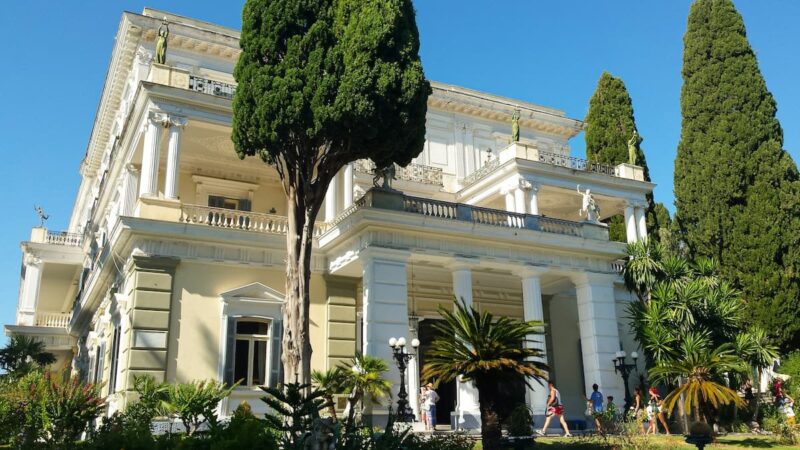
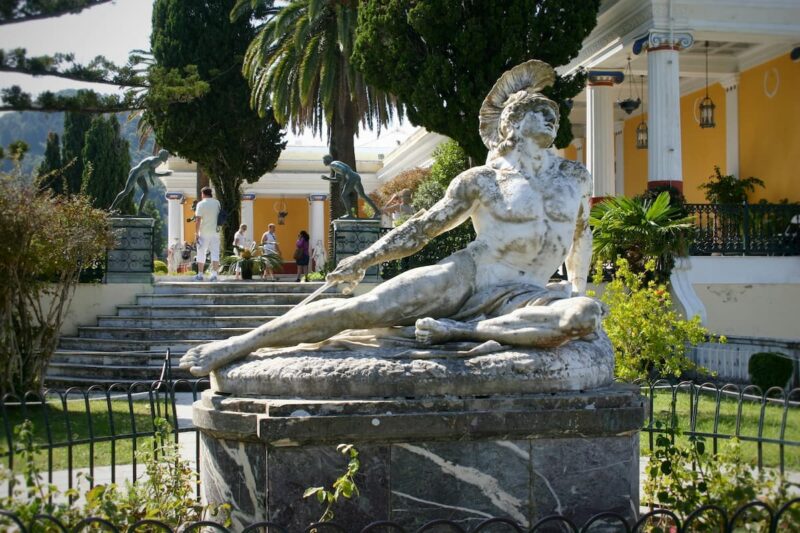
The Achilleion Palace is a magnificent palace on Corfu, built in 1888-1891 commissioned by Austrian Empress Elisabeth of Bavaria (Sisi). It was inspired by Greek mythology, especially the hero Achilles, and served as a summer retreat. Later, German Kaiser Wilhelm II bought it in 1907, adding statues such as the 11-metre “Victorious Achilles” and “House of Knights”. Today it is a museum with rich gardens, statues and neoclassical interior, attracting tourists with panoramic sea views. Entry costs around 10 euros.
Canal of Love (Canal d’Amour) and Cape Drastis
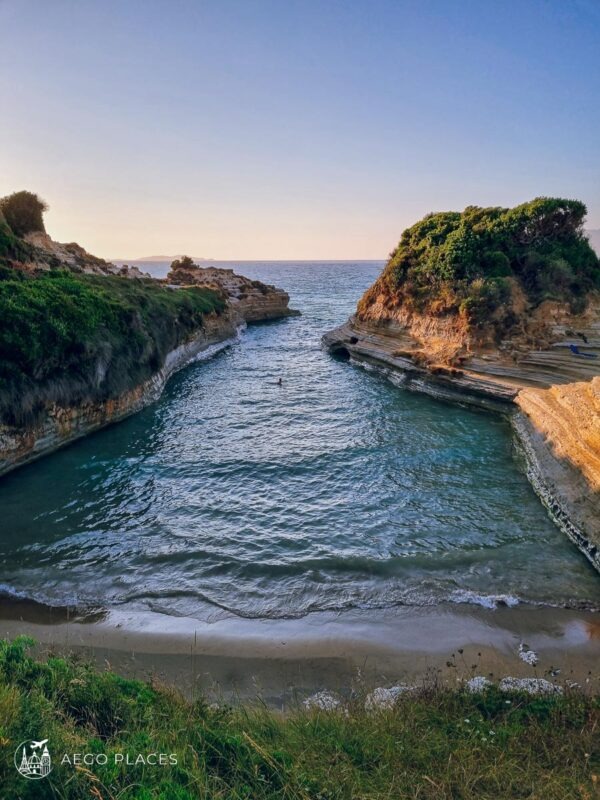
Canal d’Amour is a picturesque natural attraction in the northwestern part of Corfu, near the resort of Sidari, about 32-36 km from Kerkyra. It is a narrow channel, carved by wind and sea into soft sandstone rocks, forming natural lagoons and caves with crystal-clear water. According to local legends, couples who swim through the channel together will remain in love forever, and its water has healing properties because of the clay from the rocks.
Cape Drastis is a dramatic rocky cape at the northwestern edge of Corfu, near the villages of Peroulades and Sidari, known for white limestone and fantastic sea arches. It is the island’s northwesternmost point, shaped by wind and waves, and offers stunning views of the Ionian Sea, especially at sunset. Access is on foot or by boat, as the cliffs are steep and without stairs.
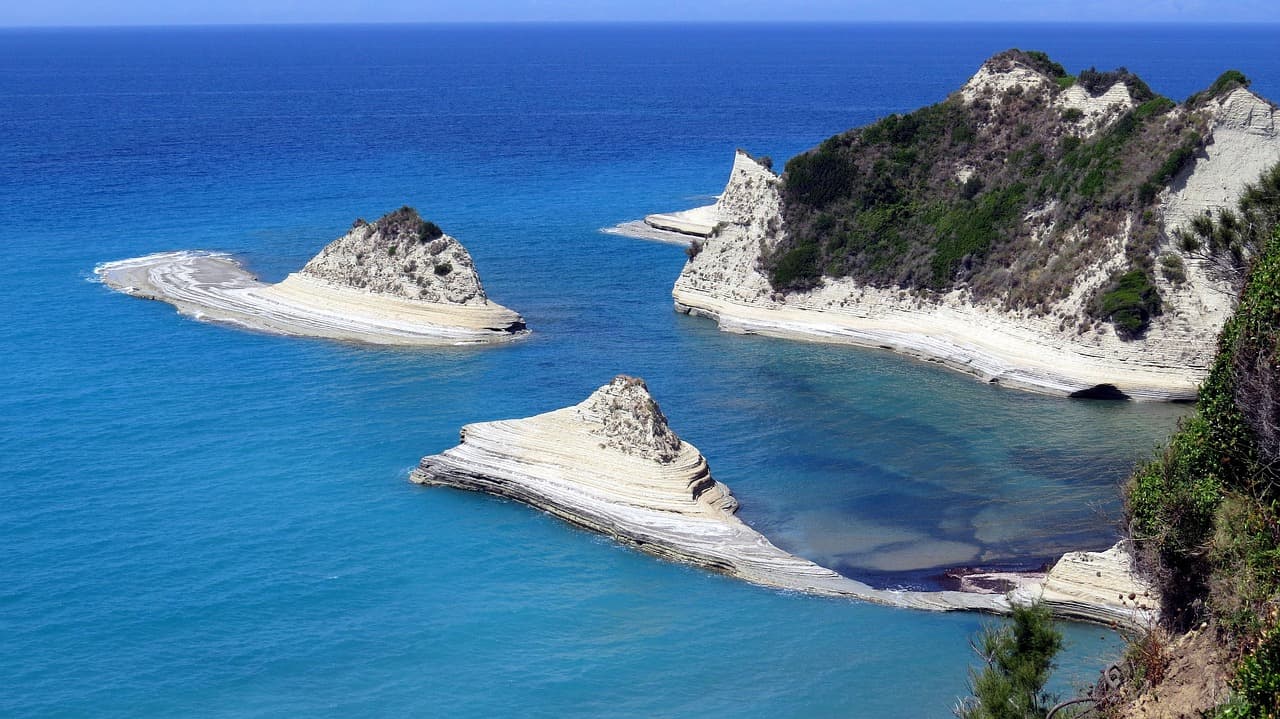
Paleokastritsa and the Monastery of the “Holy Virgin Mary”
Location: https://maps.app.goo.gl/1mmMfUsduZppDzSt5
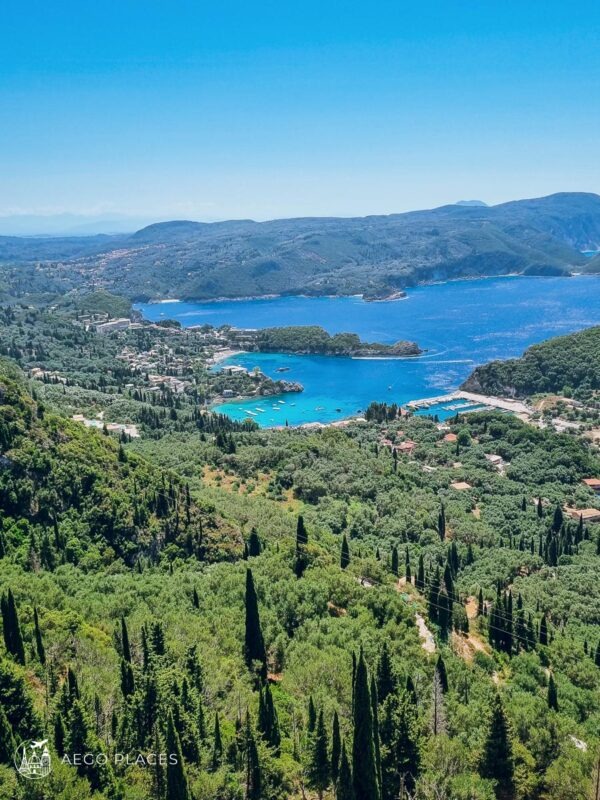
The Monastery of the “Holy Virgin Mary” (Panagia Theotokou) is a male Orthodox monastery on Corfu, founded around 1225 on the site of an ancient fortress, with much of the complex built in the 17th century after multiple destructions by Genoese and Turks. It is dedicated to Our Lady of Paleokastritsa, with miracle-working icons, a small museum with Byzantine relics and a whale skeleton. From the monastery there is an incredible panoramic view of Paleokastritsa bay with beautiful beaches, turquoise waters and green hills.
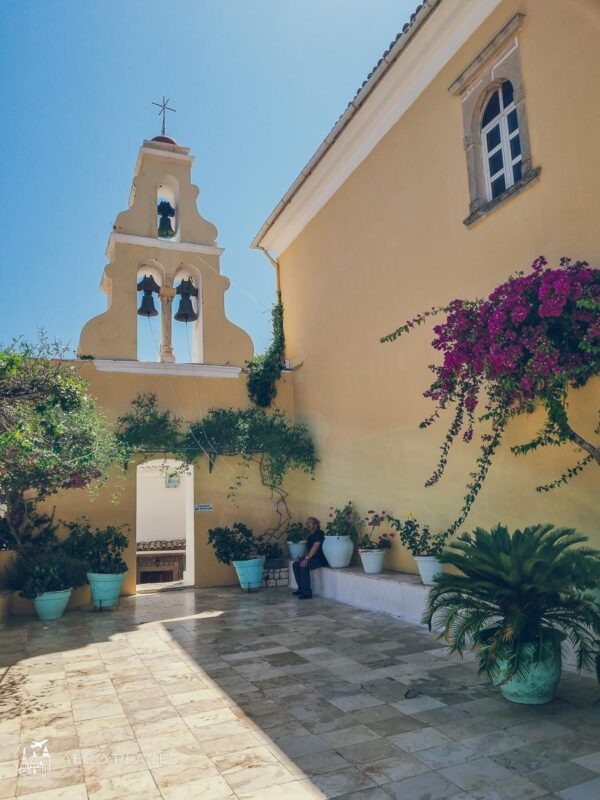
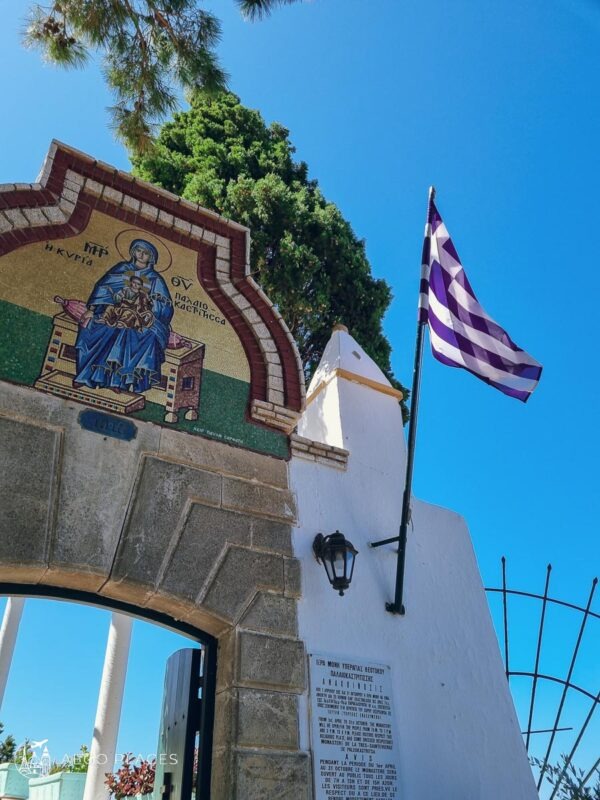
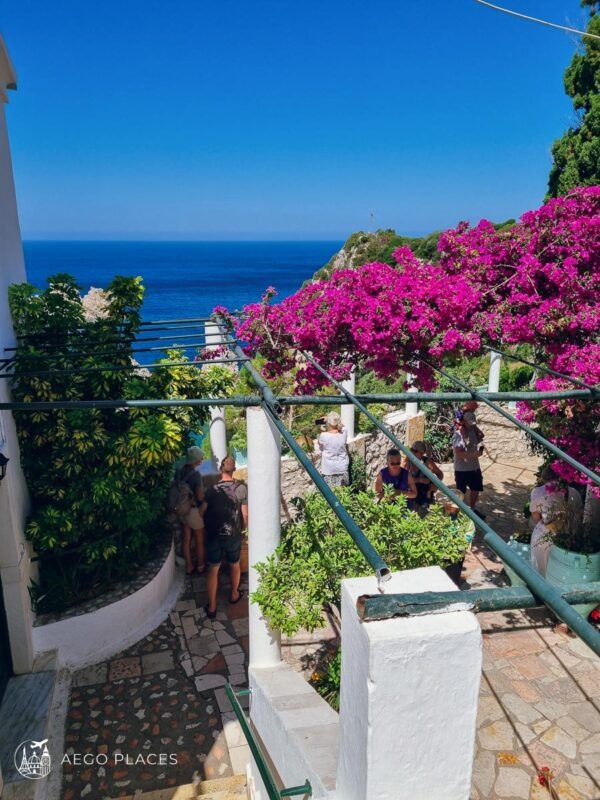
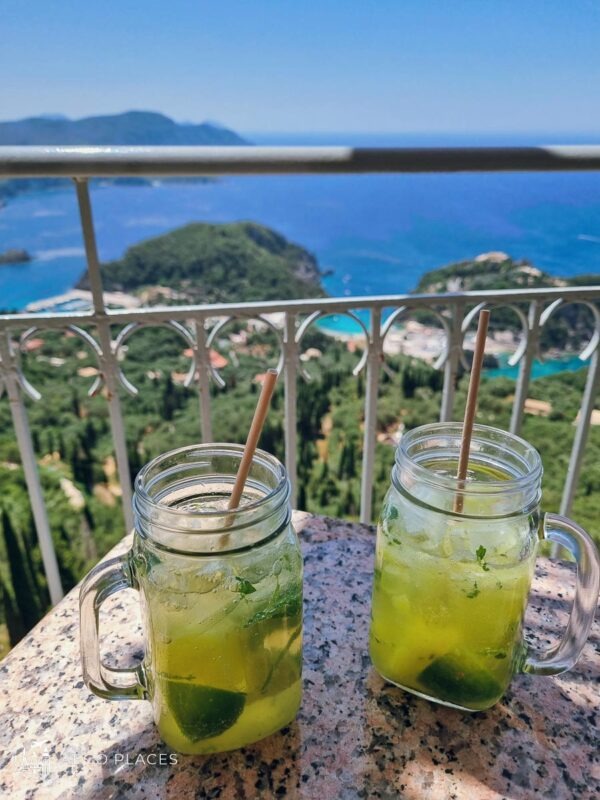
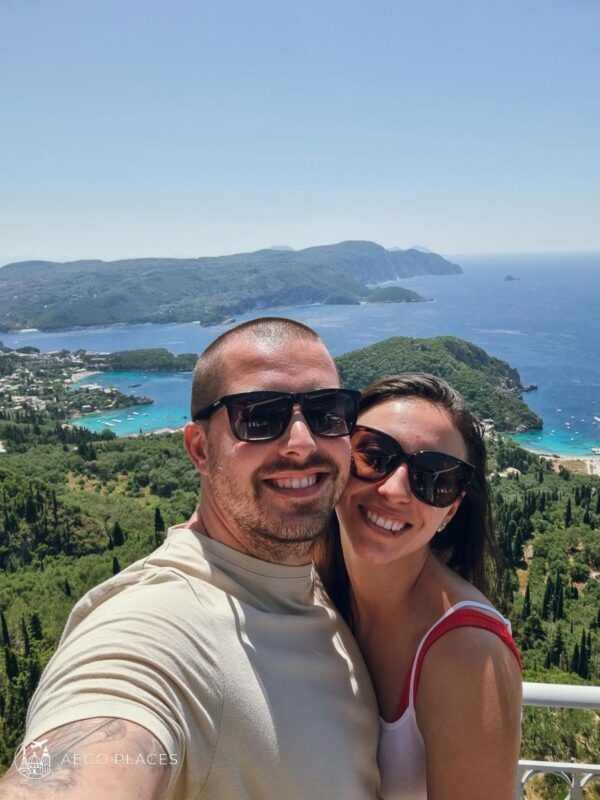
Do not miss the Bellavista café-restaurant above Paleokastritsa – from there one of the most beautiful panoramic views in Corfu opens up. You reach it along a winding mountain road in about 15 minutes from Paleokastritsa.
Visit to Paxos and Antipaxos – The Most Beautiful Ionian Islands
If you have enough time in Corfu, we strongly recommend taking advantage of one of the boat excursions to nearby islands, especially the paradise islands of Paxos and Antipaxos, which are famed for some of the most beautiful beaches and views in all of Greece. Besides the beaches, the tours will also take you to the Blue Caves, which are beautiful caves and rock formations, surrounded by turquoise-blue waters.
In Kerkyra there are various operators offering day tours, and we advise you to book your excursion early, because places fill up quickly, especially with the more reputable tour agencies. For easiest booking, you can reserve directly through the GetYourGuide tour platform, where you will find tours to Paxos, Antipaxos and the Blue Caves.
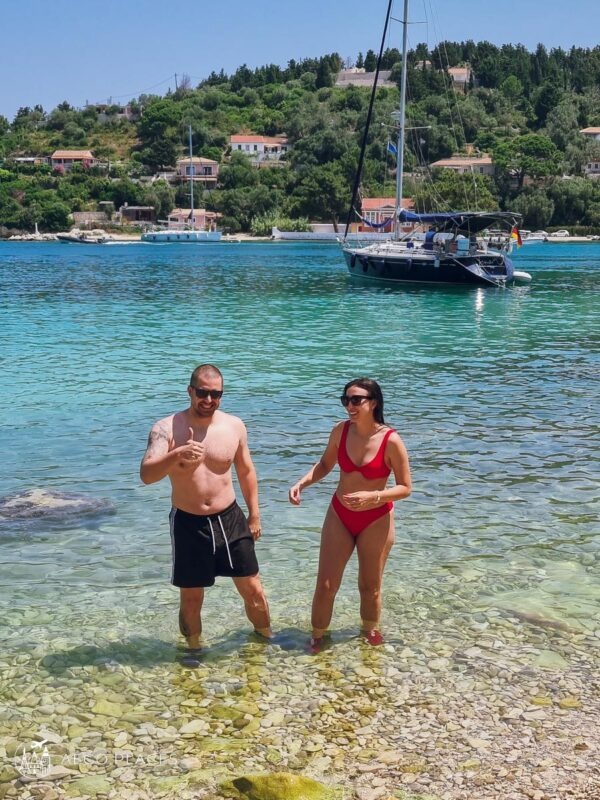
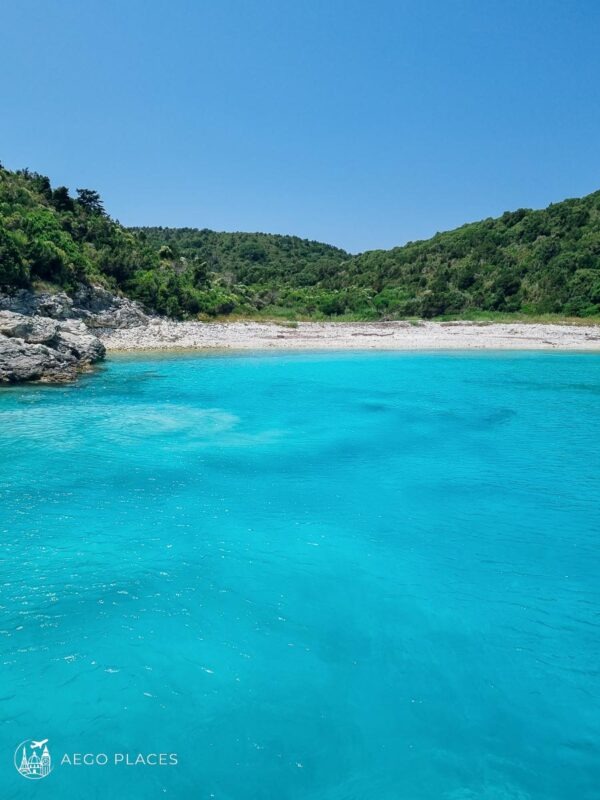
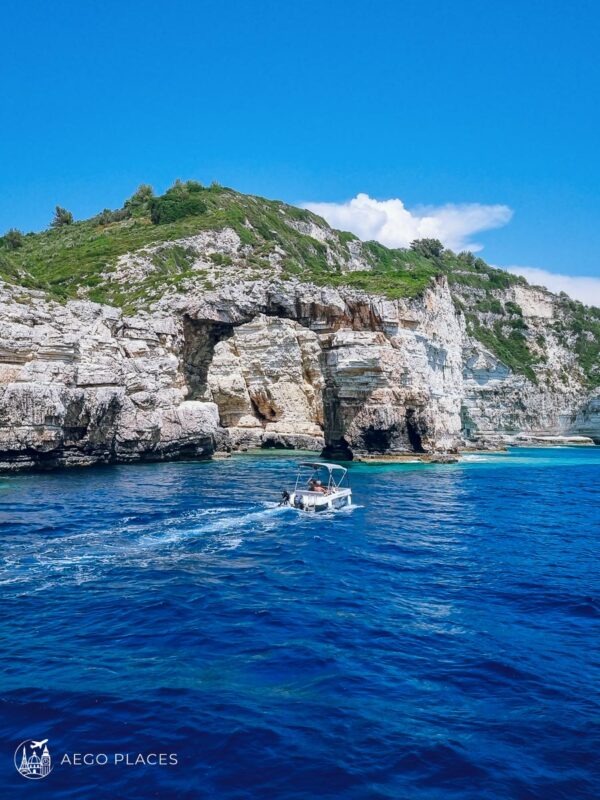
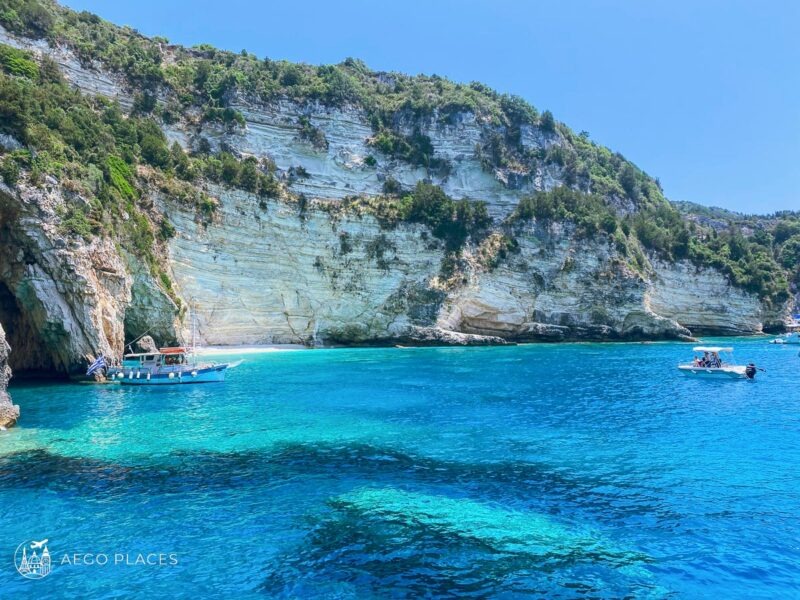
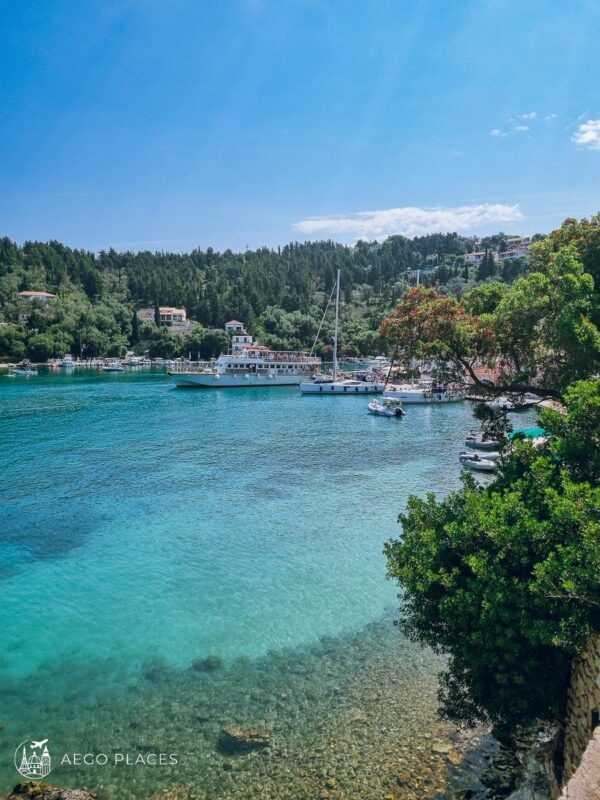
Here are some photos from our day trip to Paxos and Antipaxos:
Traditional Cuisine of Corfu
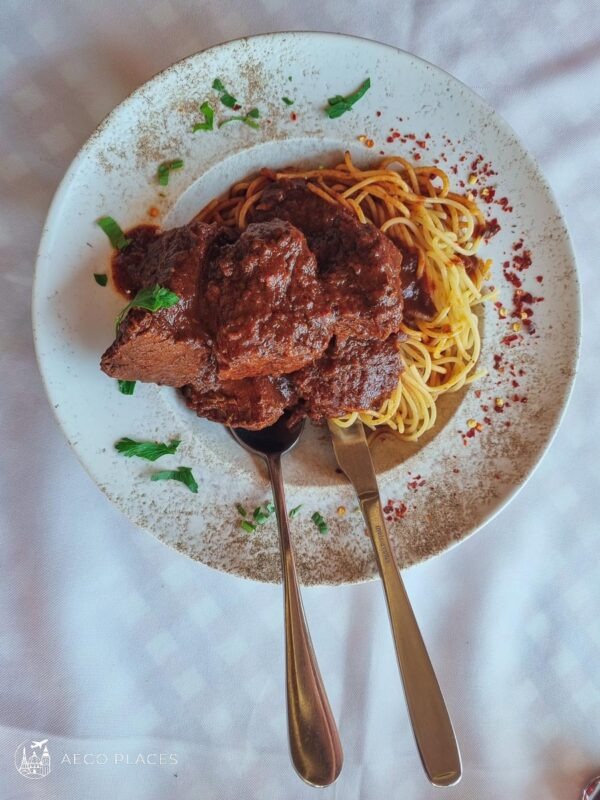
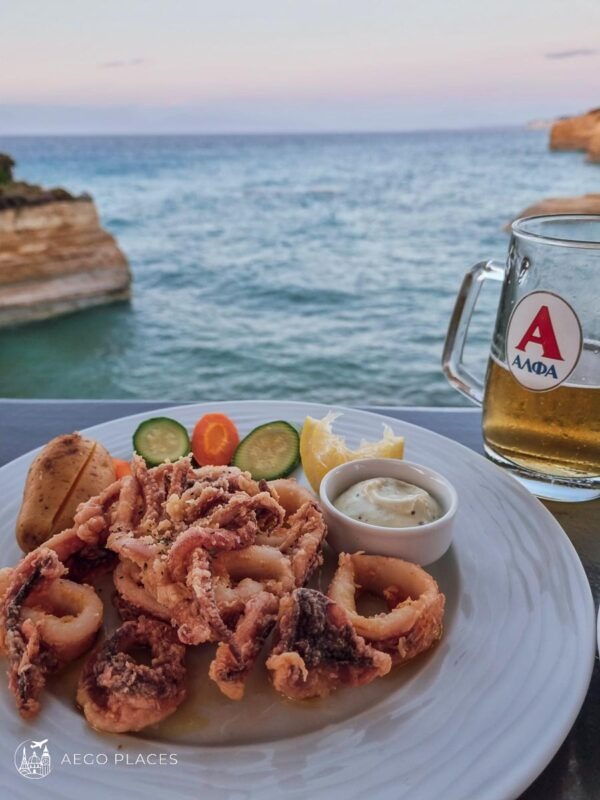
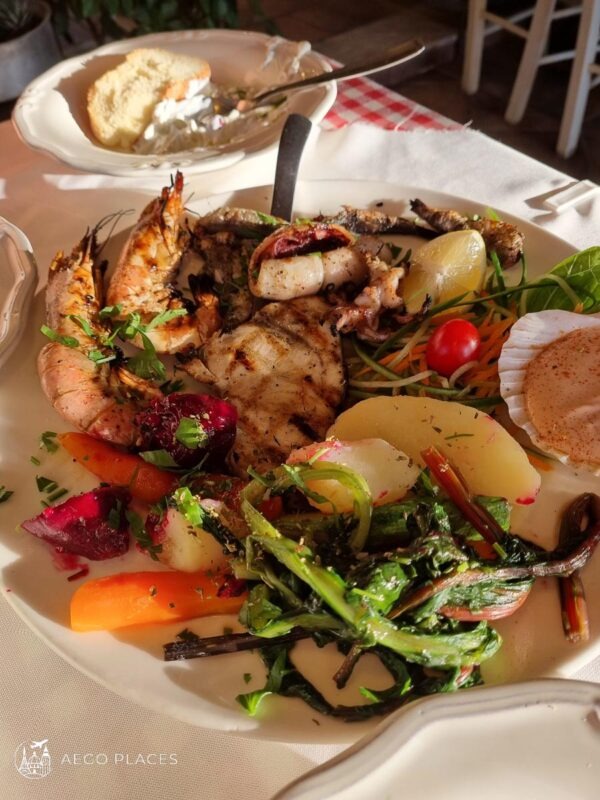
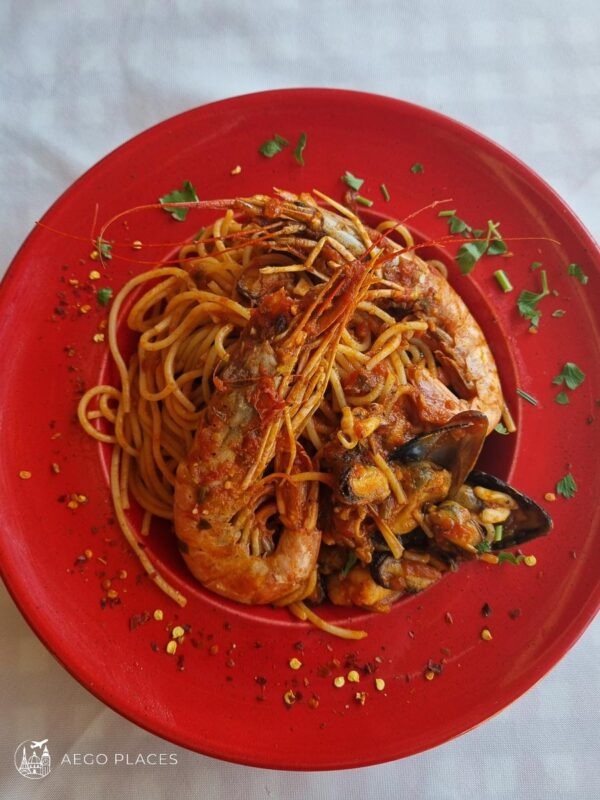
We cannot fail to mention the fantastic local cuisine of Corfu. The Italians have left their mark and the result is a very interesting mix between Italian techniques and traditional Greek flavours. From the traditional local cuisine, we especially loved the so-called Pastitsada – pasta with beef and an incredibly aromatic sauce.
Support our blog
If you find this guide useful and would like to support our blog, you can use our affiliate link to Booking.com. You will get great booking options, while your booking helps us continue sharing free travel guides and practical tips for hundreds of destinations around the world.
Related posts
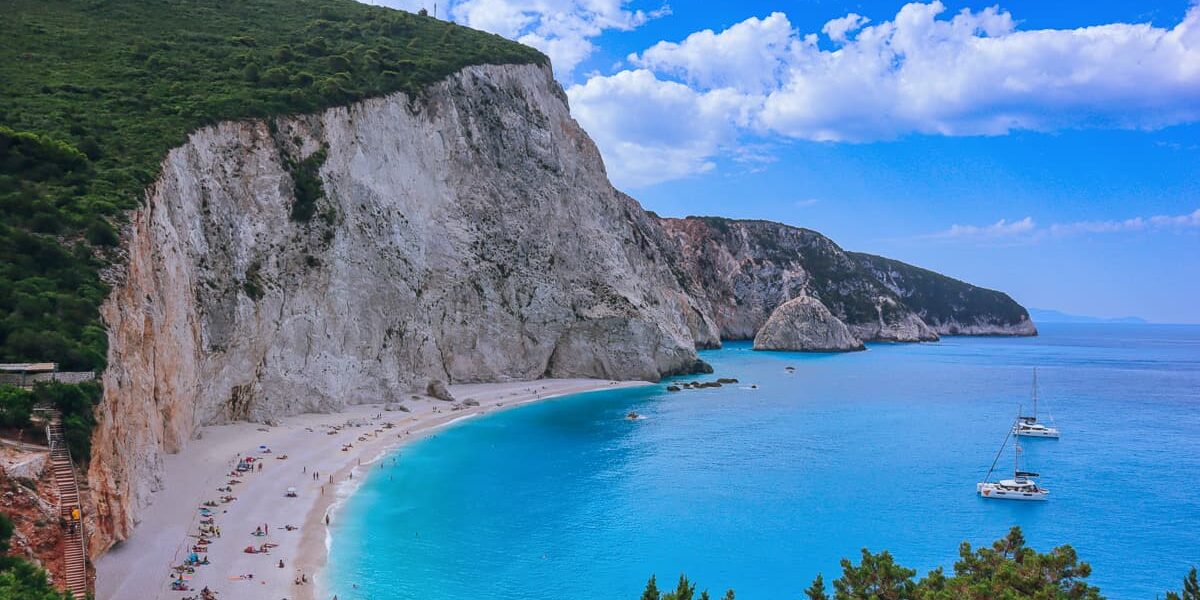
Lefkada is among the most preferred destinations for beach holidays. If you’re looking for interesting beach destinations in Greece, Lefkada has all the conditions – the island is easily accessible by…

In this complete Crete travel guide, we’ve tried to cover everything you need to plan your own trip to the island – how to structure your time, the best places to stay in Crete, the most beautiful bea…
Bangkok, Thailand’s vibrant capital, sprawls across numerous districts, each offering its own distinct personality and advantages for travelers. Choosing where to base yourself can dramatically shape …
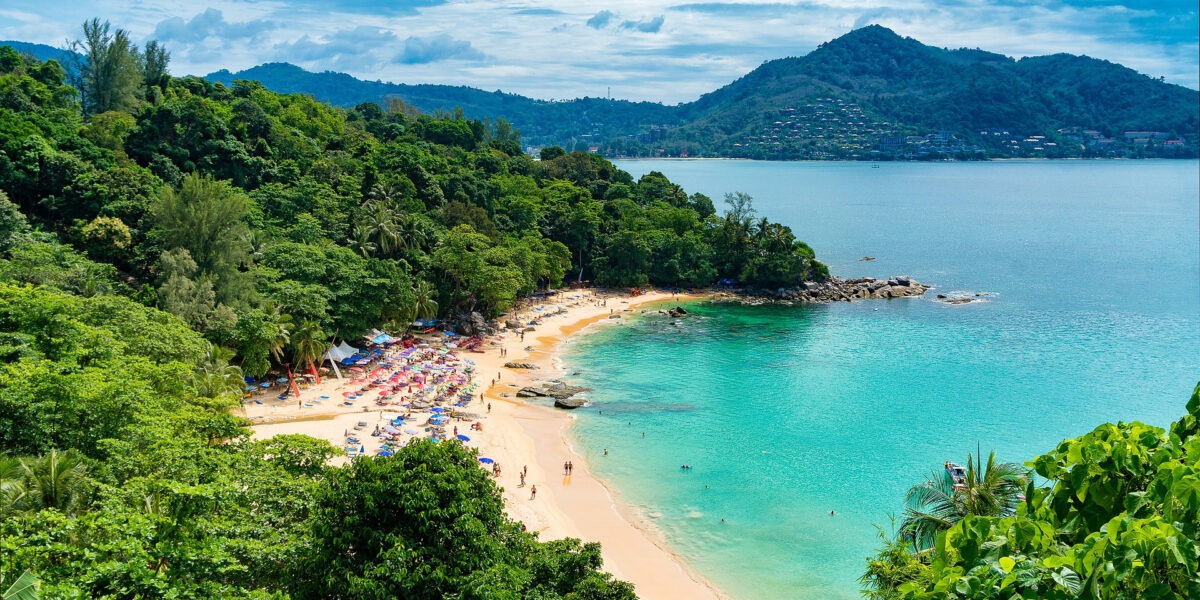
Phuket, Thailand’s largest island, offers an incredible range of accommodation options across diverse neighborhoods, each with its own unique character. Choosing where to stay can significantly impact…
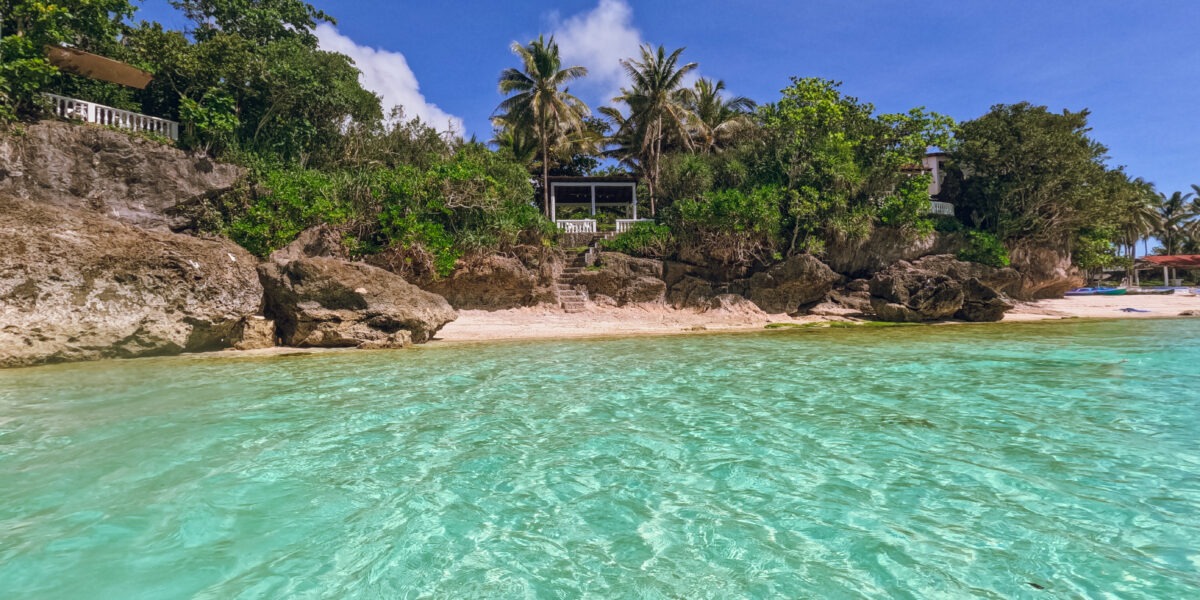
Tucked away on the eastern coast of Bohol, Anda is one of the Philippines’ quieter beach destinations—ideal if you want turquoise water, uncrowded shores, and a slower pace than Panglao. It’s the kind…
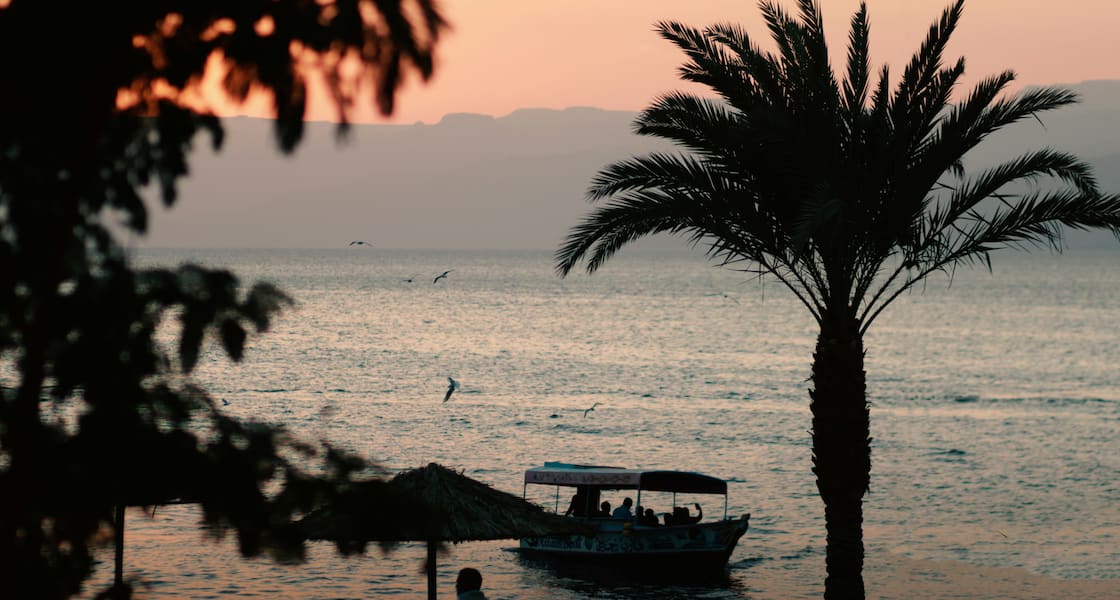
Aqaba, Jordan’s only coastal city, offers a unique blend of Red Sea beaches, ancient history, and desert adventures. Nestled at the northern tip of the Red Sea, this port city serves as the perfect ba…
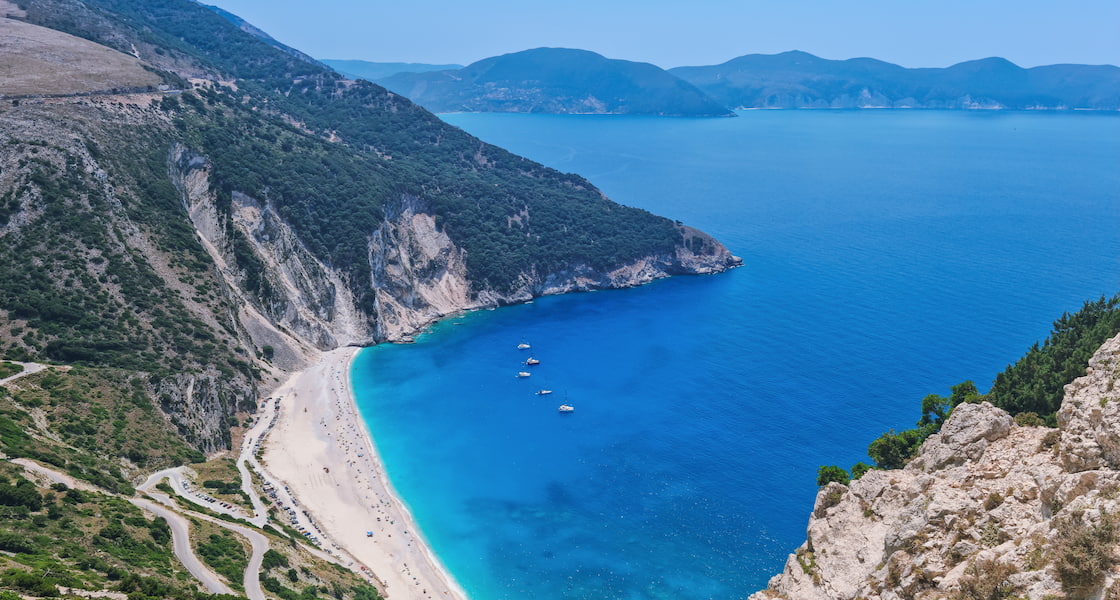
Choosing where to base yourself in Kefalonia can make or break your holiday. This mountainous island is larger than it appears on the map, and the winding coastal roads mean that getting from one side…
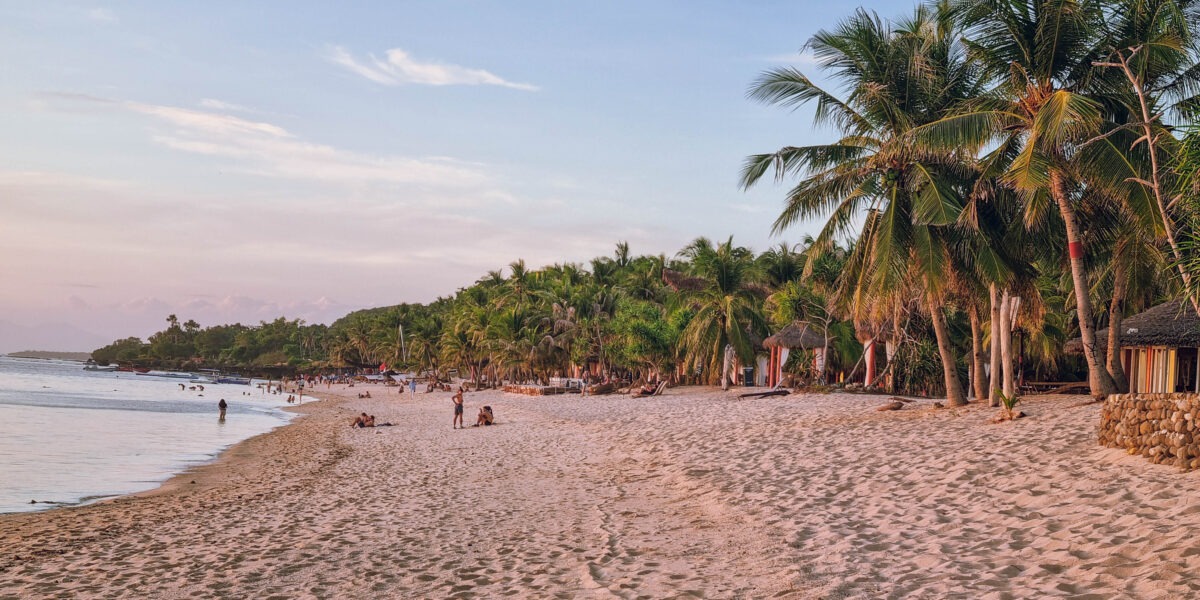
This article highlights the favorite part of our nearly three-week Philippine adventure: our unforgettable stay on Siquijor Island. The island delivers everything you could want from a Southeast Asian…