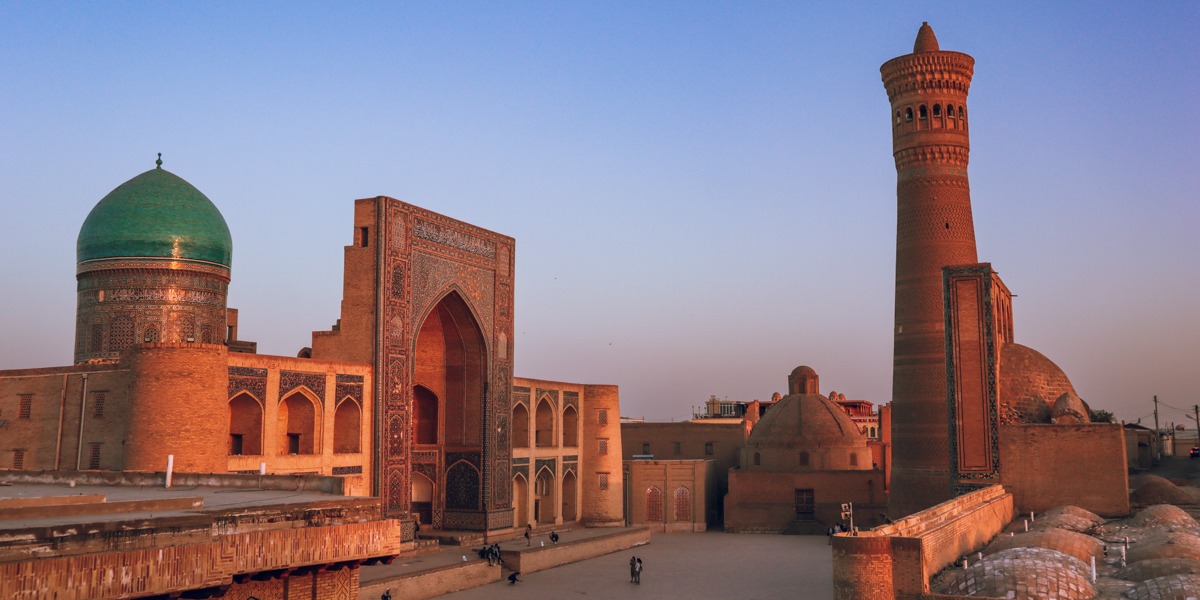
Bukhara was our favourite city in Uzbekistan. We visited it as part of a wider journey through the country, alongside Tashkent, Samarkand, Khiva and Shakhrisabz, and while each destination has its own character, Bukhara stayed with us long after the trip ended.
One of the oldest cities in Central Asia and a key stop on the ancient Silk Road, Bukhara is known for its remarkably well-preserved historic centre, magnificent Islamic architecture and deeply atmospheric old town. Within a compact, walkable area, you will find dozens of important landmarks, including grand madrasas, historic mosques, bustling trading domes, the Ark Citadel and the iconic Po-i-Kalyan complex.
In this Bukhara travel guide, we share the best things to do in Bukhara, the most important sights to visit, practical tips for exploring the old town and ideas for planning an independent trip to Uzbekistan. Whether you are spending one day in Bukhara or staying longer, this guide will help you experience one of the most beautiful and fascinating cities on the Silk Road.
Basic Information about Bukhara
Bukhara is one of the oldest and best-preserved cities in Central Asia – so old that it even remembers the conquests of Alexander the Great. The city’s history exceeds 2500 years, and its very name carries traces of this antiquity: in Old Bactrian “bukhar” meant “abode of knowledge” or “centre of learning”. It is no coincidence that the city was the intellectual heart of the Islamic world – great scholars and philosophers such as Avicenna (Ibn Sina) lived and worked here.
Like Samarkand, Bukhara played a key role on the Silk Road, serving as an important stop for merchant caravans before their crossing through the desert. Between the 9th and 10th centuries it reached its golden age, becoming the capital of the Samanid Empire and turning into one of the most significant spiritual and commercial centres of its time. In the 13th century the armies of Genghis Khan devastated the city almost to its foundations, but according to legend the conqueror himself ordered the famous Kalyan minaret to be spared, after it made him bow his head before it – and by the irony of history, the minaret still stands today. Subsequently the city was revived under the rule of Timur, and from the 16th to 20th centuries it was the capital of the Bukhara Khanate.
Unlike Samarkand, whose monuments are more scattered and require entrance fees, Bukhara’s historic core is compact and can be explored mainly on foot. Precisely because of its remarkably good preservation, the entire historic centre has been included in the UNESCO World Heritage list since 1993. Bukhara is different from Samarkand in character – if Samarkand strikes you with the power and monumentality of Registan, then Bukhara embraces you gradually, with its winding cobbled streets, hidden courtyards and the feeling that time here has simply stopped. An old Uzbek saying puts it well: “Samarkand is the beauty of the earth, and Bukhara is the beauty of the spirit.
Below you will find the most beautiful places in Bukhara and the sights you should not miss.
Where to stay in Bukhara
Bukhara was undoubtedly our favorite city in Uzbekistan. Its sights are impressive, the Old Town is easy and enjoyable to explore, and many of the most interesting places are within a relatively short distance of one another.
When looking for a hotel, we recommend choosing somewhere in or near the Old Town. Prices are generally very reasonable, and Bukhara is home to many beautifully restored madrasas and caravanserais that have been converted into charming boutique hotels.
Here are some of the highest-rated hotels on Booking.com:
- DUSTON Boutique XIX Century Rooms (9.7/10)
- Rahmat Guesthouse (9.7/10)
- Mashkobi Buxoro (9.7/10)
- Ali Boutique (9.5/10)
- Aida Hotel PREMIUM (9.5/10)
- Zarafshon Hotel Bukhara (8.9/10)
Sights in Bukhara
Po-i-Kalyan Complex
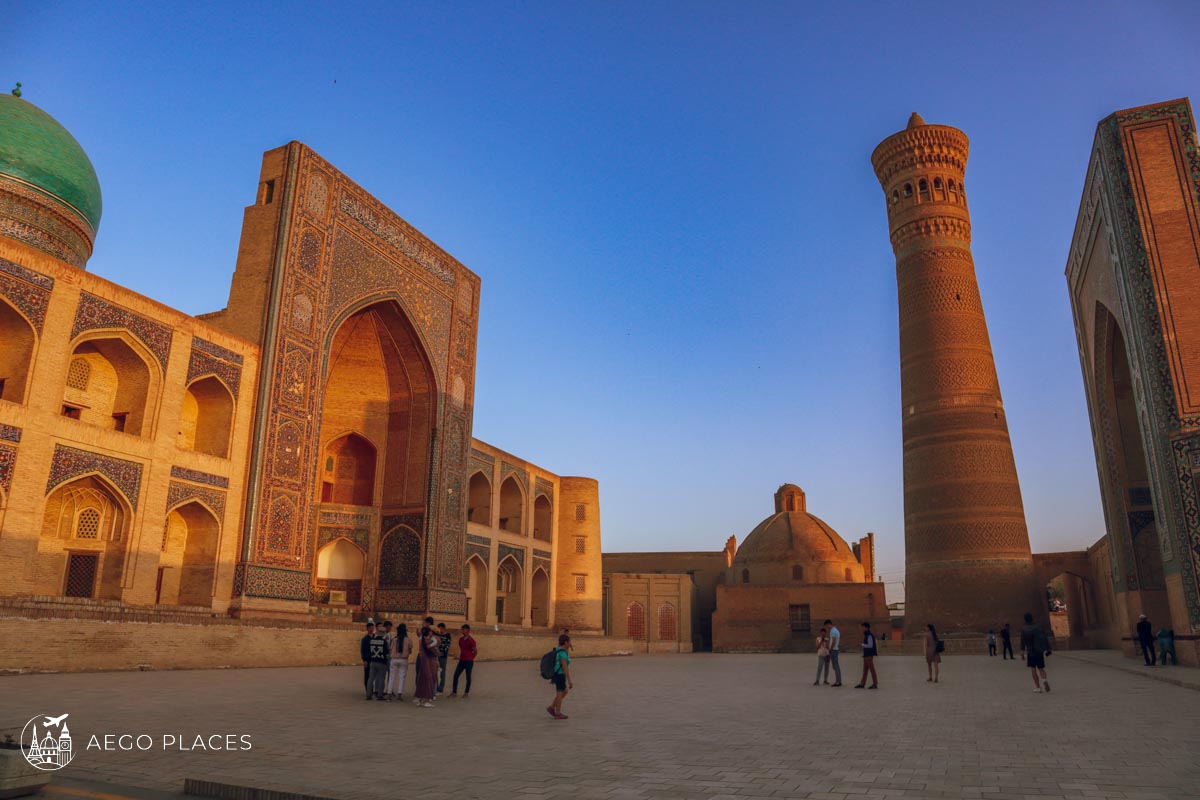
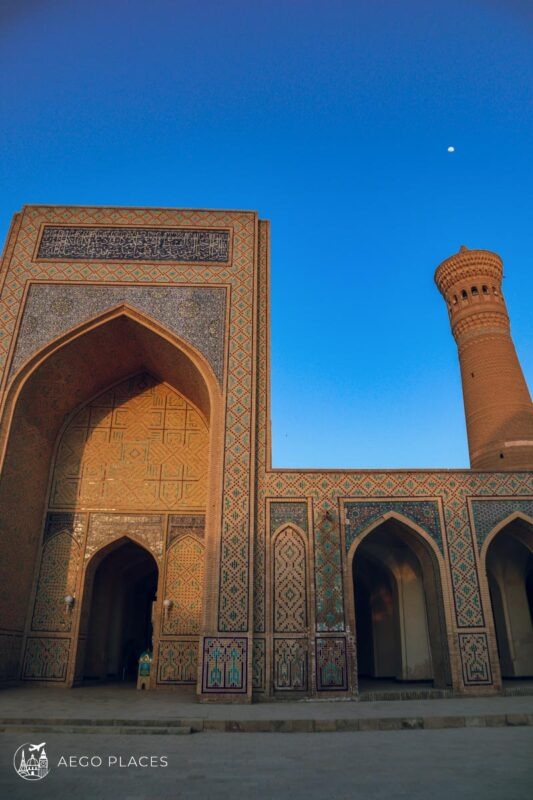
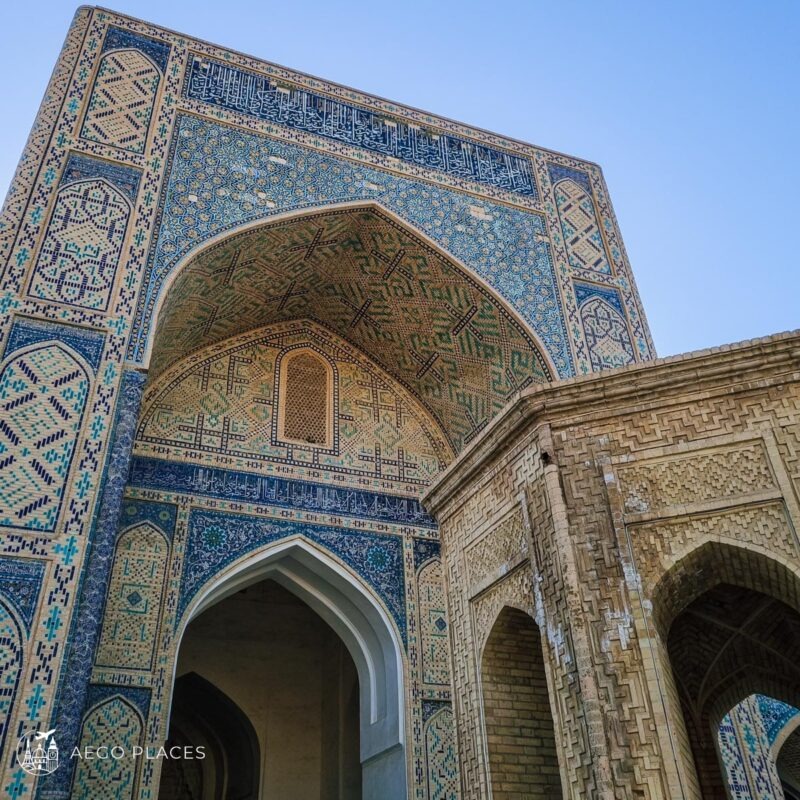
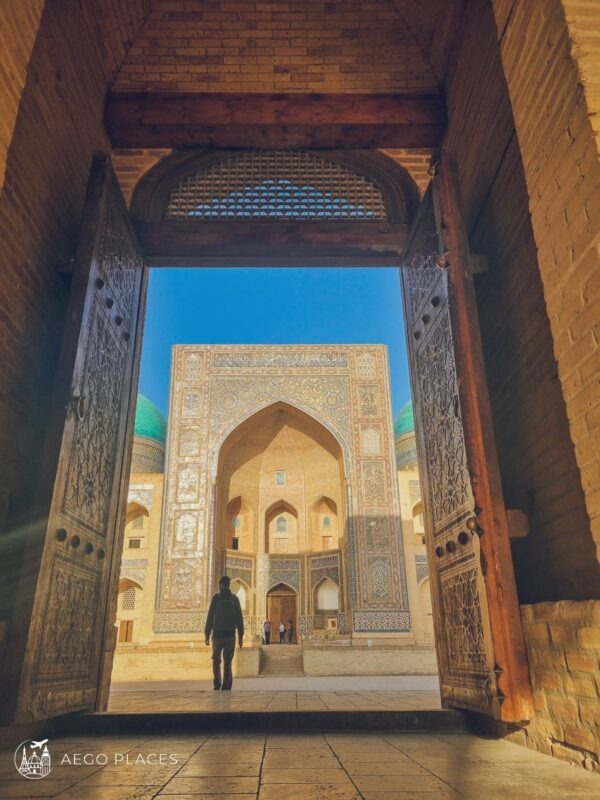
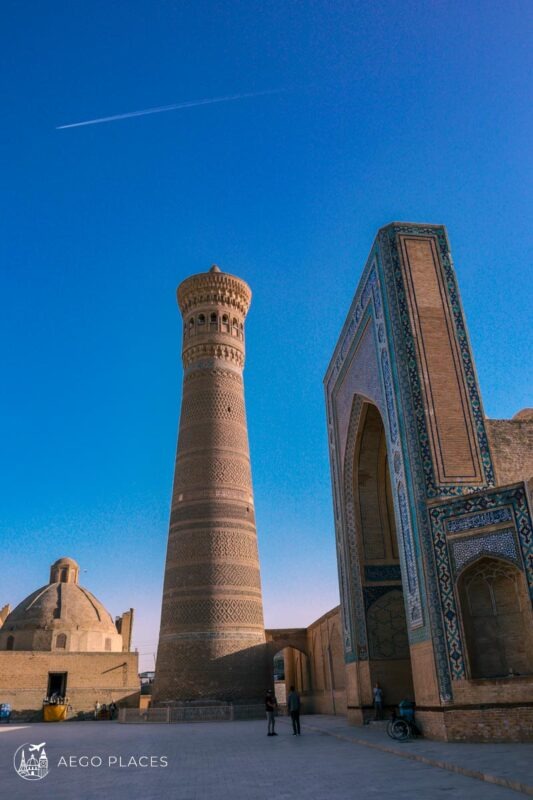
The Po-i-Kalyan Complex is the heart of Bukhara, the postcard of the city and one of the most stunning places in Central Asia. It includes the Kalyan Minaret (1127) – a 46-metre tower from which condemned prisoners were thrown to their deaths in the past, the Kalyan Mosque and the Mir-i-Arab Madrasa, which still functions as an active religious school today. The ensemble is monumental and in no way inferior in impact to Registan Square in Samarkand.
The Beautiful Streets of the Old Town
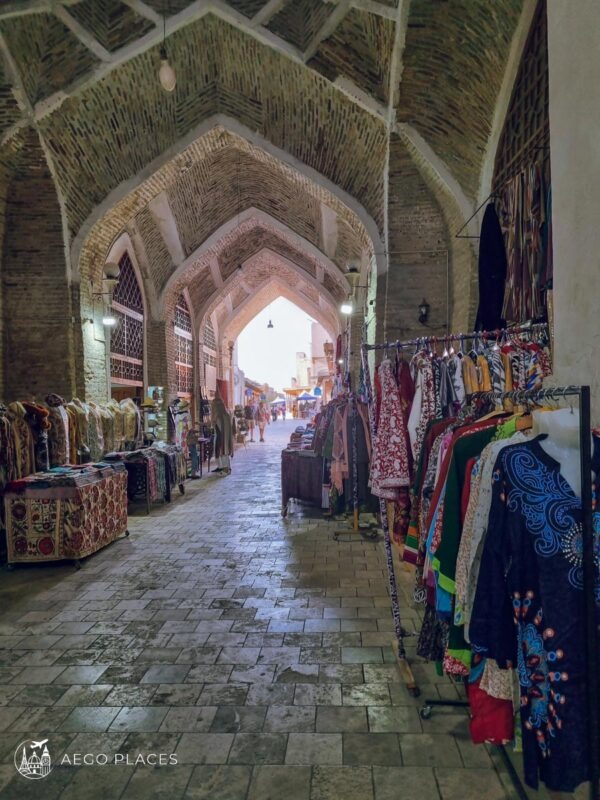
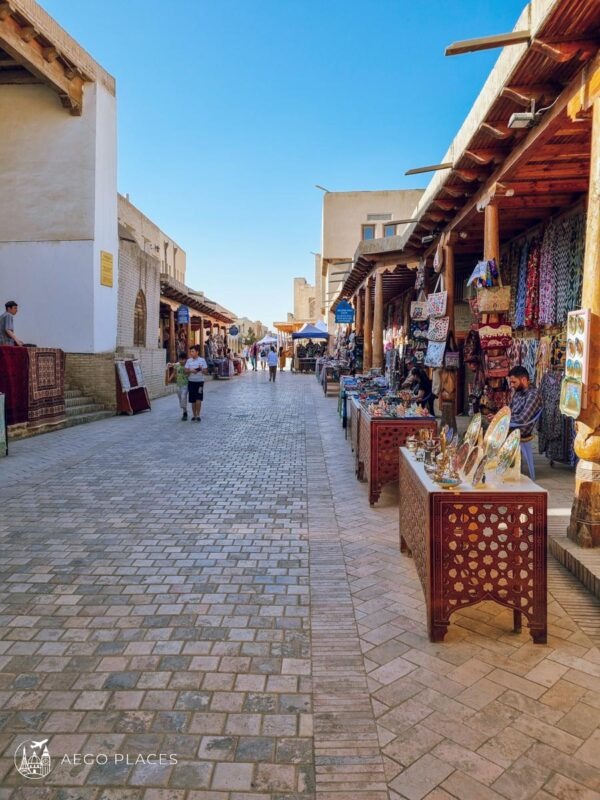
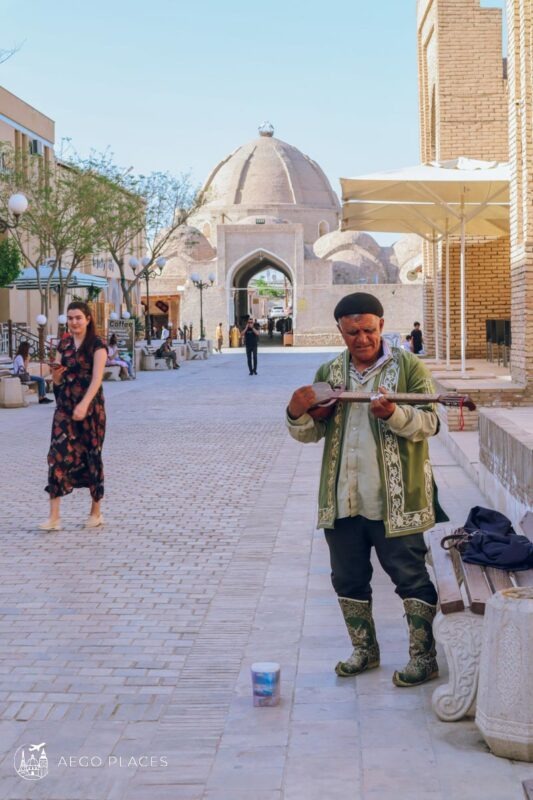
If in Samarkand Registan Square strikes you directly in the face with its monumental beauty, then Bukhara captivates you gradually – street by street, corner by corner. This is precisely its greatest difference from other cities on the Silk Road: here you do not go from sight to sight, but simply wander. And the wandering itself is the experience.
The old town of Bukhara is extremely compact and is almost entirely pedestrianised – most sights are no more than 10-15 minutes walk from each other. Its streets are narrow and winding, lined with clay and brick facades in ochre and sandy yellow, and many of the courtyards behind the gates hide inner gardens, fountains and hotels in ancient caravanserais, whose existence tourists do not even suspect. This is precisely one of the few places in Central Asia where the authentic medieval urban structure has been preserved almost intact – the layout of the streets, courtyards and buildings has not changed for more than 500 years, which is why the entire historic centre has been on the UNESCO list since 1993.


The Ark Citadel
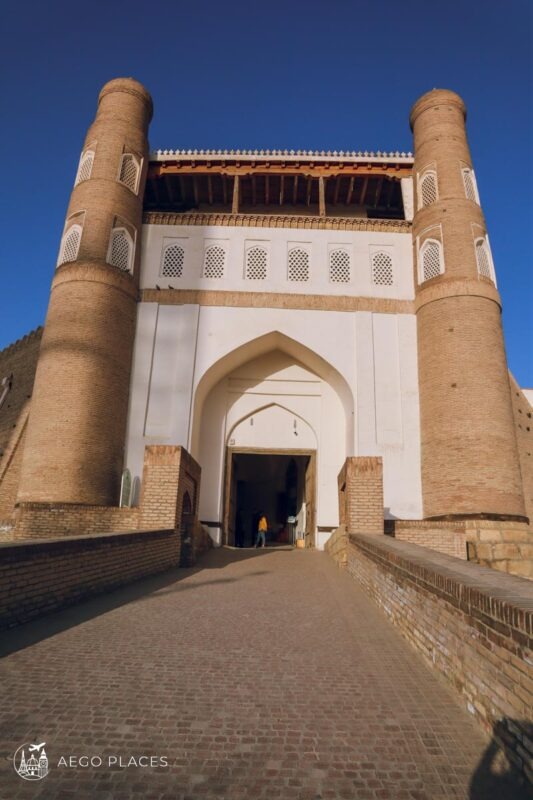
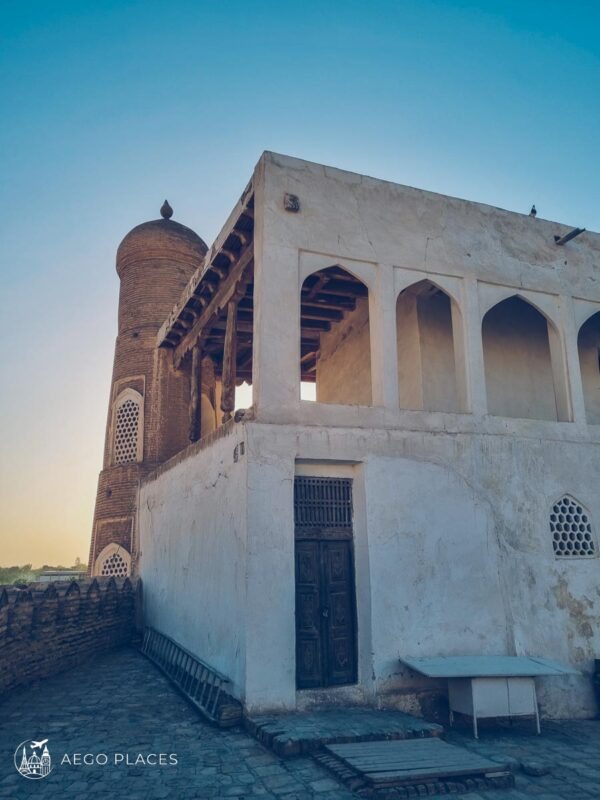
The Ark Citadel is the oldest architectural monument in the city – a massive fortress with 20-metre sloping walls, inhabited by the rulers of Bukhara for centuries. Inside were a palace, mosque, prison and treasury. Its last destruction came at the hands of the Bolsheviks in the early 20th century and its interior is empty, but from it beautiful views open up over Bukhara.

Samanid Mausoleum
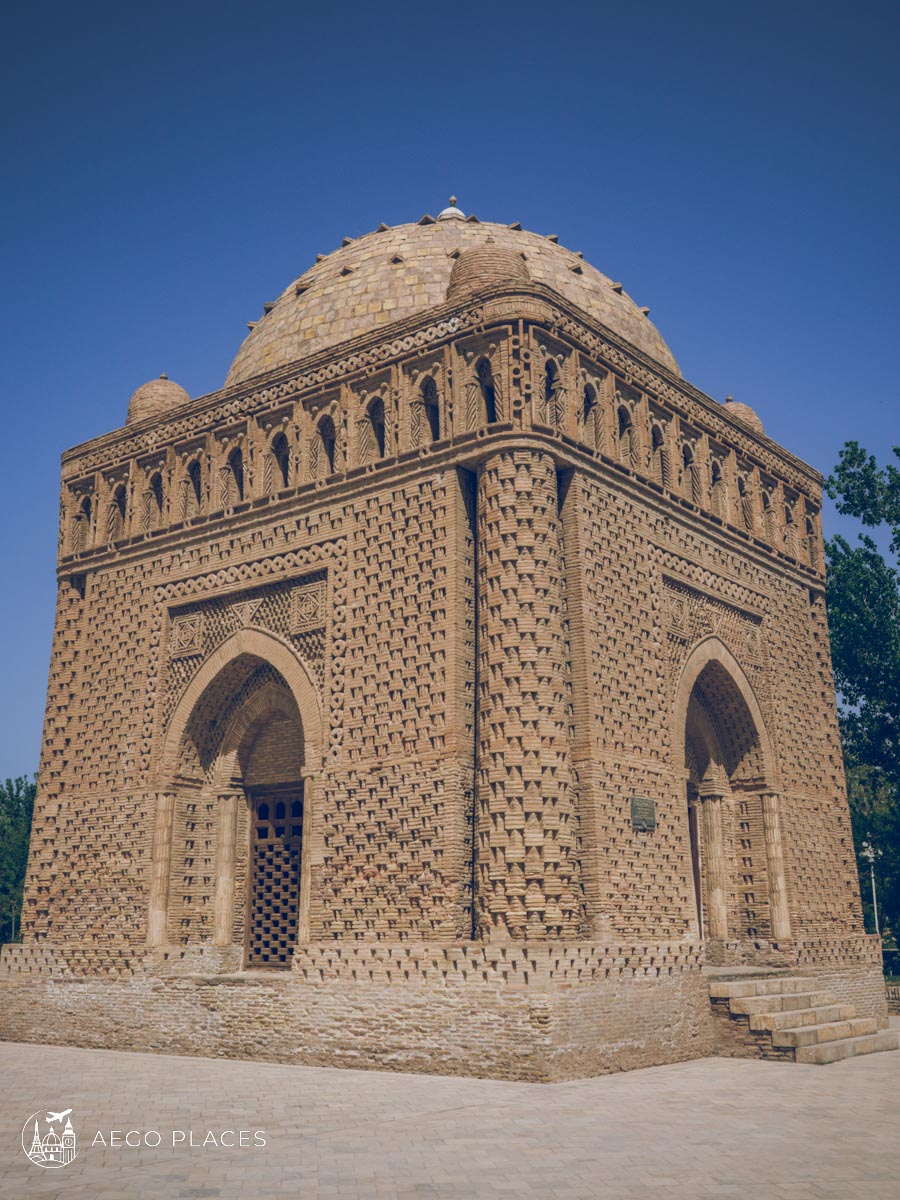
The Samanid Mausoleum is a true pearl of Bukhara and one of the oldest preserved monuments in Central Asia, dating from the 10th century. It is located in a quiet park outside the main tourist route, which adds to its charm. The carving on the bricks, imitating weaving, is so precise that it looks like lace from a distance.
Lyab-i-Hauz Square
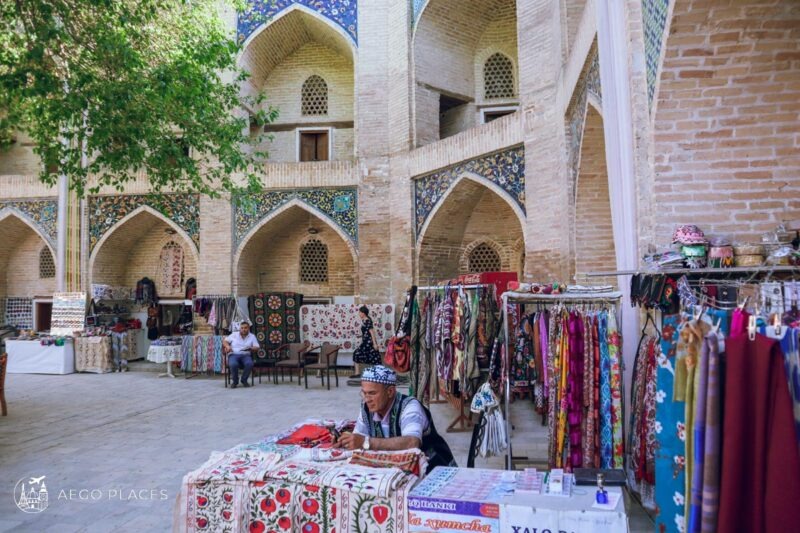
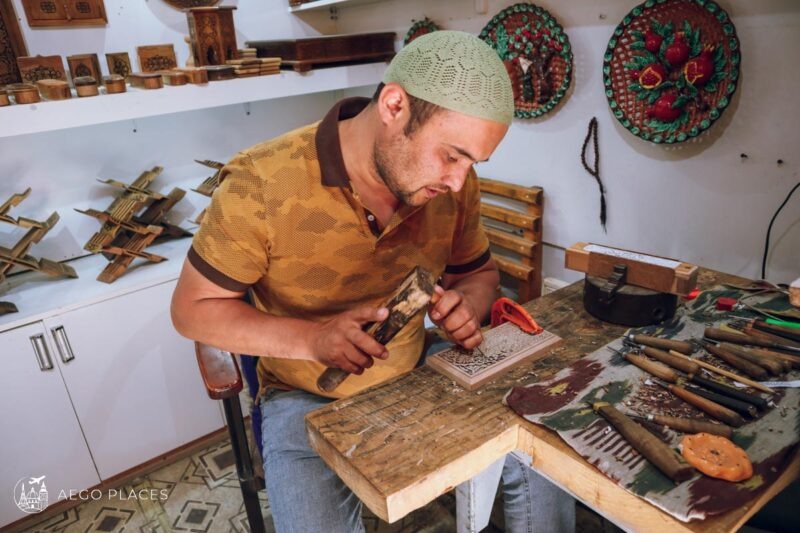
Lyab-i-Hauz Square is the soul of modern Bukhara – a pool surrounded by centuries-old mulberry trees, mosques and madrasas. Here life flows slowly and pleasantly: locals play backgammon, and tourists sit in the numerous establishments overlooking the water. There you can find many shops for souvenirs and handmade items from local craftsmen.
Bolo-Hauz Mosque
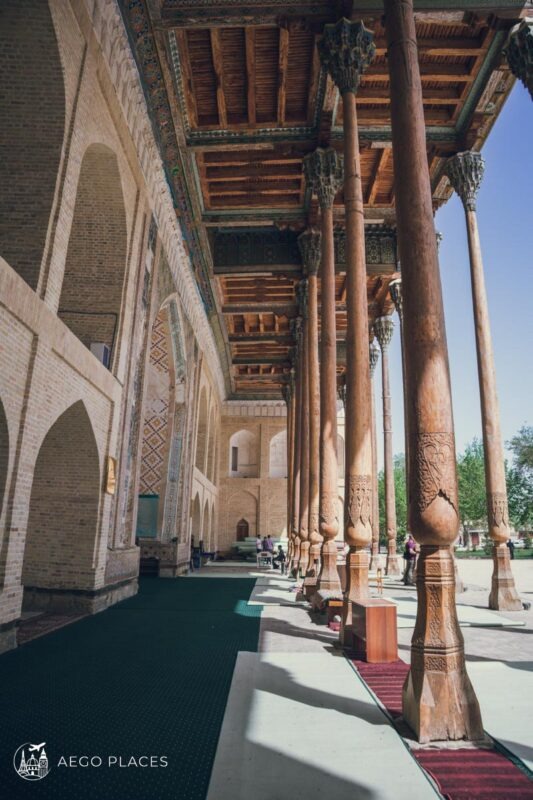
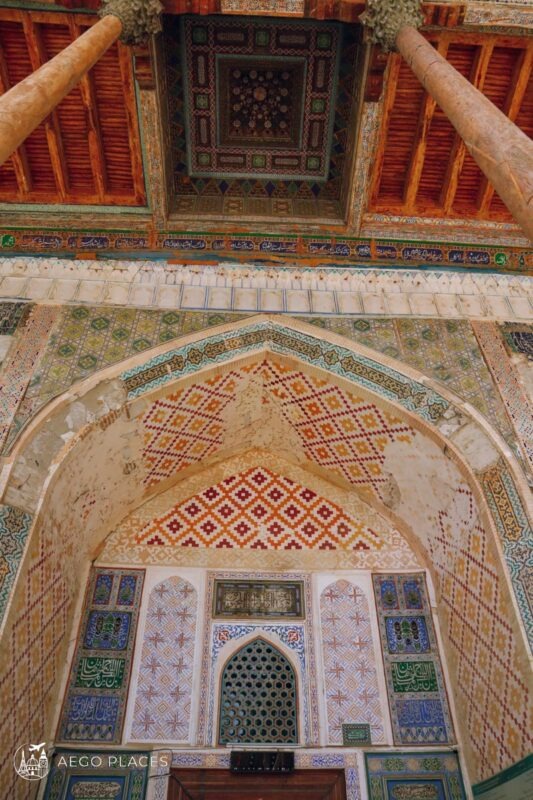
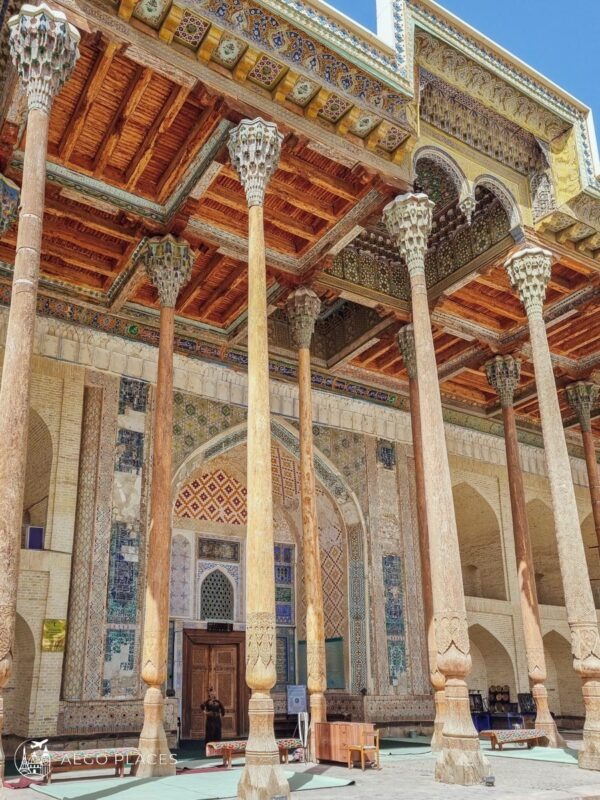
The Bolo-Hauz Mosque is located directly opposite the Ark Citadel and is one of Bukhara’s most elegant monuments. It was built in 1712, and its name means “children’s pool” – in front of it was a public reservoir from which locals drew water. Locals also know it by another, much more poetic name: “the mosque of forty columns” – it actually has only twenty, but when they are reflected in the calm water in front of it, their number doubles. The main accent is the covered summer veranda, whose ceiling is supported by twenty wooden columns, hand-crafted and covered from base to top with precise carving – some of the finest examples of Central Asian woodcarving.
Chor Minor
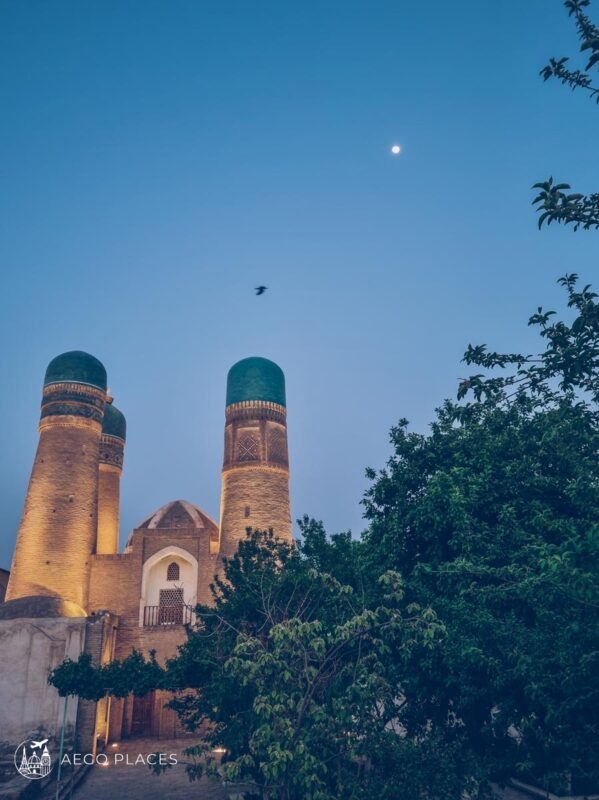
Chor Minor (“Four Minarets”) is one of Bukhara’s most iconic objects – an unusual tower with four blue domes at the corners, built around 1807 as a portal to a now non-existent madrasa. It is located in the quiet side of the old town, far from the main tourist movement. Besides the object itself being very beautiful, reaching it takes you through the narrow streets of a local neighbourhood, where you can see how local people live and meet hundreds of children playing carefree in the streets. Right next to Chor Minor there is also a very nice antique shop with interesting objects from Uzbekistan’s past, which are sold at reasonable prices.


Ulugbek Madrasa
The Ulugbek Madrasa is the lesser-known cousin of the madrasa of the same name in Samarkand, built by the same ruler-astronomer in the early 15th century and included in the UNESCO list.

Bukhara’s Central Market
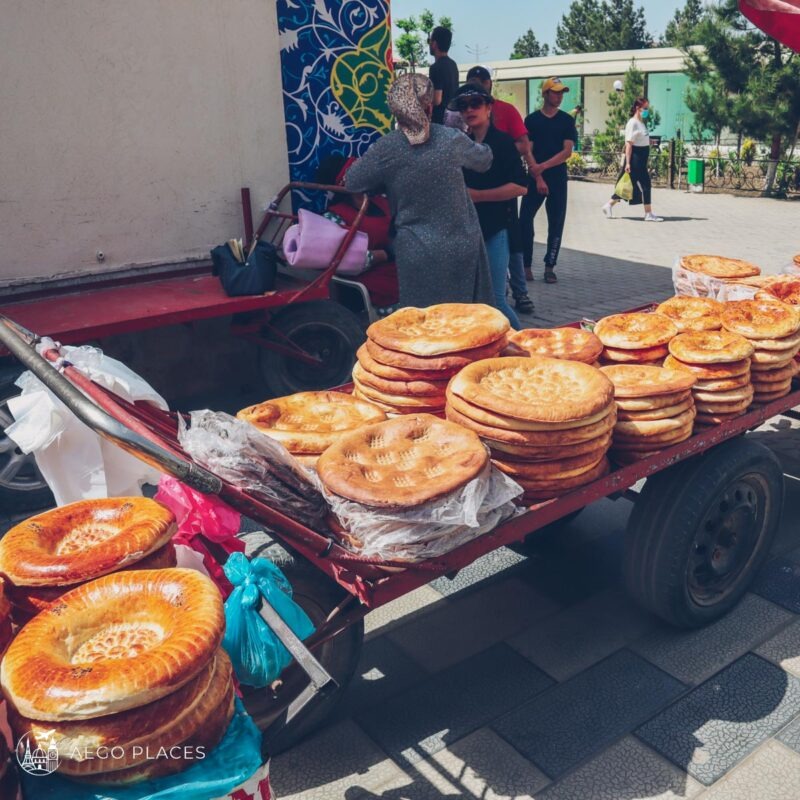
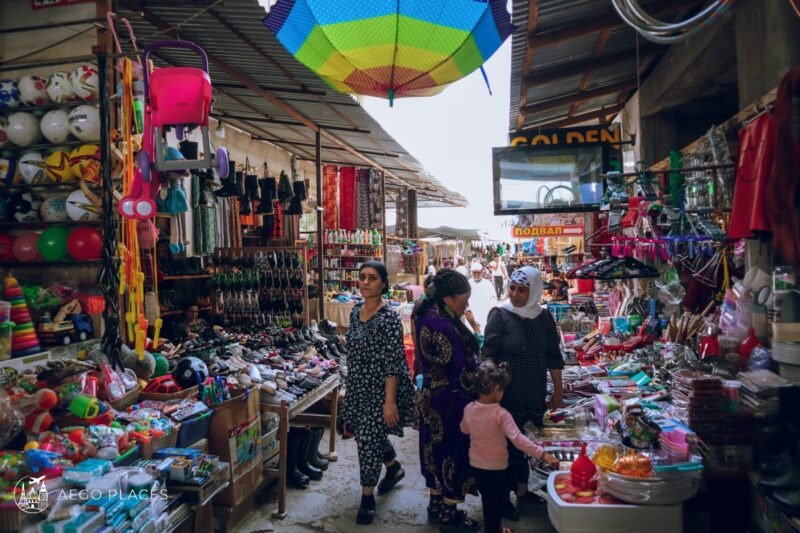
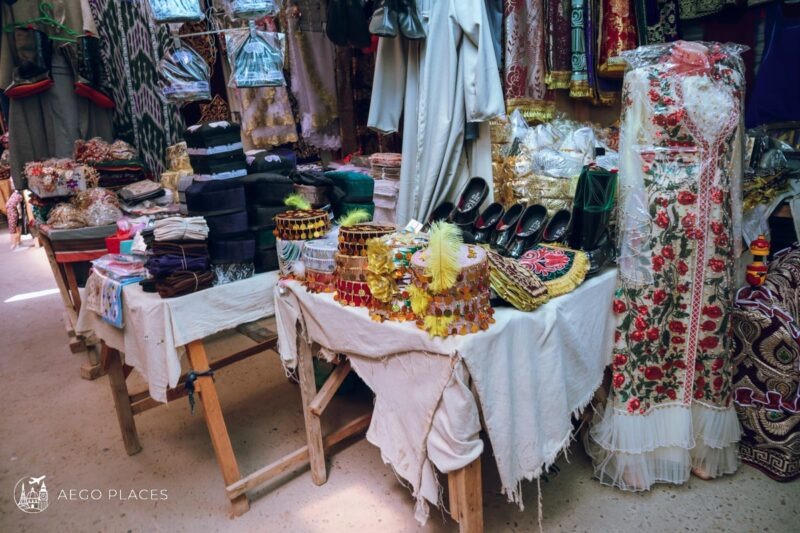
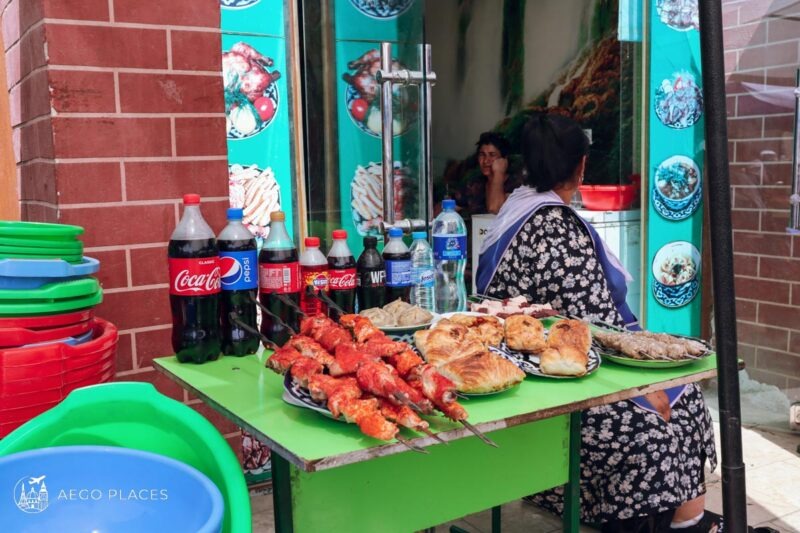
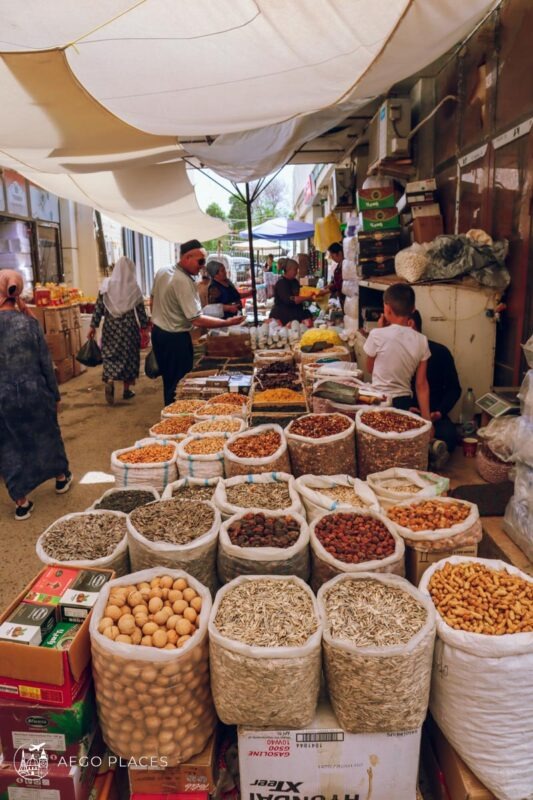
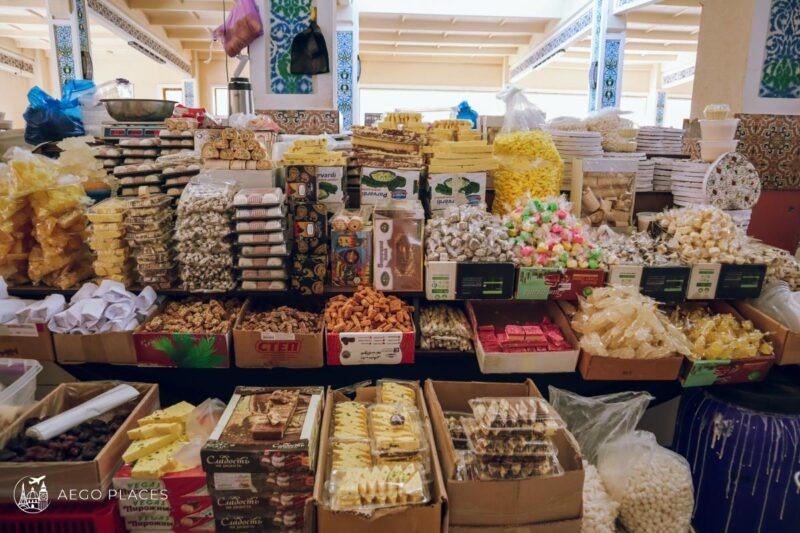
If you want to get as close as possible to local life, cuisine and culture, one of the best places for this are the markets in Uzbekistan. Bukhara has a great central market that should not be missed. There you can try a large part of the local products – traditional Uzbek bread, local fruits, cheeses, desserts and other specialities, buy spices and all kinds of souvenirs at ridiculously low prices.

Support our blog
If you find this guide useful and would like to support our blog, you can buy us a coffee or use our affiliate link to Booking.com. You will get great booking options, while your booking helps us continue sharing free travel guides and practical tips for hundreds of destinations around the world.

Related posts

In April, we visited one of the most beautiful cities in Central Asia – Samarkand, Uzbekistan. This visit was part of a larger tour of Uzbekistan, where we also explored Bukhara, Khiva, Shakhrisabz, a…
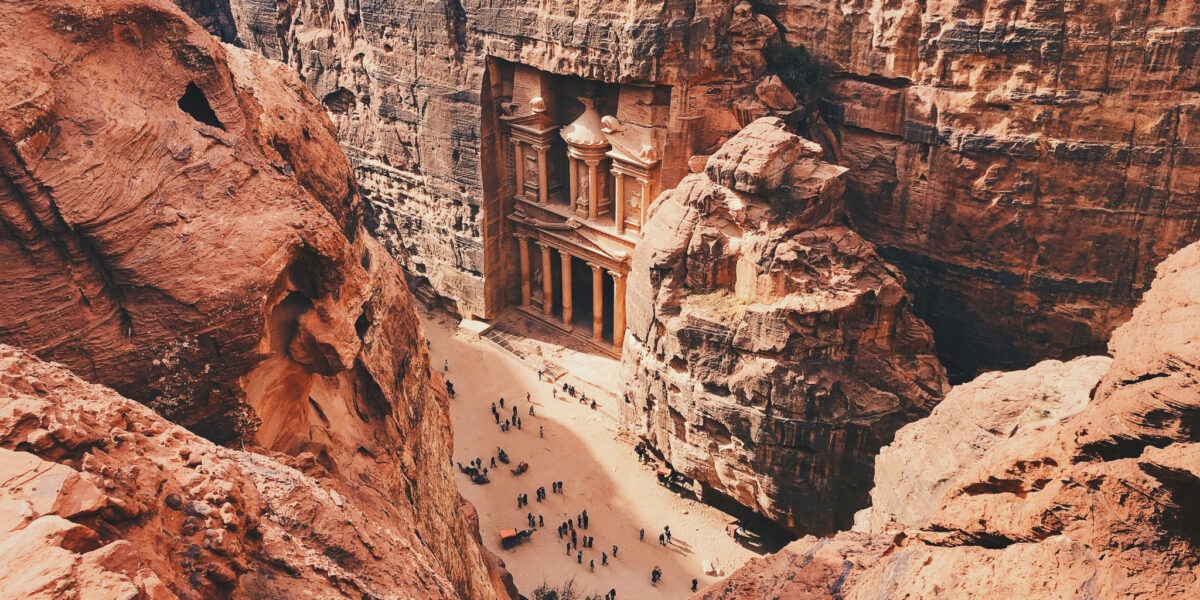
Jordan is one of the most incredible places we have ever visited. Despite being a relatively small country, it’s packed with fascinating historical sites – from the ancient Nabataean city of Petra, t…

Over the years, we’ve often searched for information about whether a particular month is suitable for visiting a specific destination. Friends and readers regularly ask us where it’s best to go for a …