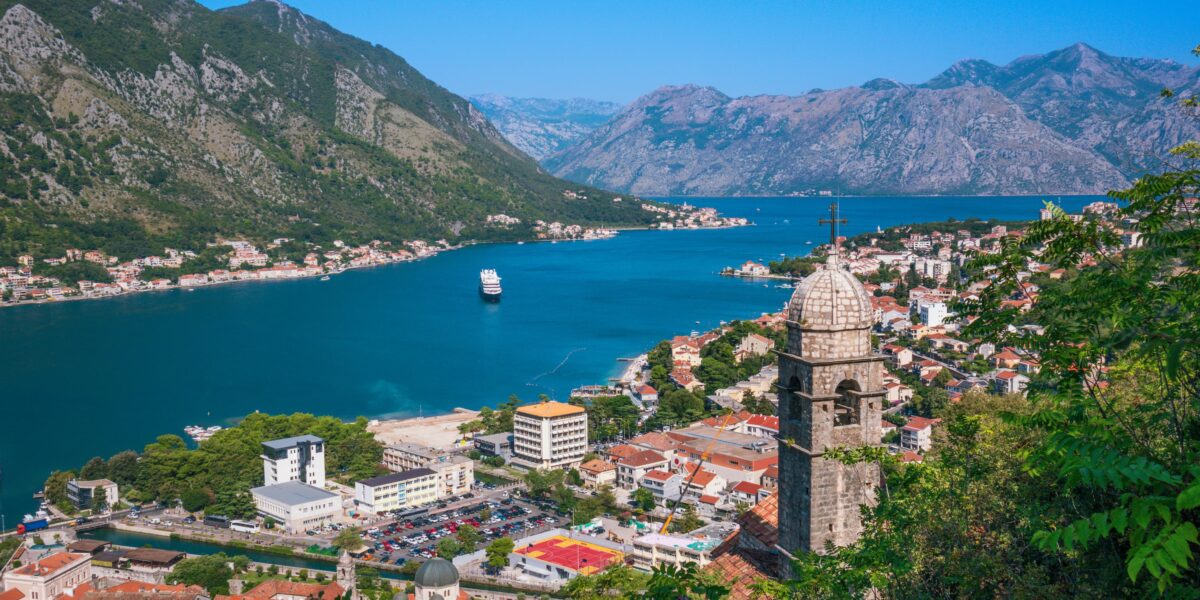
In this article, we’ll share the story of our incredible road trip through the Western Balkans, complete with plenty of tips and recommendations for organizing your own journey.
We spent about 10 days in the region, and I can say we managed to see everything we wanted to. We had a fantastic time, from the paradise-like beaches of the Dalmatian Riviera in Croatia and the delicious food in Bosnia and Herzegovina to the incredible nature of Montenegro. Although they are neighbors, all three countries have their own unique character, and in this post, we’ll share how to make the most of each. We’ll start with planning the route.
How to Plan Your Itinerary and Allocate Your Time
First and foremost, the key question is when you plan to visit the area. We highly recommend taking this trip in the summer so you can enjoy the stunning beaches Croatia has to offer. We had about 10 days and decided to focus on the Croatian seaside, planning our route to pass through Bosnia and Herzegovina on the way there and Montenegro on the way back.
The most interesting places we visited or had the chance to stop at were:
- Bosnia and Herzegovina: Višegrad and Mostar
- Croatia: The entire Dalmatian coast from Split to Dubrovnik, including the island of Brač
- Montenegro: Kotor, Herceg Novi, and Budva
Our trip was organized as follows:
- An overnight stay in Serbia, in the Mokra Gora mountain region near the Bosnian border. This is a convenient first stop for those traveling from Central or Eastern Europe.
- An overnight stay in Mostar, Bosnia and Herzegovina. It’s located not far from Croatia, and the drive from the Serbian border takes about 5 hours through a beautiful mountain road with interesting stops along the way.
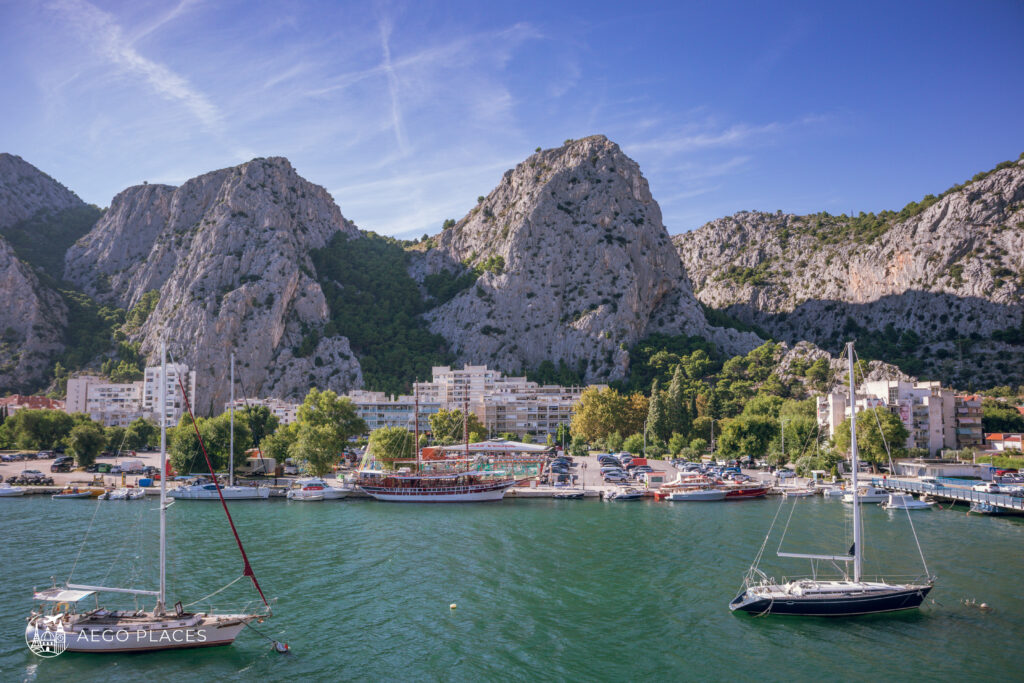
- Five nights in Omiš, Croatia, a beautiful town on the Dalmatian coast, not far from Split and with many gorgeous beaches nearby.
- Two nights in Kotor, Montenegro. The drive from Omiš to Kotor takes about 5 hours, and you can stop in Dubrovnik and Herceg Novi on the way, just as we did.
- The return journey can be done in one long drive or broken up with an overnight stay in Serbia.
Traveling Through Serbia
One of the potential challenges of a Balkan road trip, especially during peak season, can be long queues at border crossings. We left Sofia(Bulgaria) and traveled on a Friday evening at the end of August and hit a massive wave of traffic. We lost about three hours waiting, and instead of arriving at 10:00 PM as the navigation suggested, we got there around 2:00 AM. Fortunately, the roads in Serbia turned out to be in very good condition, and we had no other issues after the border.
Tip: If possible, be mindful of border traffic and try to cross either very early in the day or choose a quieter day like Tuesday, Wednesday, or Thursday.
Our hotel in the Mokra Gora area was lovely, and the region was beautiful. Unfortunately, we didn’t have time for any stops there and headed directly for our next destination the following morning: Mostar in Bosnia and Herzegovina.
Mostar: The Most Beautiful Historic City in Bosnia and Herzegovina
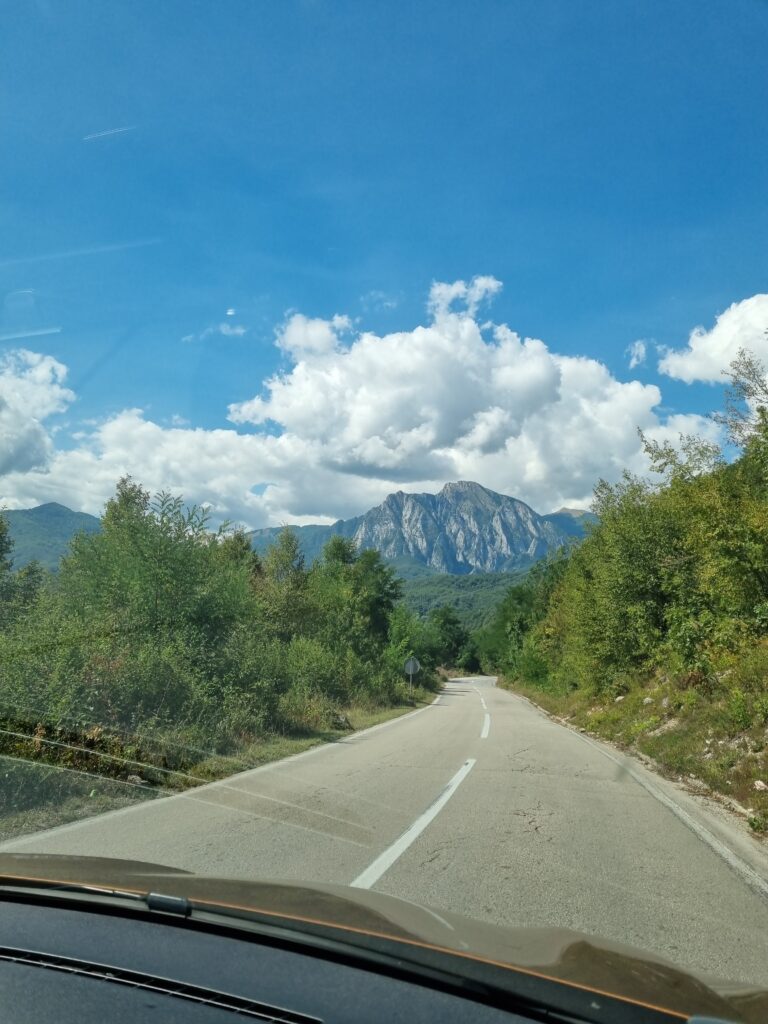
Crossing the border between Bosnia and Herzegovina and Serbia is quick and easy; there was no waiting and no problems. Immediately after the border, you’ll find yourself on a scenic mountain road with good pavement and beautiful views. Shortly after, you pass through the town of Višegrad, famous for its grand bridge over the Drina River, making it a suitable stop for a coffee.
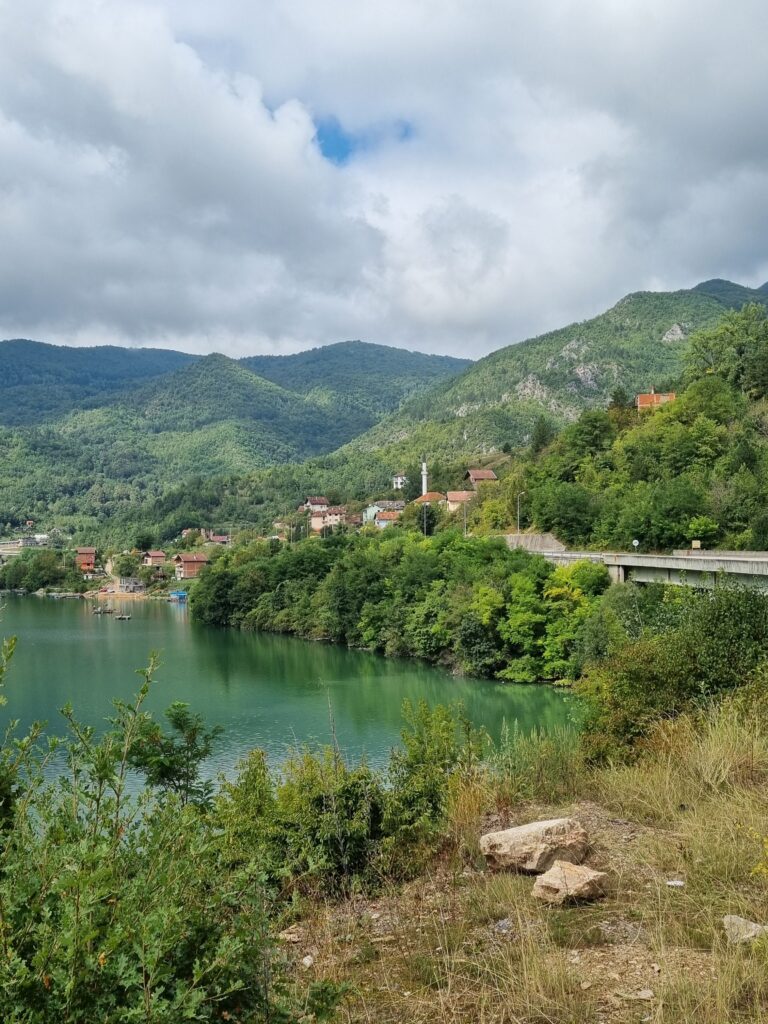
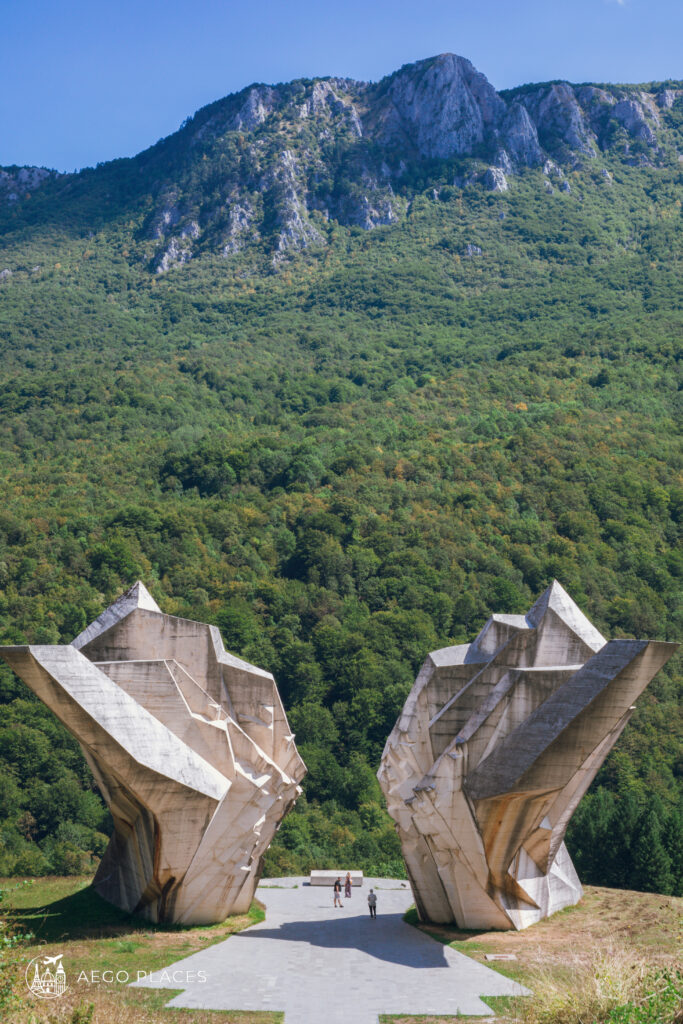
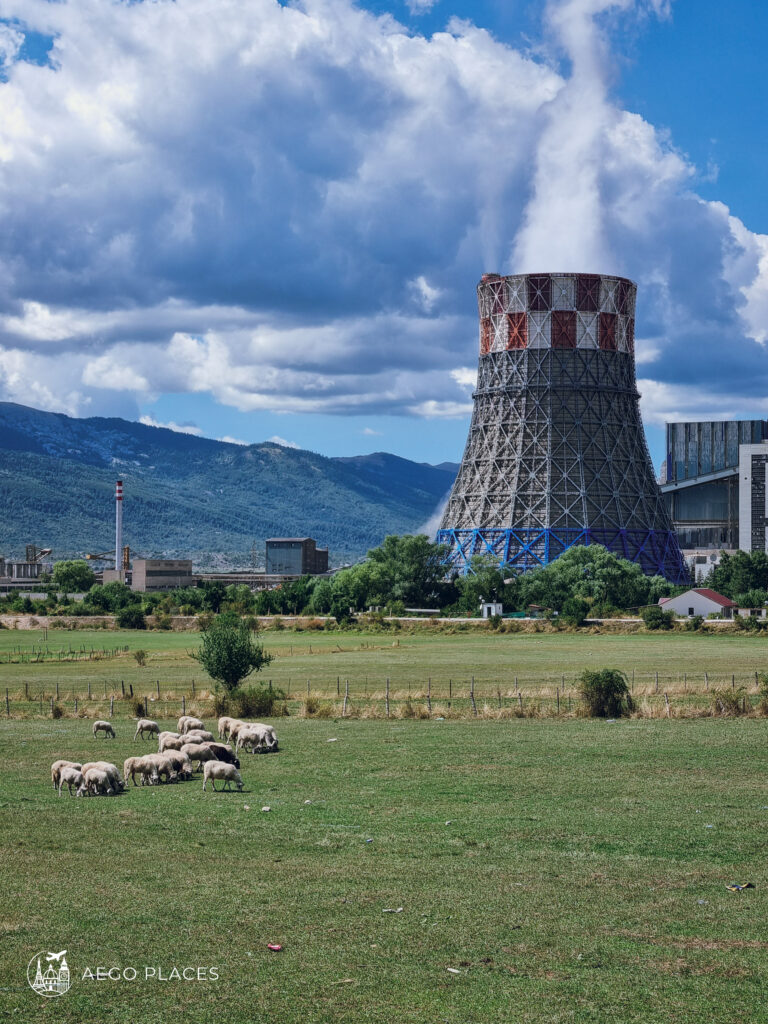
To get to Mostar from there, you have two routes with roughly the same travel time: one via Sarajevo and the other via Foča. We chose the second route because we didn’t have time to visit Sarajevo and preferred to save it for another trip.
The entire road is two-way, but traffic was extremely light, making the journey to Mostar easy and pleasant.
Almost immediately after arriving in Mostar, we headed hungrily to the center to find a place to eat. We were instantly impressed by the town center, which turned out to be very beautiful, clean, and tidy. The minarets and stone buildings were reminiscent of an old Turkish town, but honestly, much more orderly. We sat down at a touristy restaurant, but one with exceptionally good food and generous portions: Tina Irma. Of course, the city has many other restaurants and taverns, but this one, in particular, won us over. We spent the afternoon and evening strolling and relaxing in cafes, finally able to unwind from the drive. The “Stari Most” (Old Bridge), the emblem of Mostar, turned out to be truly beautiful and grand. Although it was destroyed during the Bosnian War in the 90s, the bridge has been restored to its original splendor.
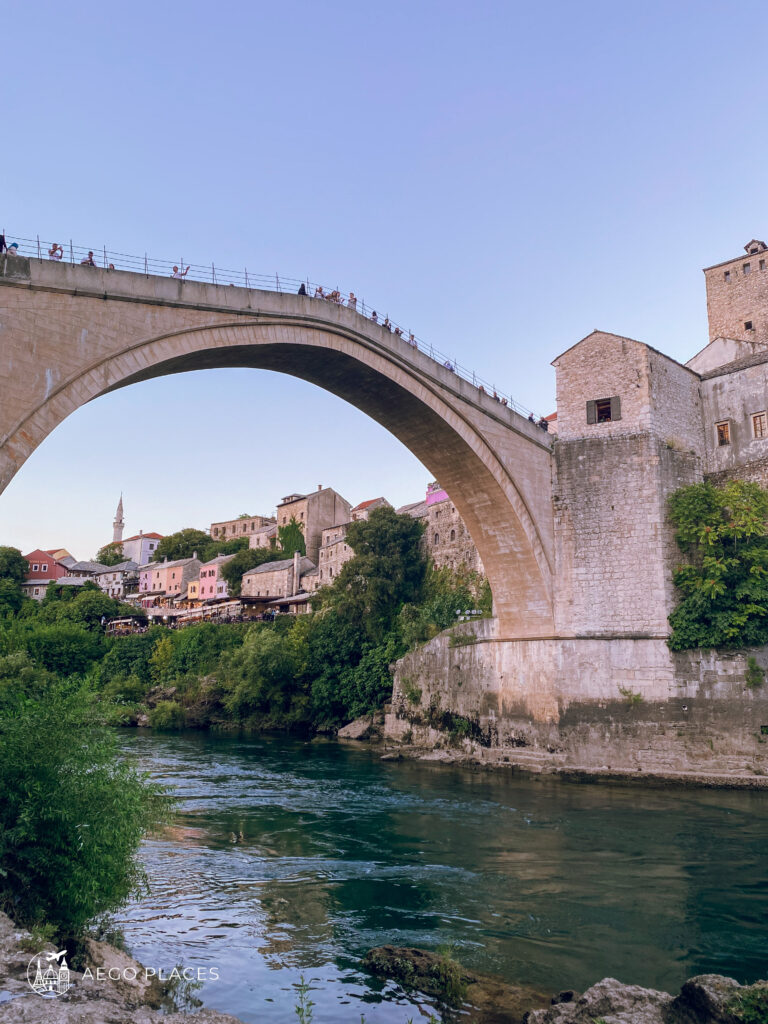
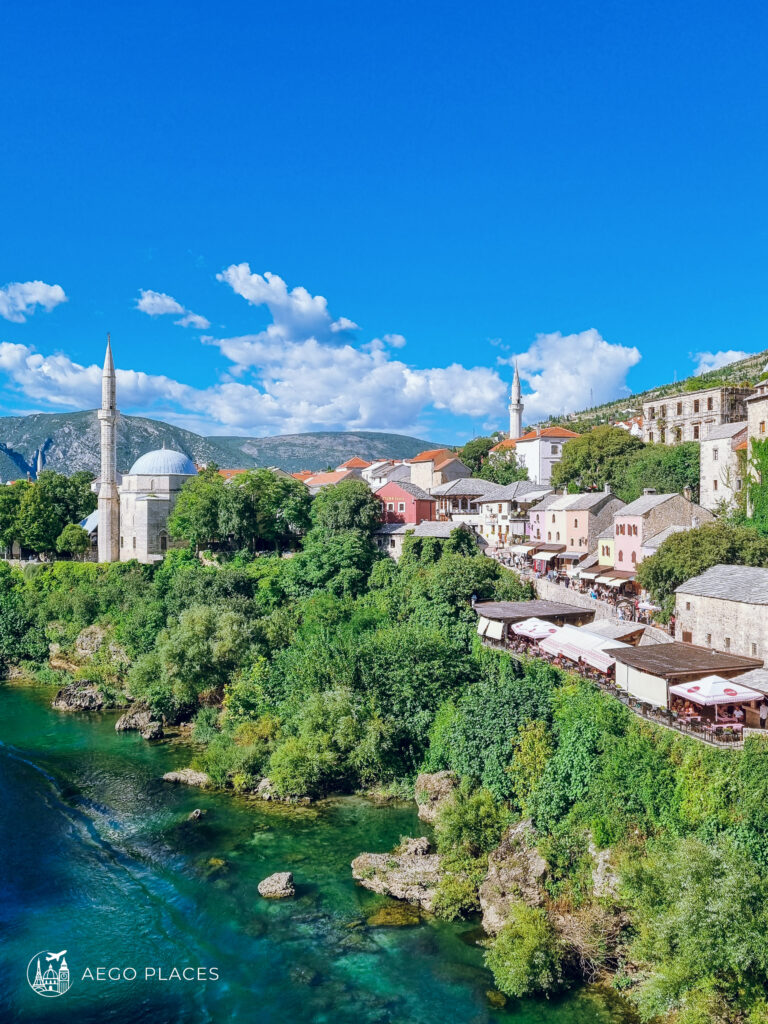
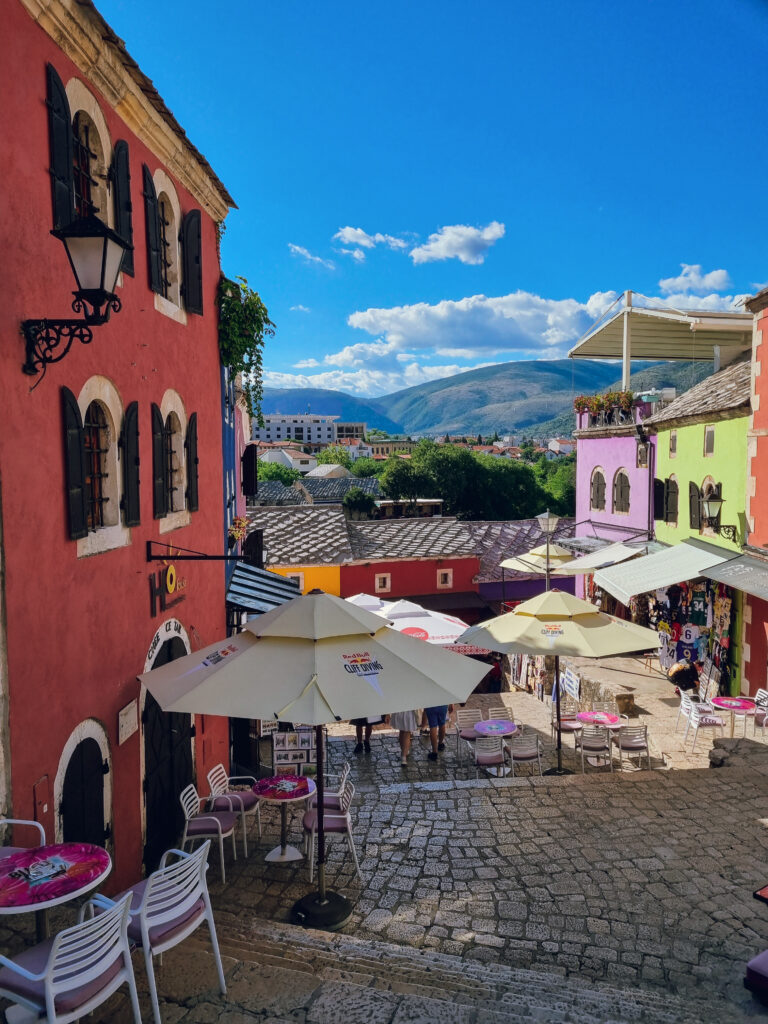
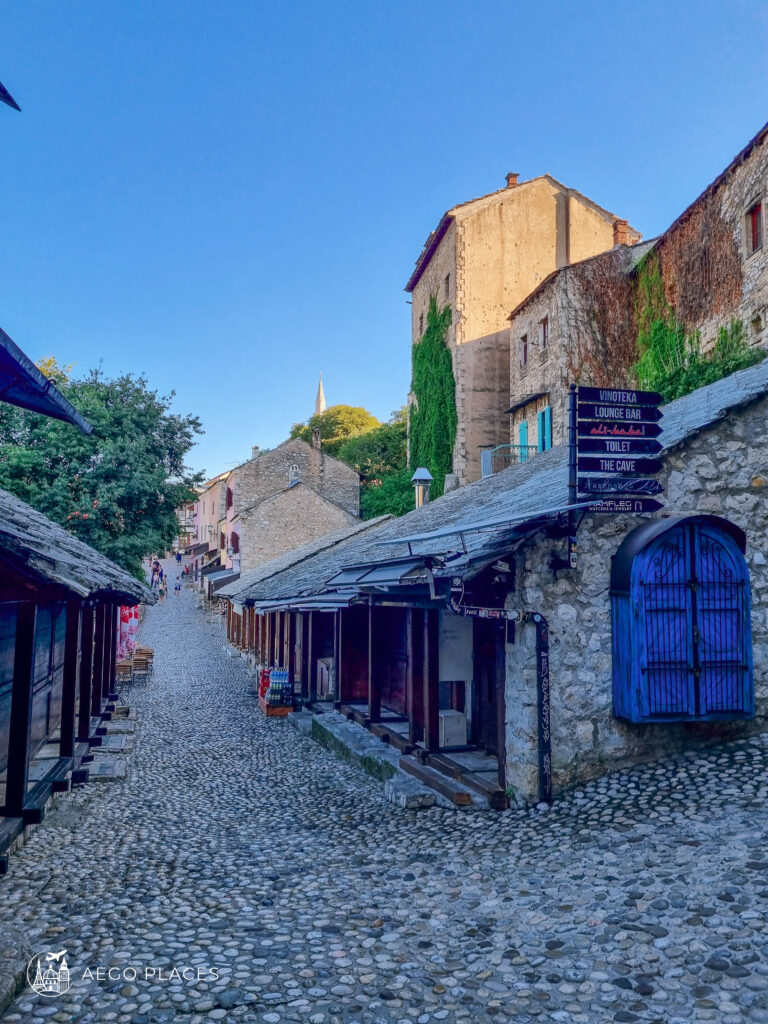
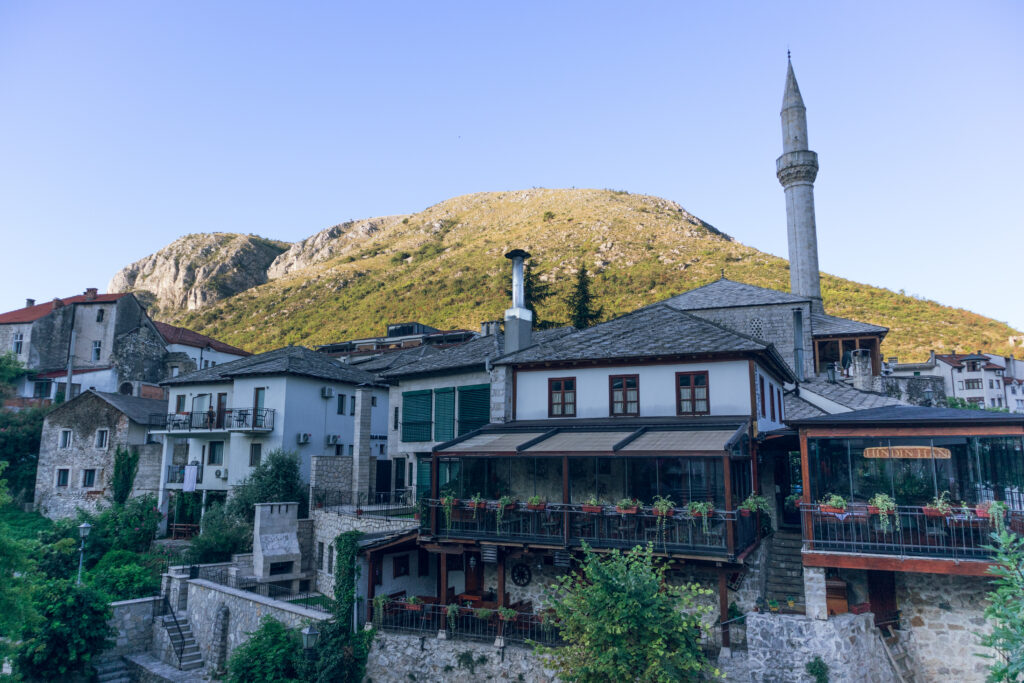

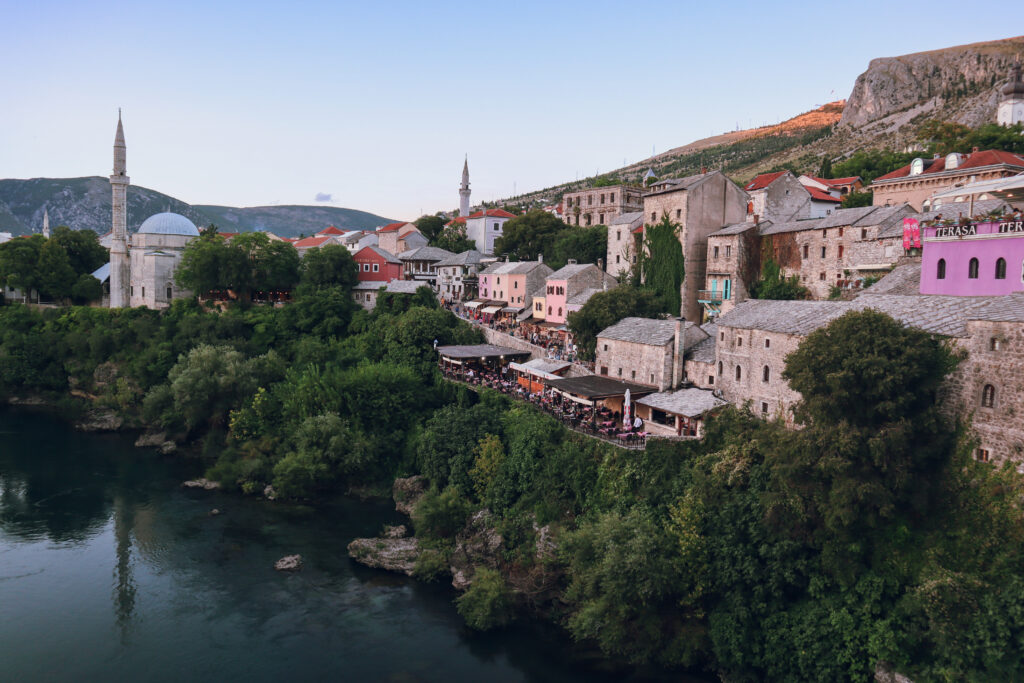
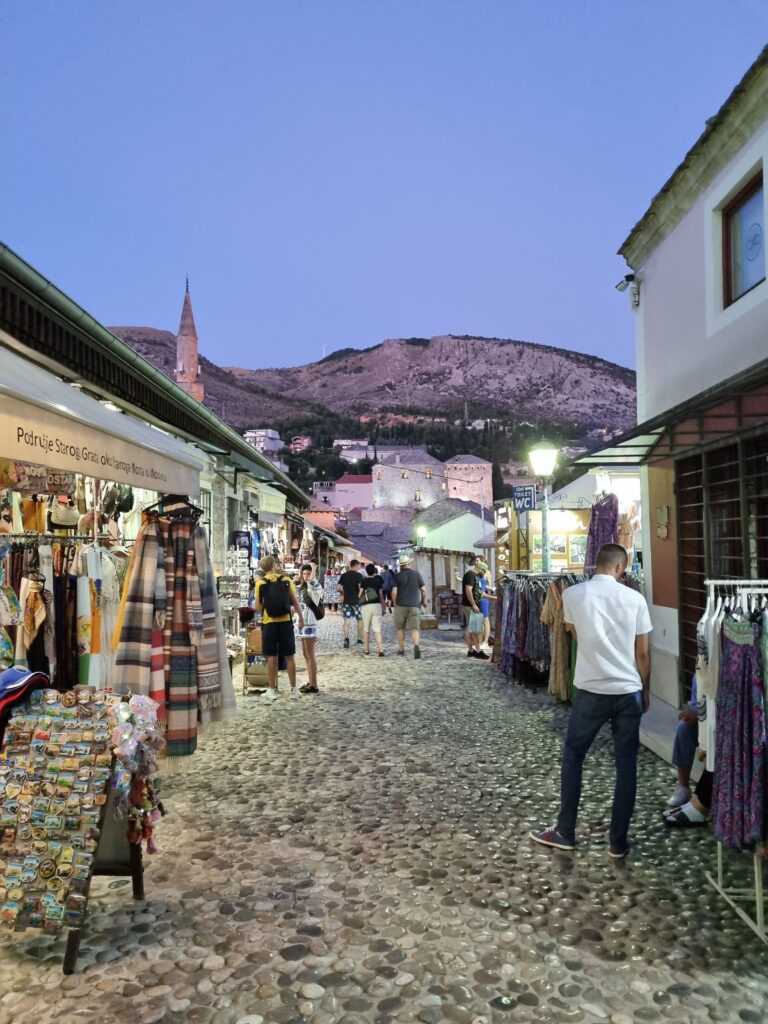
The next morning, we were scheduled to travel to Croatia, but we decided to get up early for one last walk through Mostar’s empty streets, which made the experience even more pleasant.
Dalmatia, Croatia: Pristine Beaches, Ancient Towns and Spectacular Views
For our stay in Croatia, we chose the small town of Omiš, located very close to Split on the coast at the mouth of the Cetina River. We chose it for two reasons: its strategic proximity to most of the beaches and towns we wanted to visit in Dalmatia, and the fact that the town itself offers beautiful views and a charming old center.
Day 1: Arrival in Omiš
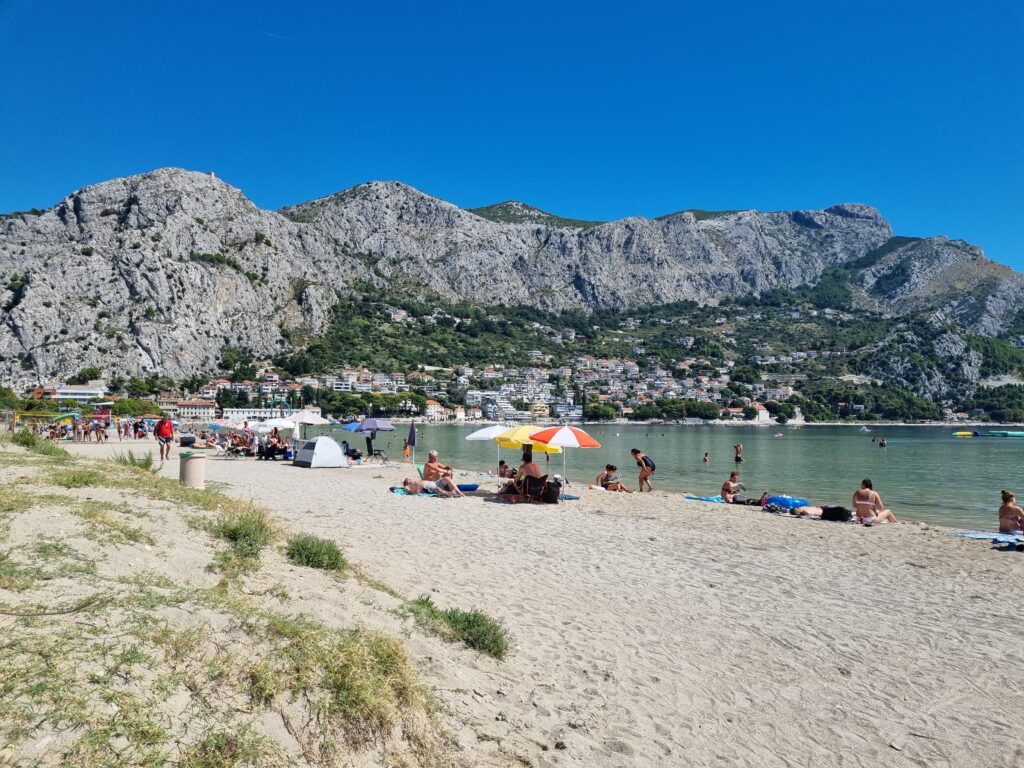
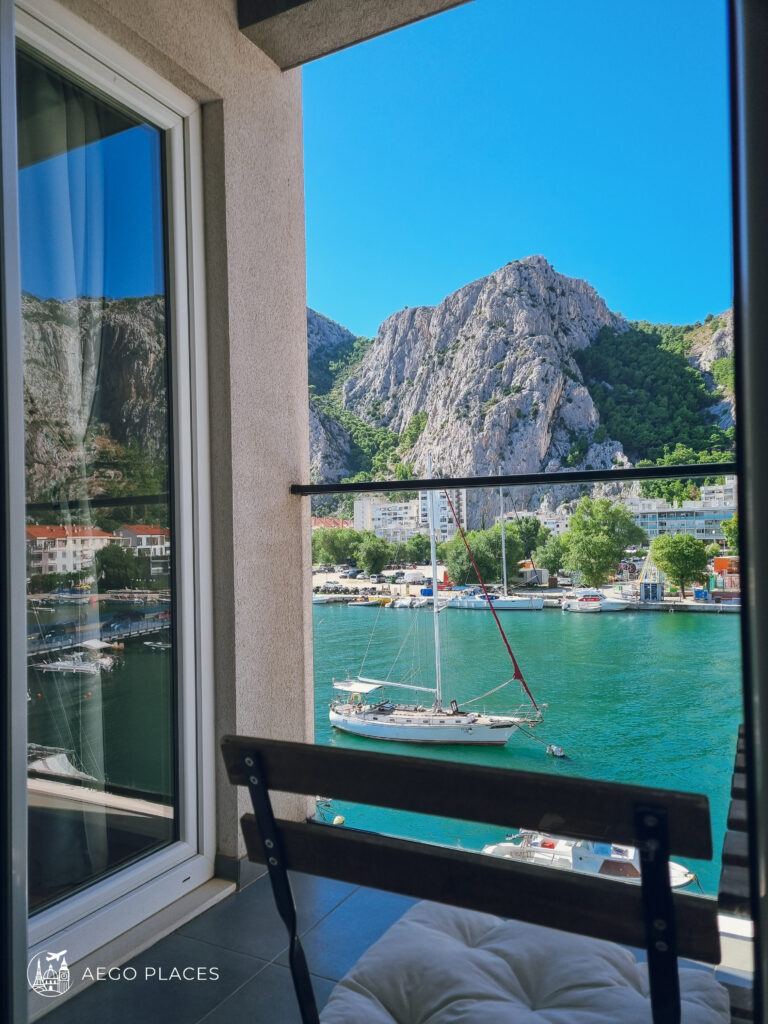
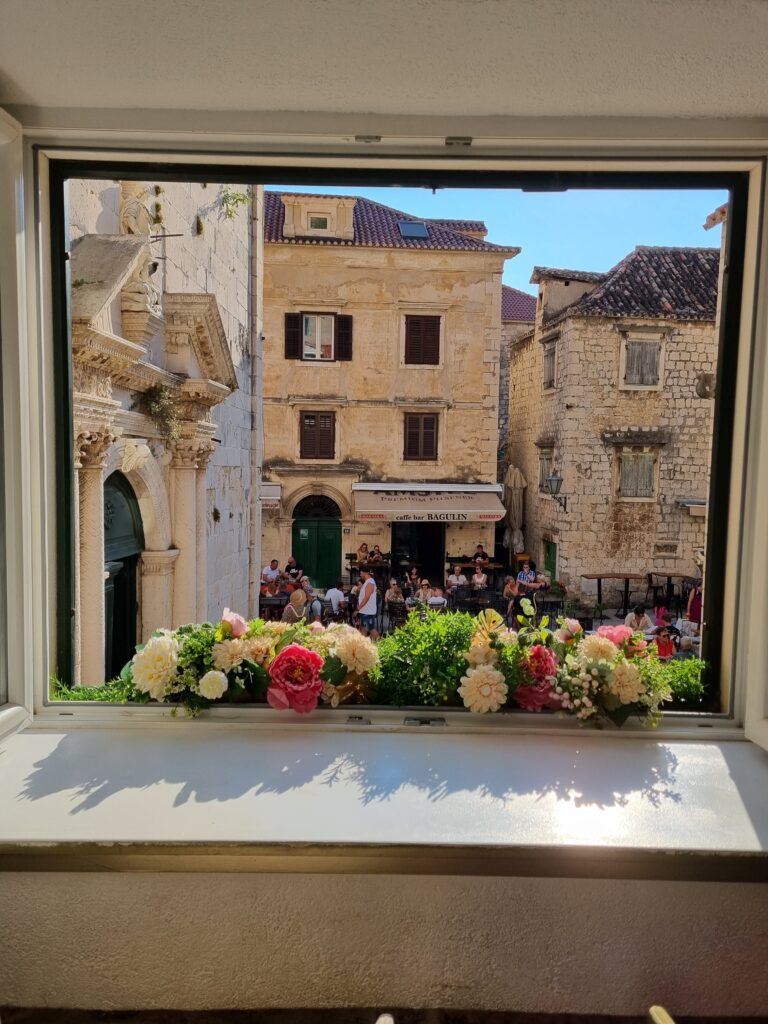
The drive from Mostar to Omiš, where we had booked our accommodation, was about two hours. The road was relatively easy, and the border crossing was smooth. To reach the coastal road, we passed through a very long tunnel under a huge mountain, and in just a few minutes, everything around us changed. We went from a mountain climate to the Mediterranean Sea. Immediately upon arriving in Omiš, we checked into our apartment, which had one of the most beautiful views we’ve ever had. Afterward, we visited the town beach, which turned out to be quite nice. We rested, took a quick walk through the center, and were surprised to find that restaurant prices were significantly higher than in other Balkan countries, including Greece.

Day 2: Mimice beach and a trip to Split
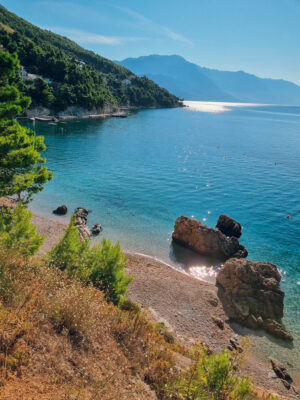
The plan for the next day was to visit the nearby village of Mimice, which has a very beautiful beach, and then visit Split in the late afternoon. The beach was indeed incredible, and it was relatively empty in the morning. Most beaches in Croatia are pebbly, which we were prepared for and had brought water shoes.
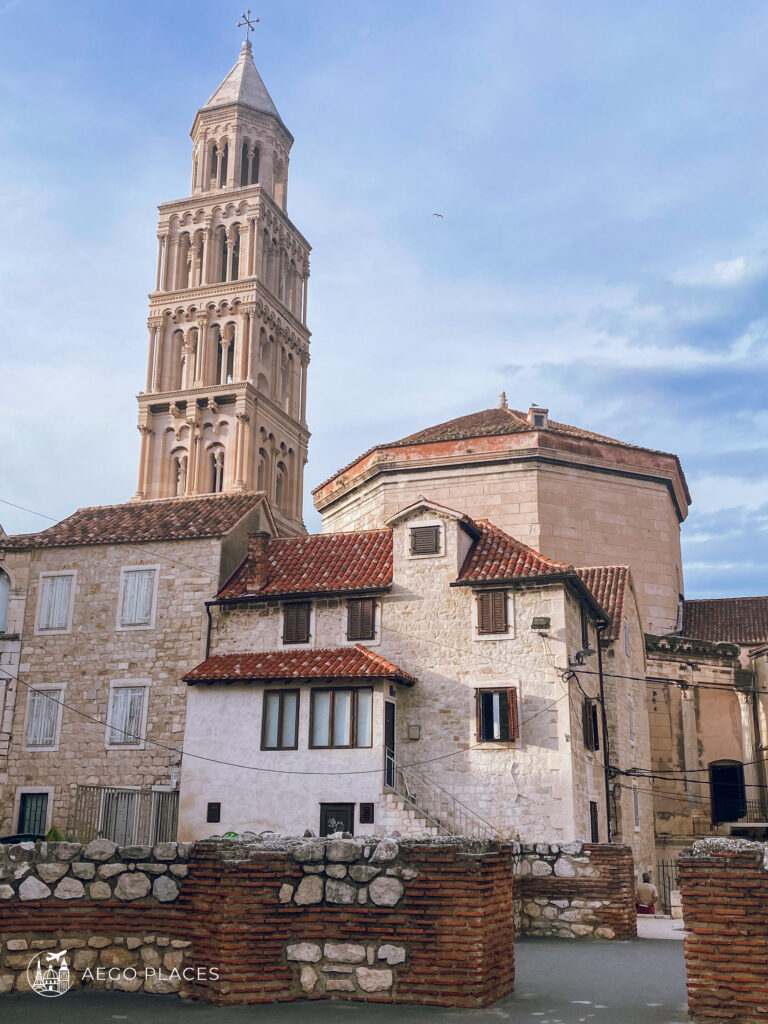
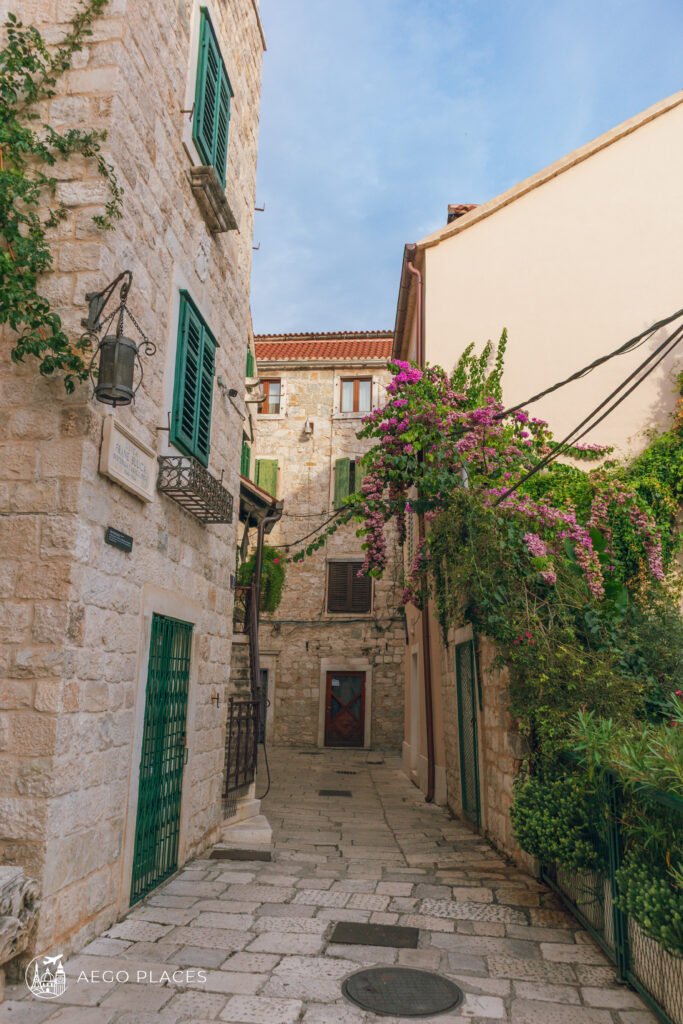
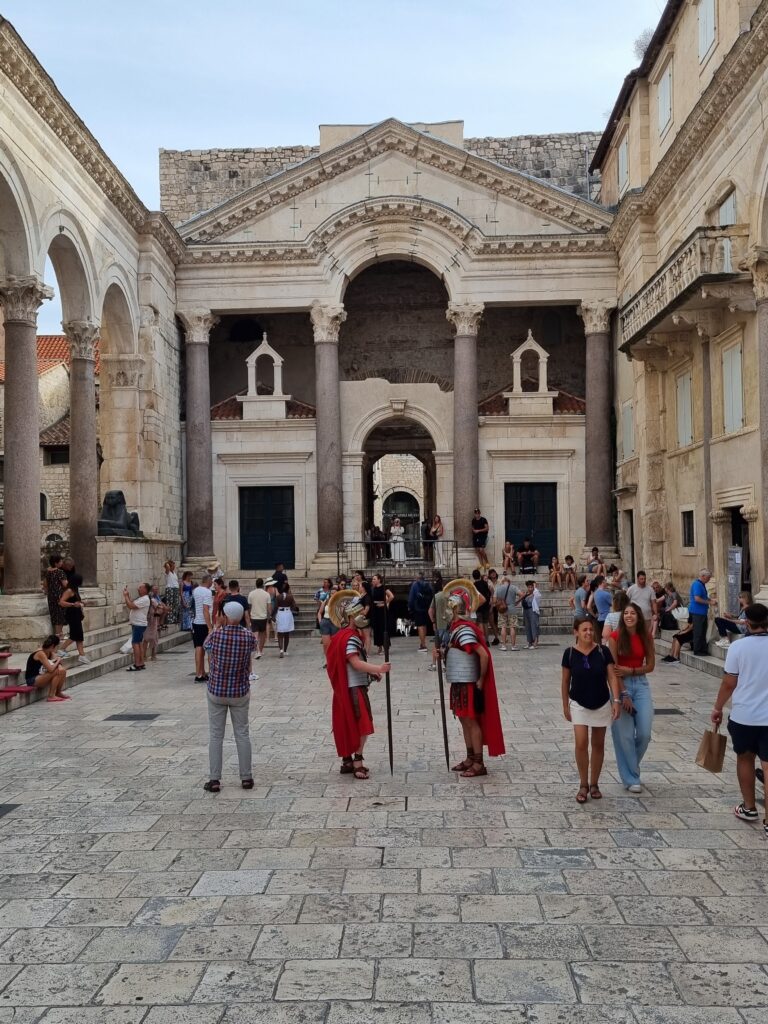
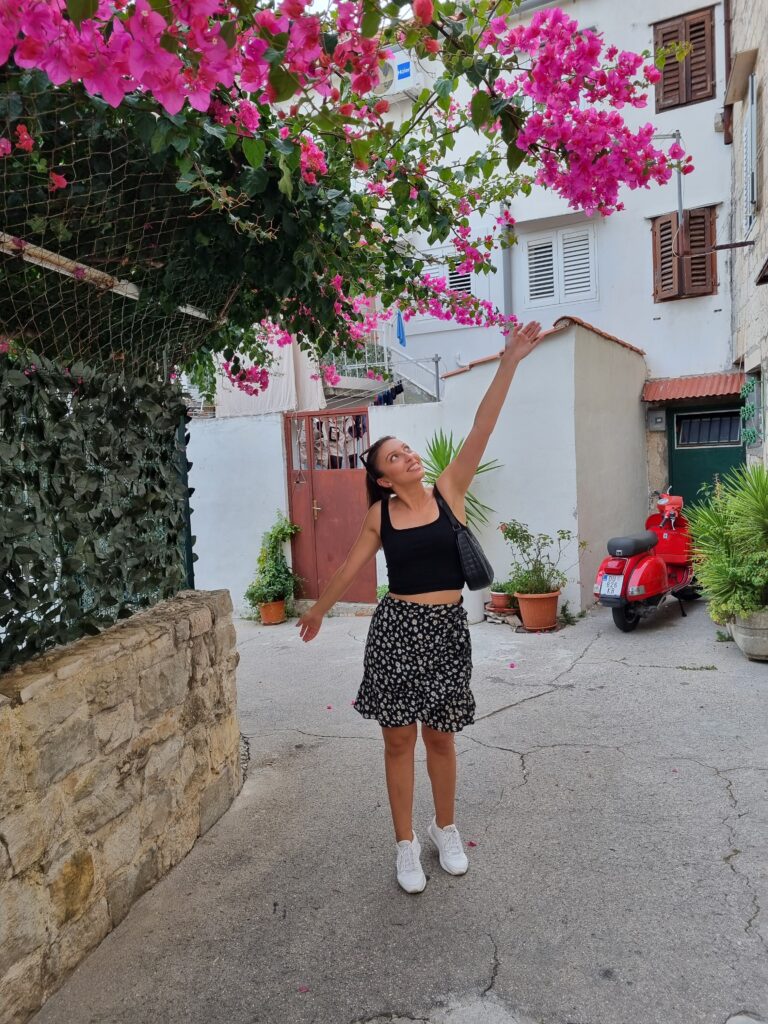
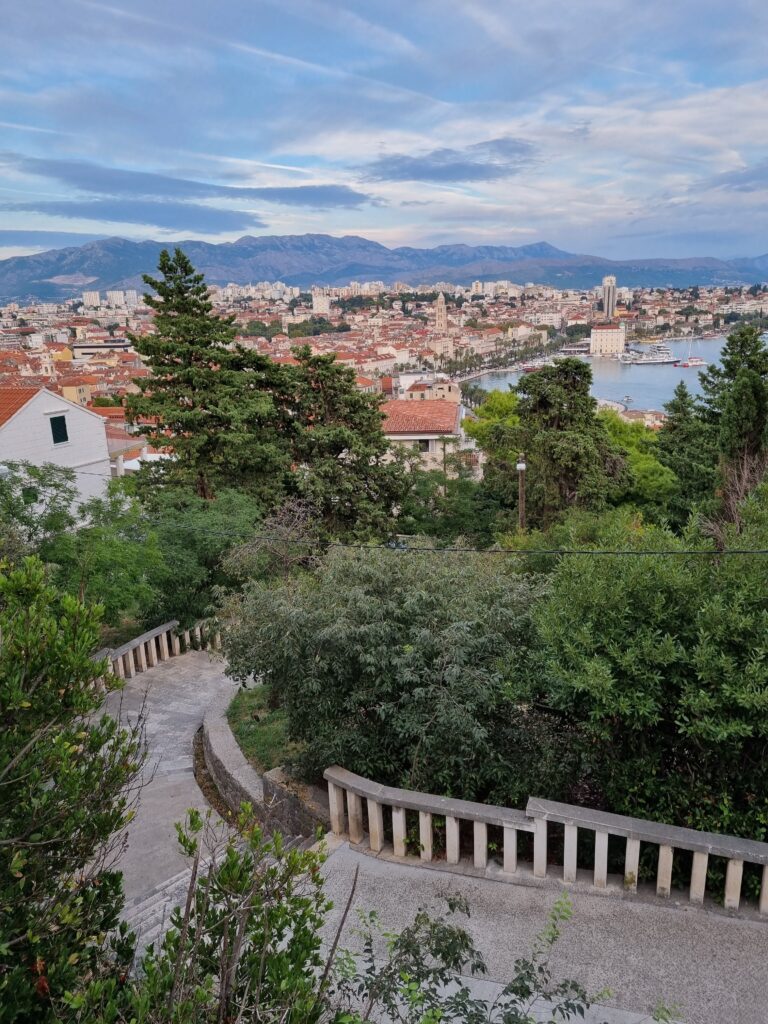
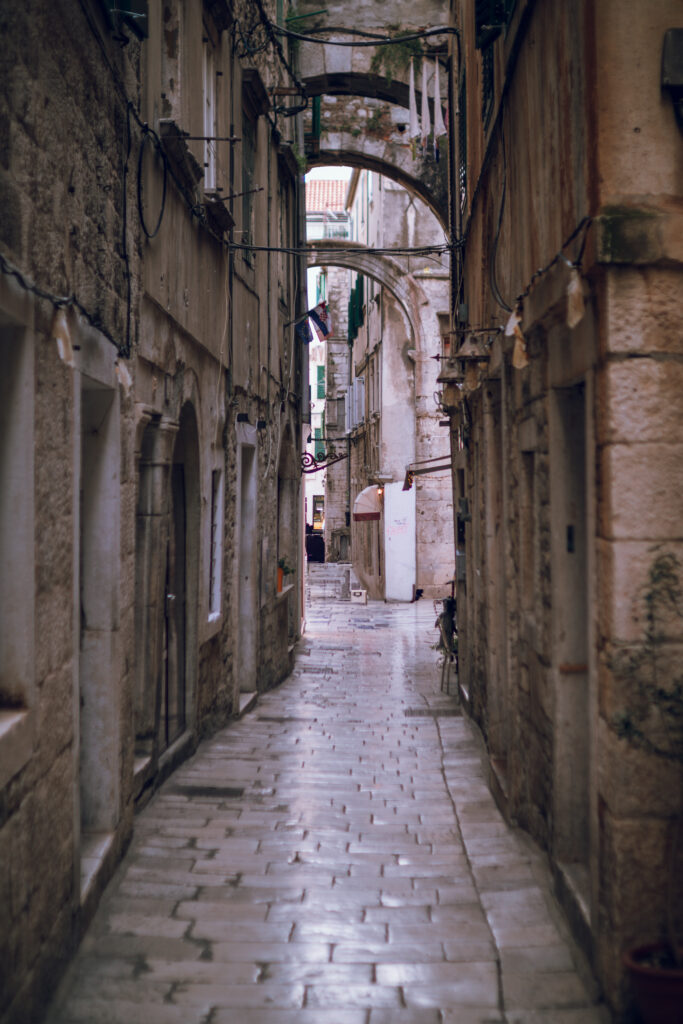
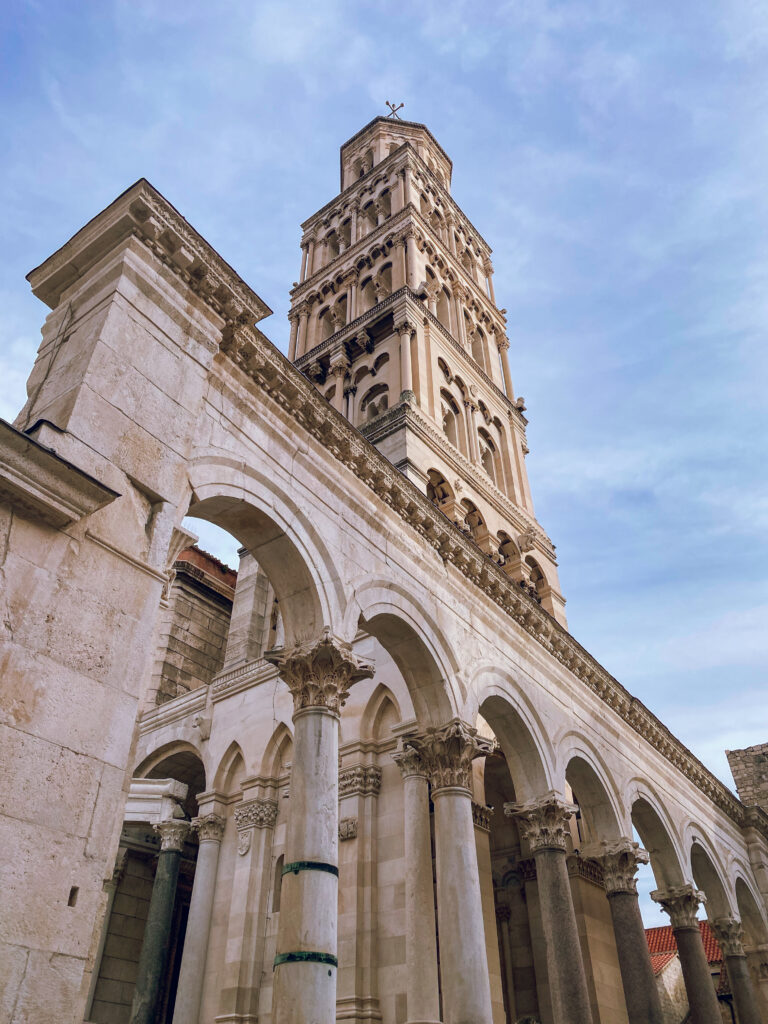
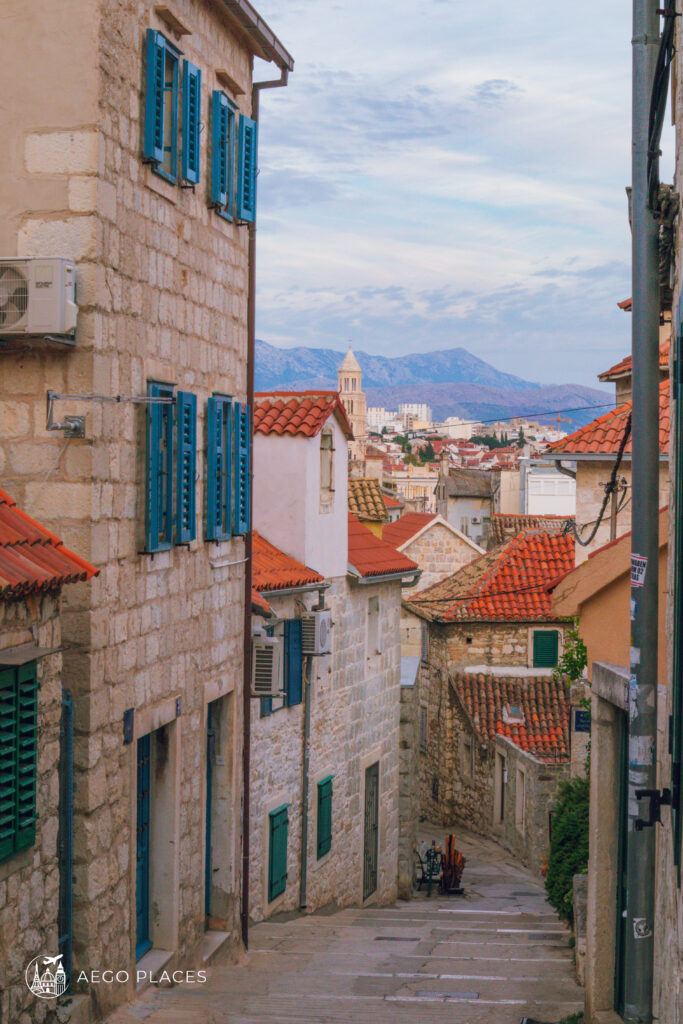
After lunch and a rest, we headed to Split. I can confidently say that Split is one of the most beautiful Mediterranean cities we have ever visited. The center is incredibly clean and well-organized. You can easily get lost in the labyrinth of small streets in the old town, located within the former palace of the Roman emperor Diocletian. From there, we walked along charming cobblestone streets to the Marjan panoramic viewpoint, which offers a breathtaking view of the Split coastline.
Day 3: Visiting Šibenik and Trogir
The next day, we decided to visit Mimice again, but unfortunately, although it was sunny, the weather was quite windy and not particularly suitable for the beach. We decided to visit some of the beautiful old towns around Split instead, where the wind wouldn’t bother us. About an hour and a half’s drive away is Šibenik, a beautiful coastal city with a very charming old town. We decided to stop there first and then pick another place to visit. We knew almost nothing about Šibenik beforehand, but we absolutely loved it. In the old town, you feel as if you are in Italy; besides its beautiful narrow streets, the city is full of restaurants and cafes.
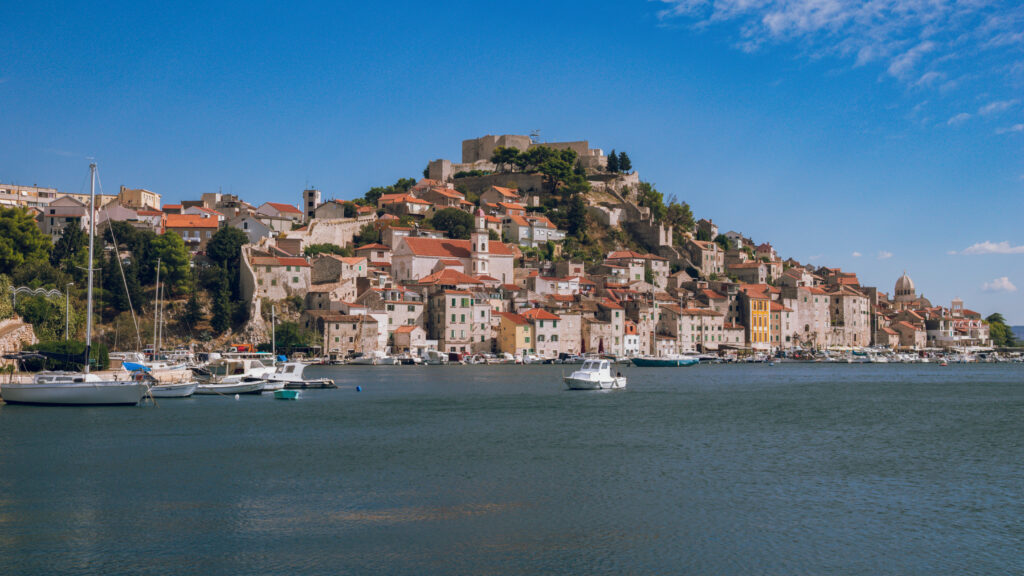
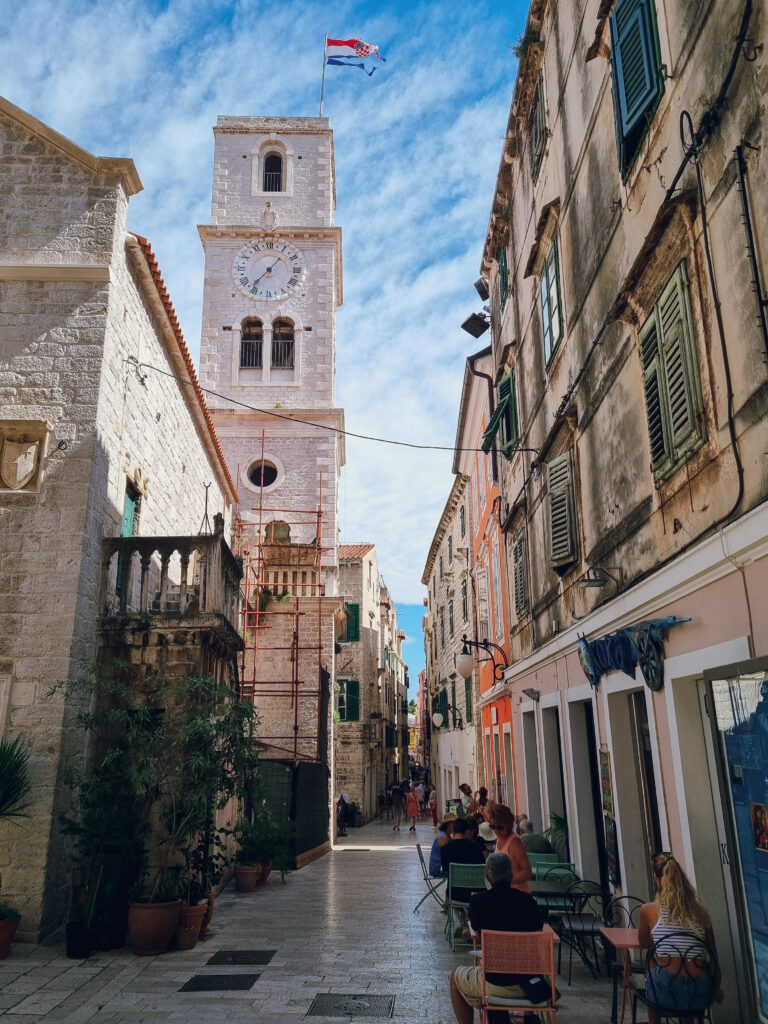
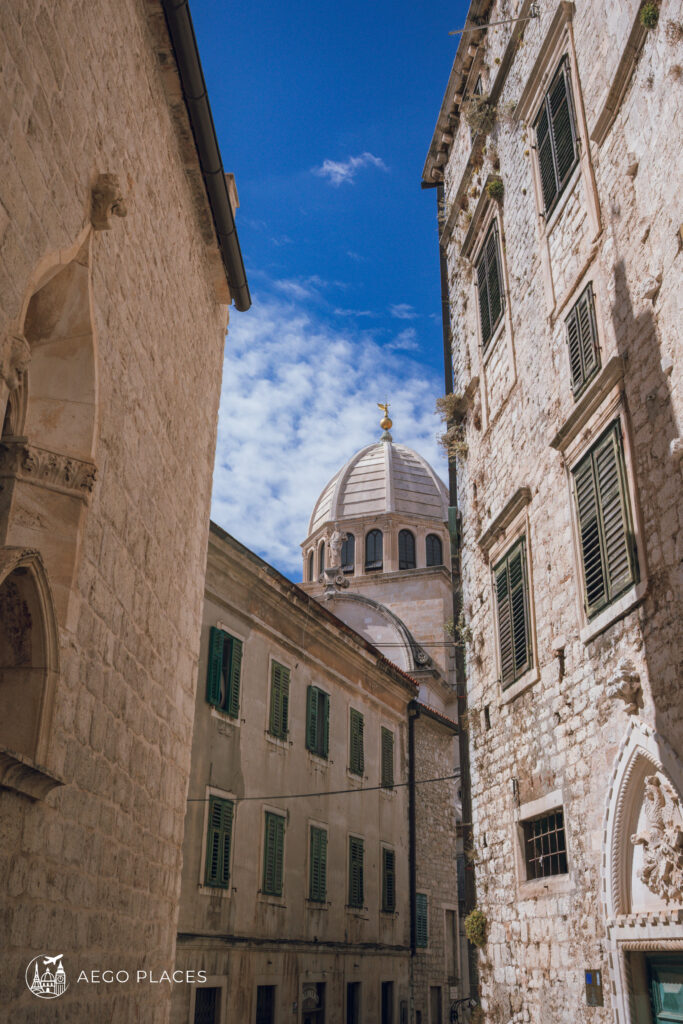
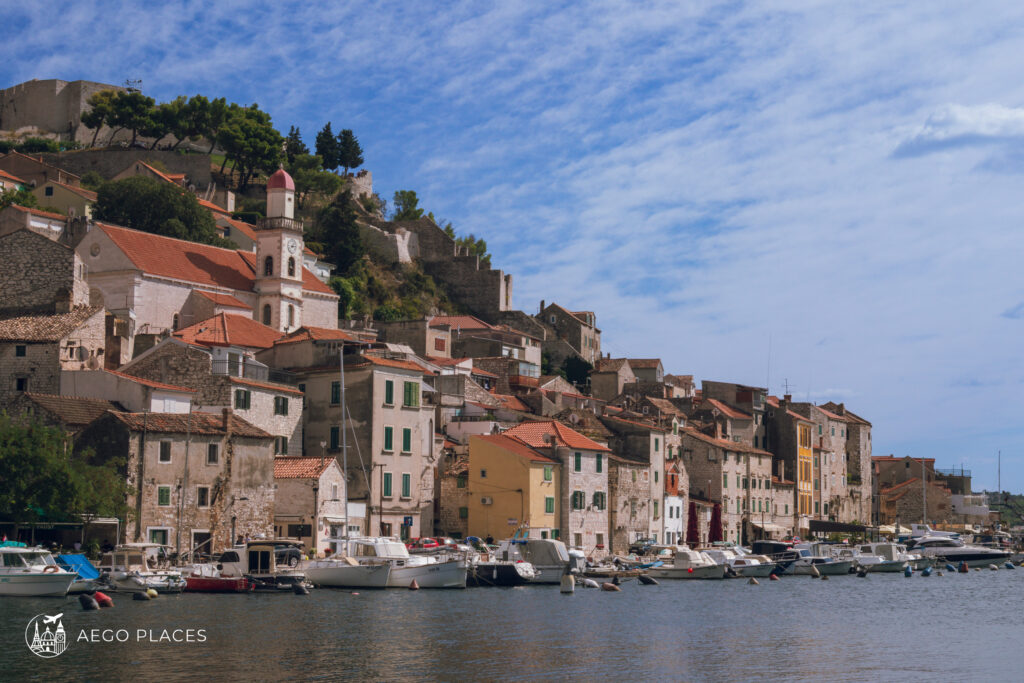
After exploring the lovely old town, we picked a restaurant, had a late lunch, and chose our next destination: Trogir.
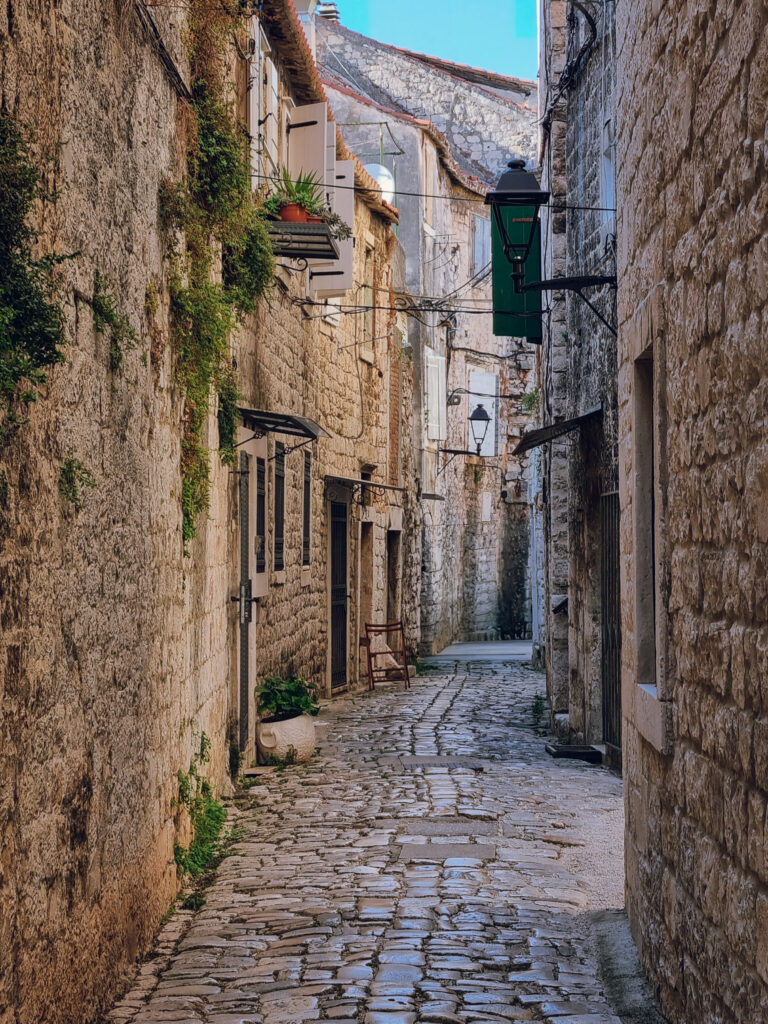
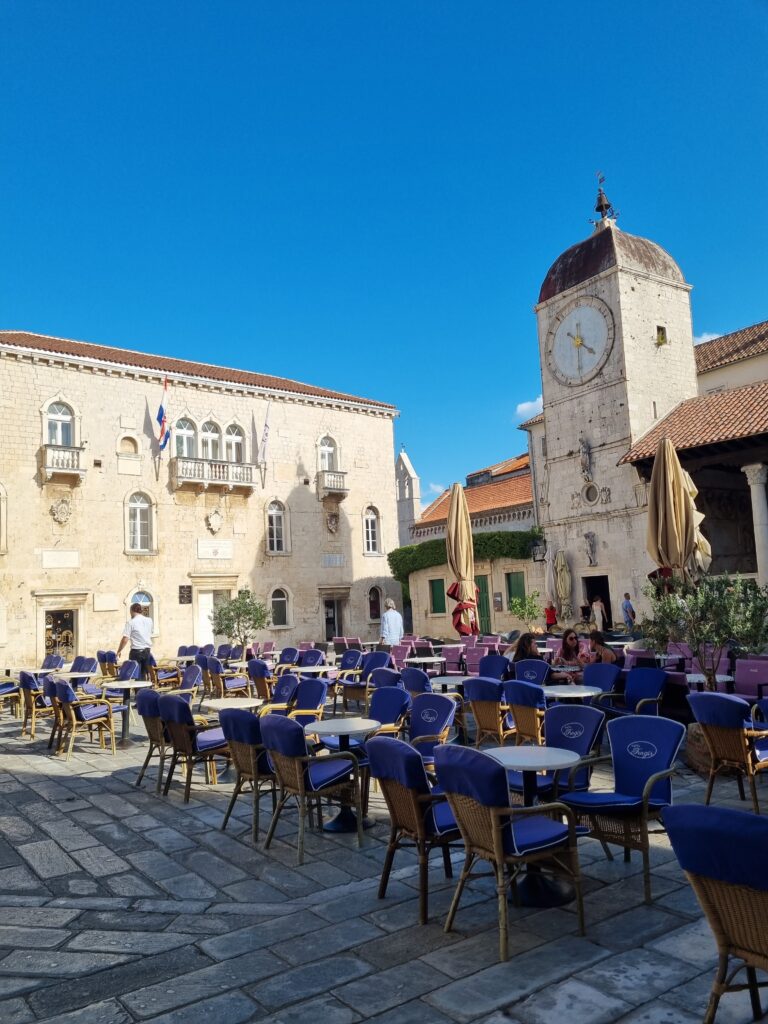
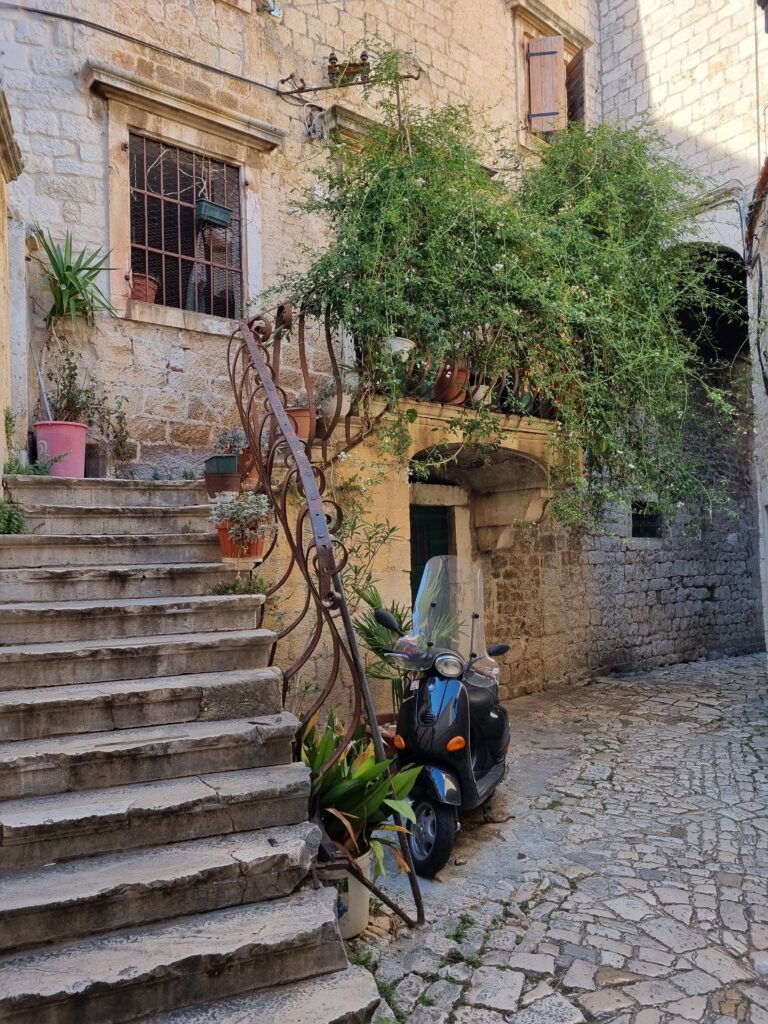
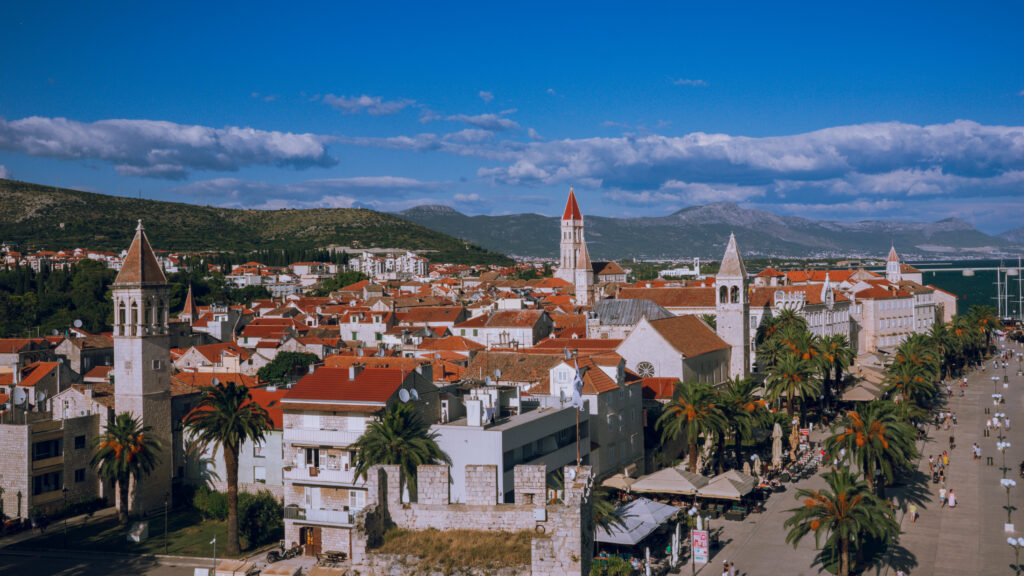
Trogir is a small ancient town surrounded on all sides by well-preserved stone walls. We reached it via a beautiful scenic road along the sea, which offered incredible views of small bays and islands. We arrived in Trogir in about an hour, parked, and entered the old town for a walk. Unlike Šibenik, Trogir was much more crowded and felt more commercial and touristy, but that didn’t stop us from having a good time. Finally, we climbed one of the towers on Trogir’s wall and enjoyed the panoramic view over the town.
Day 4: Punta Rata Beach
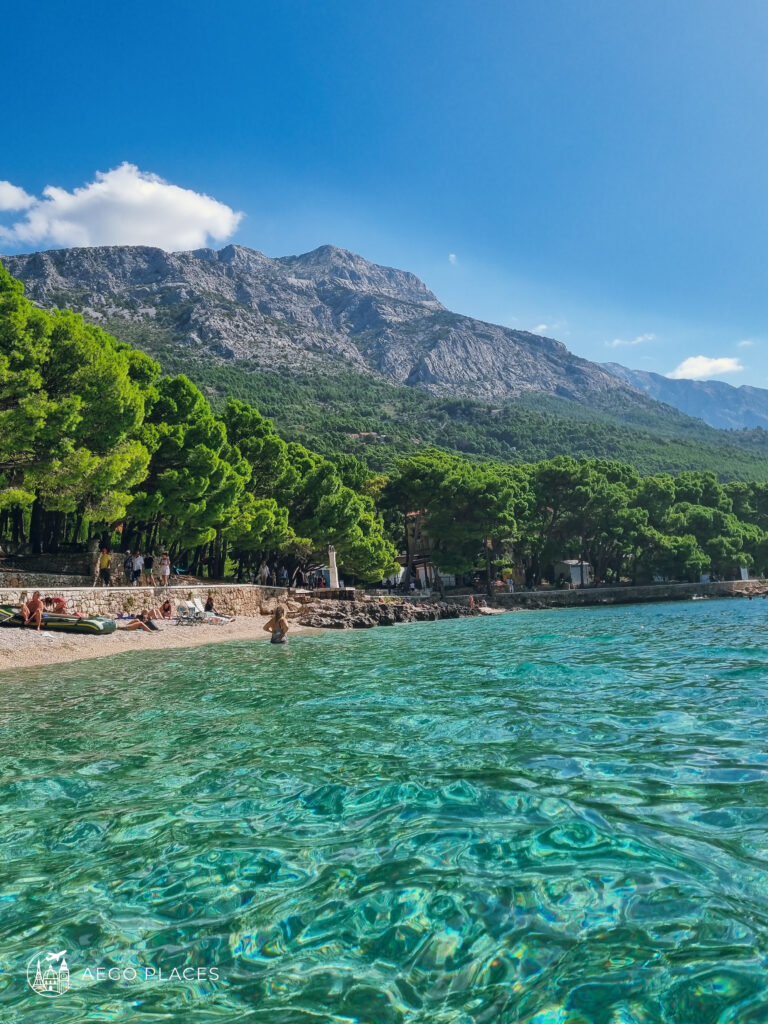
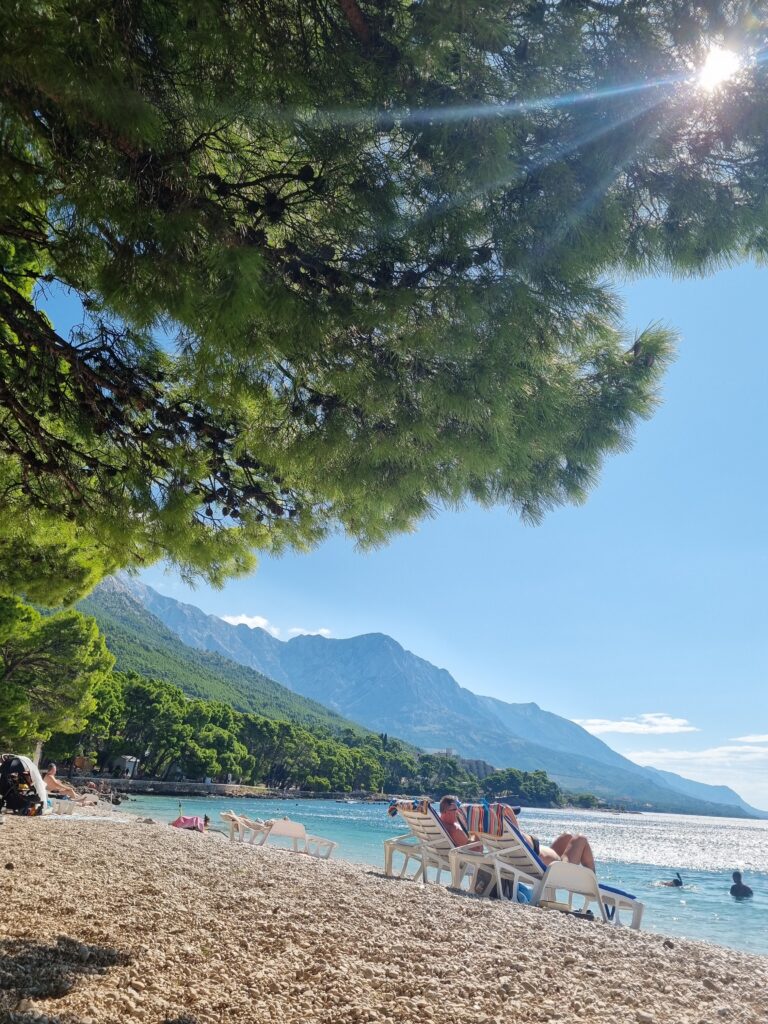
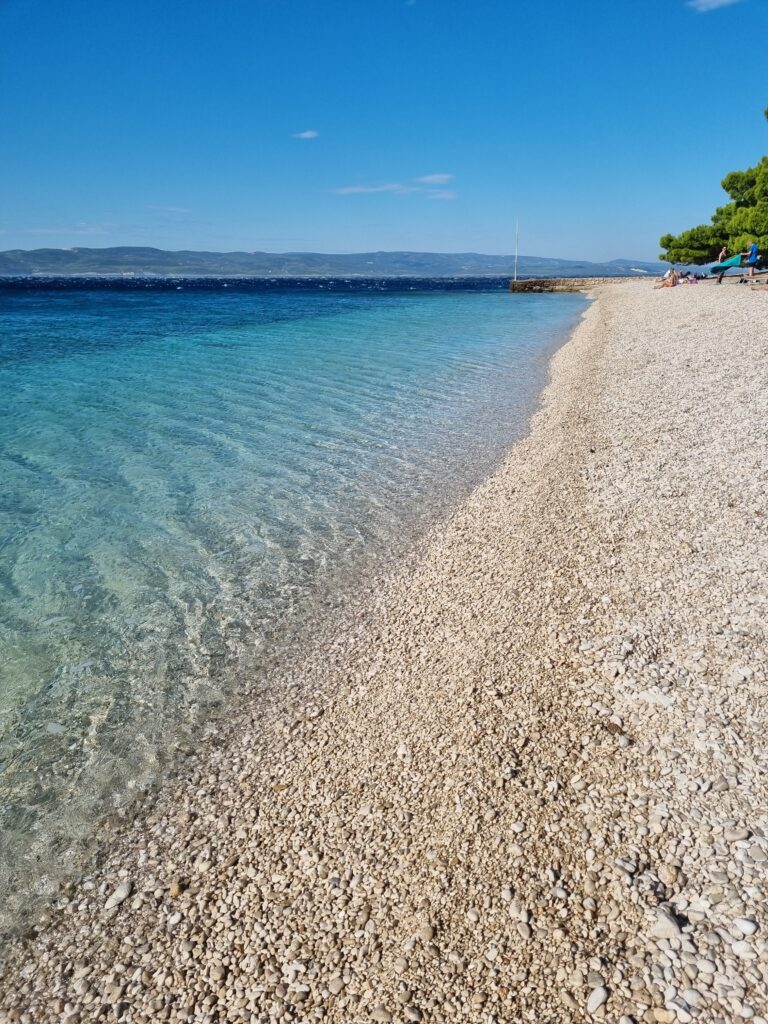
The next day, the weather was less windy, and we decided to visit another beach we had bookmarked near Omiš: Punta Rata. It’s a pebbly beach, part of a long stretch of beaches connected by a path. Along the entire path, tall pine trees with large crowns provide nice shade over half of the beach strip. Because of the white seabed, the water looks bright blue, which, in contrast with the high mountains behind the beach and the bright green pine trees, creates an unforgettable landscape. The water was full of small fish, and we definitely enjoyed the beach for snorkeling as well.
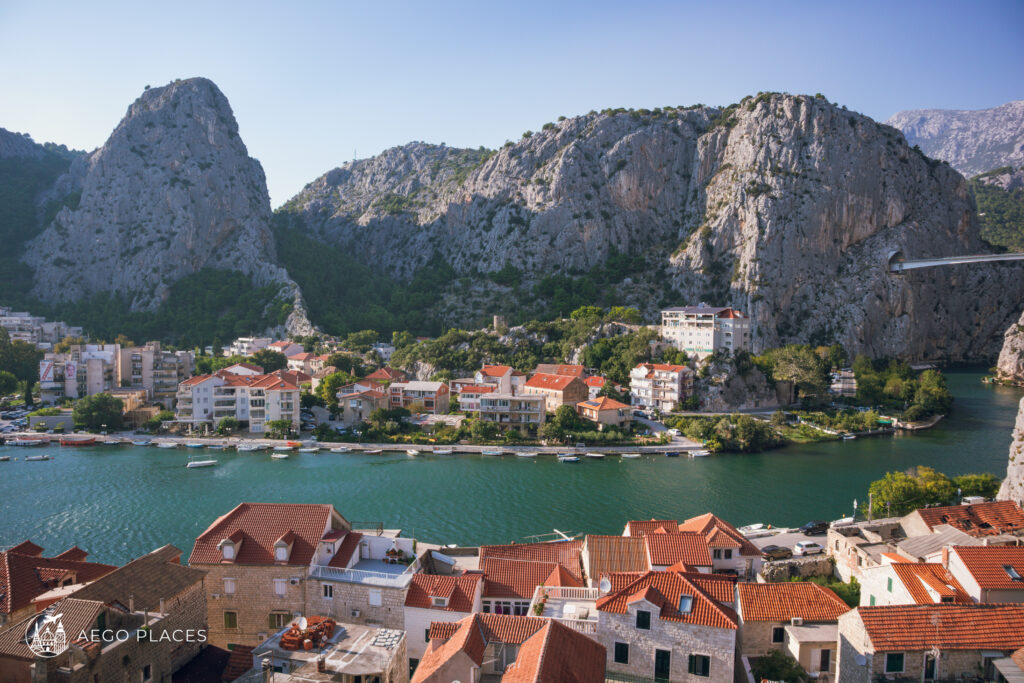
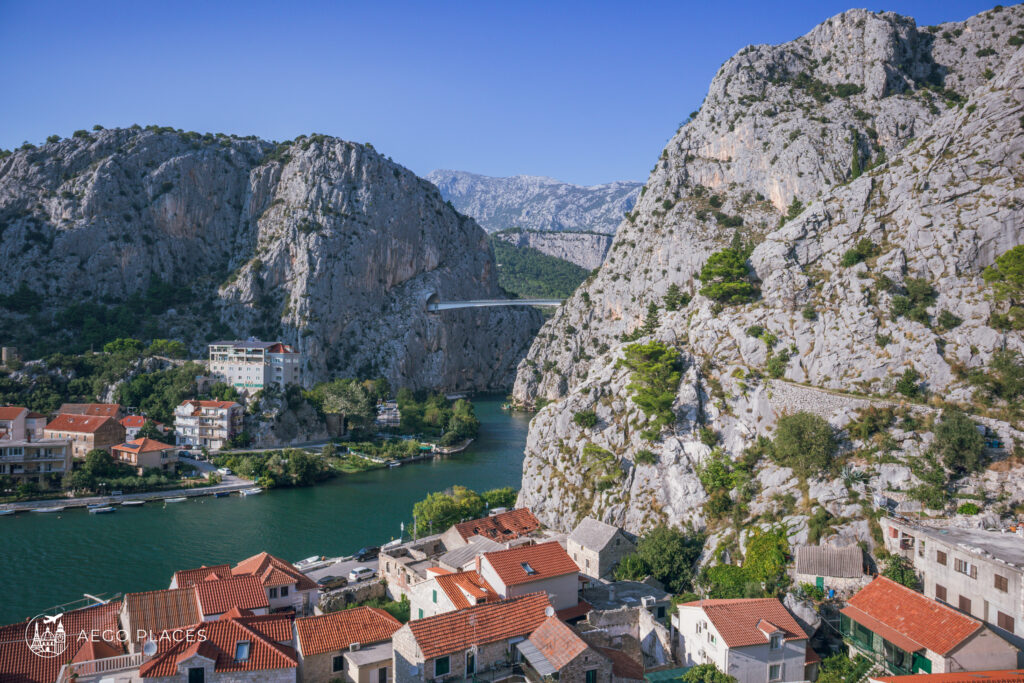
After resting up after the beach, we decided to climb up to the fortress of Omiš, which also offers a beautiful panorama over the town, the sea, and the Cetina River flowing into it.
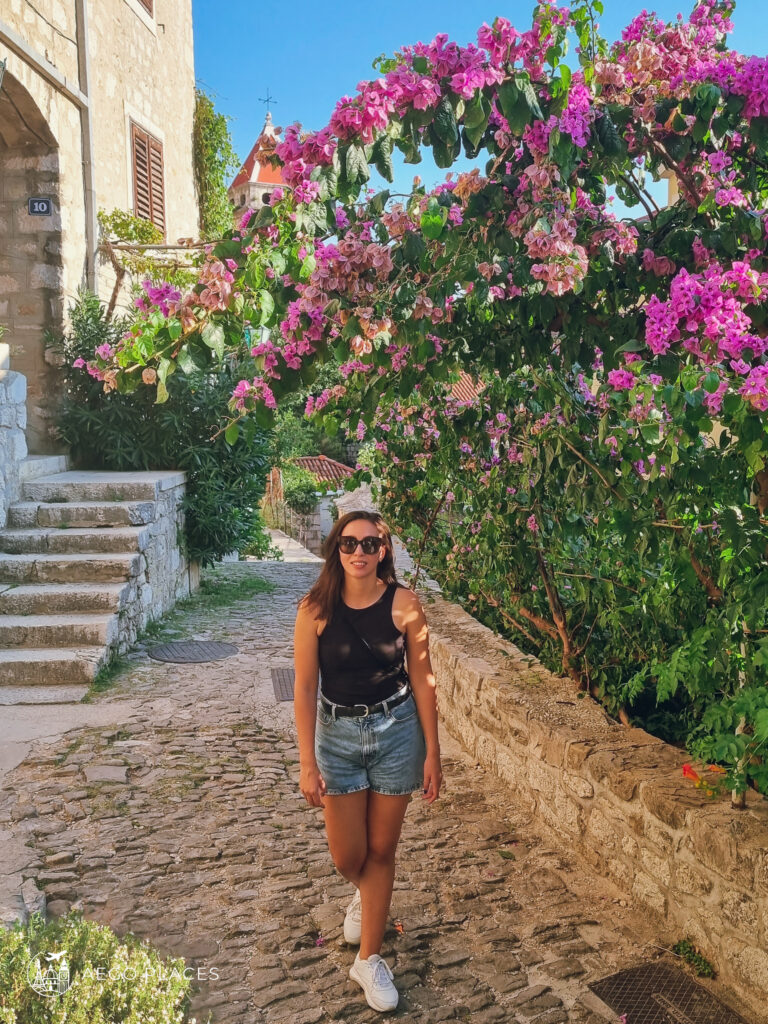
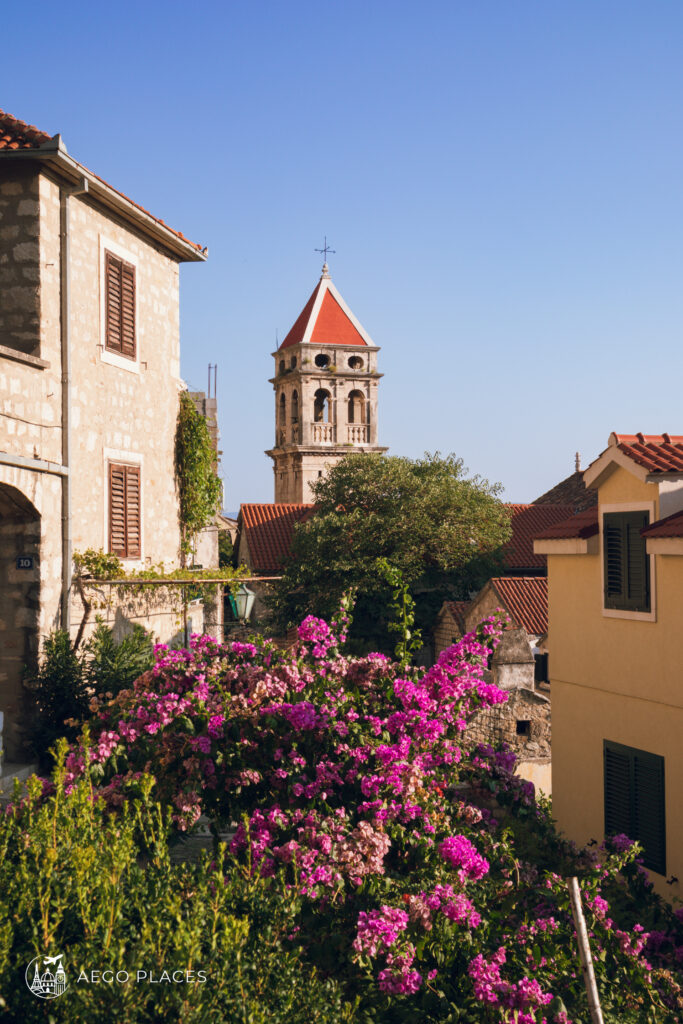
In the evening, we visited a restaurant in a mountain village recommended by our host in Omiš. Since the restaurant is popular, we made a reservation in advance. The food and atmosphere were indeed incredible. We highly recommend it if you are visiting the area— Konoba Palacio
Day 5: Excursion to Brač Island and the Famous Zlatni Rat Beach
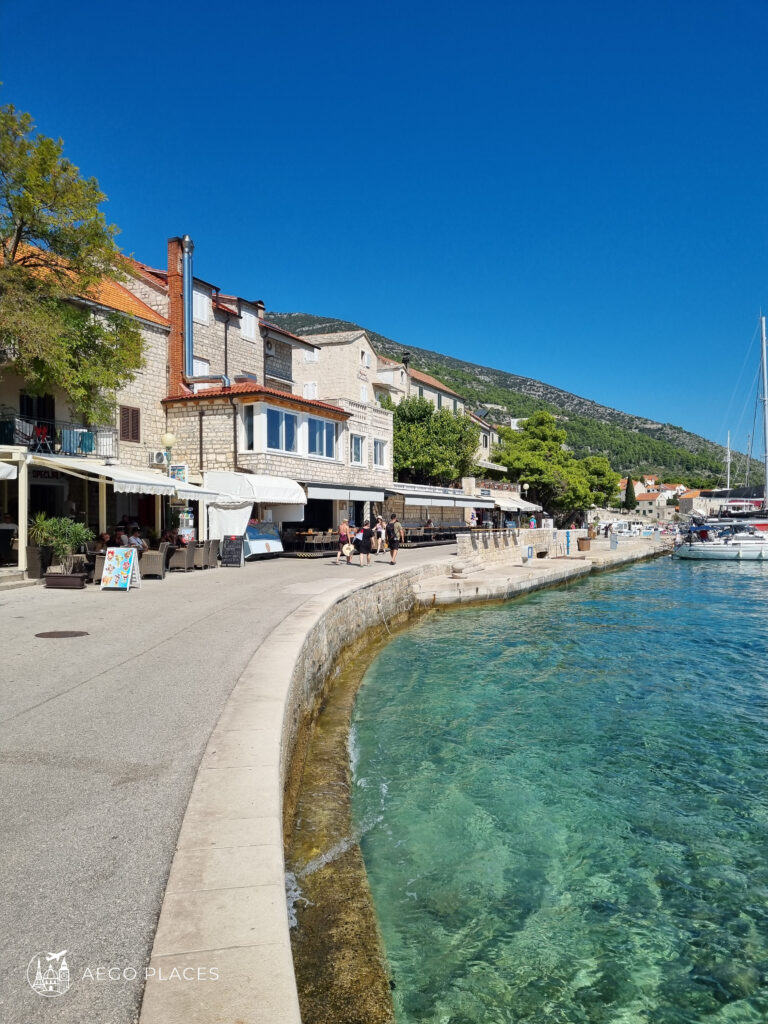
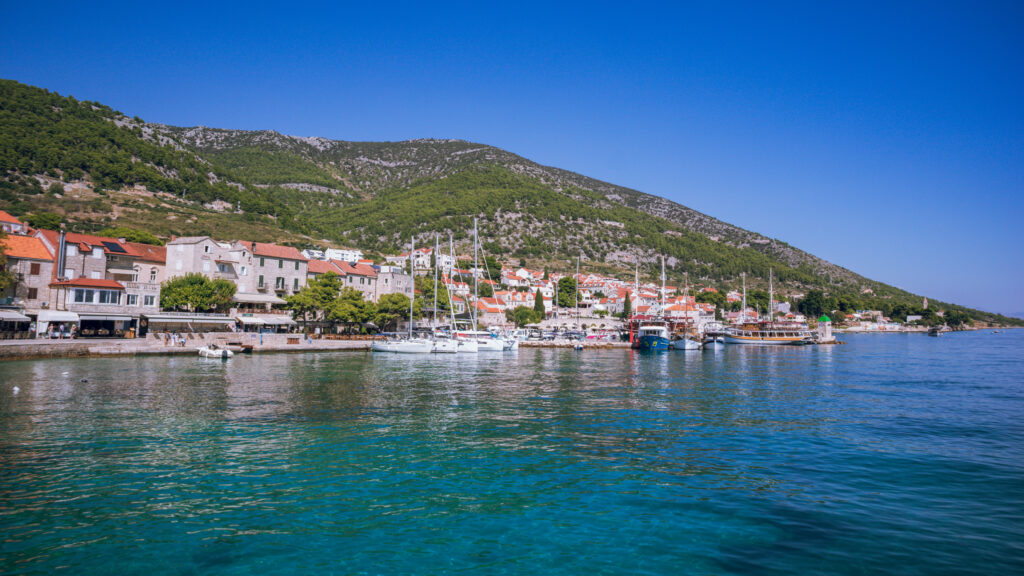
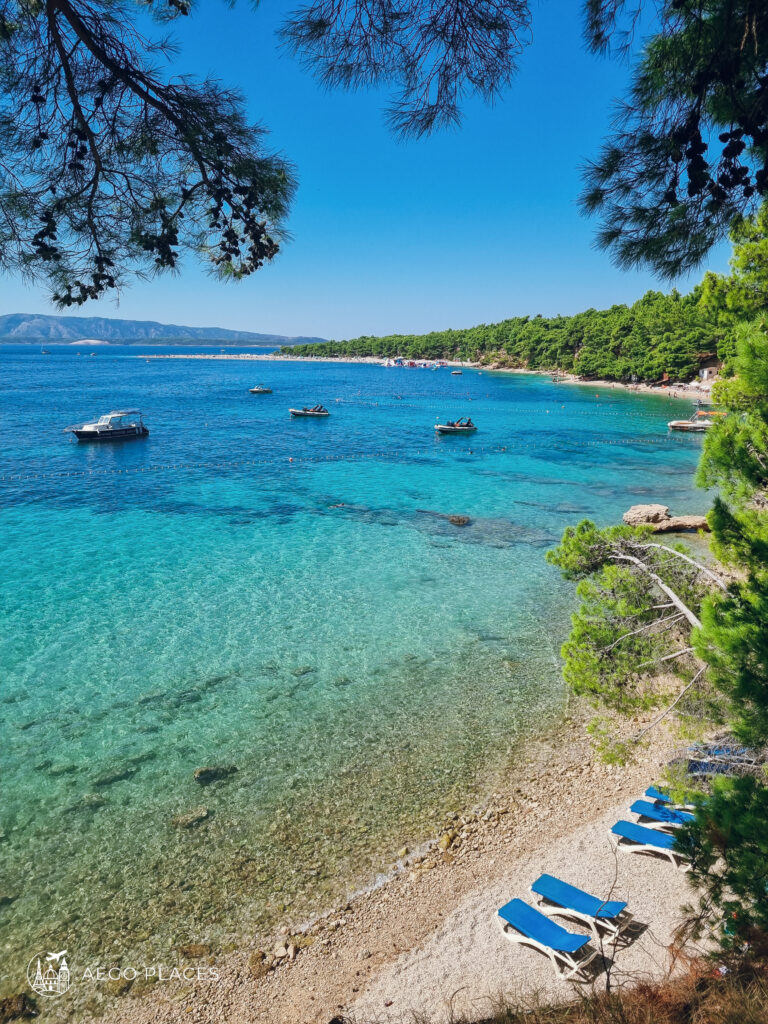
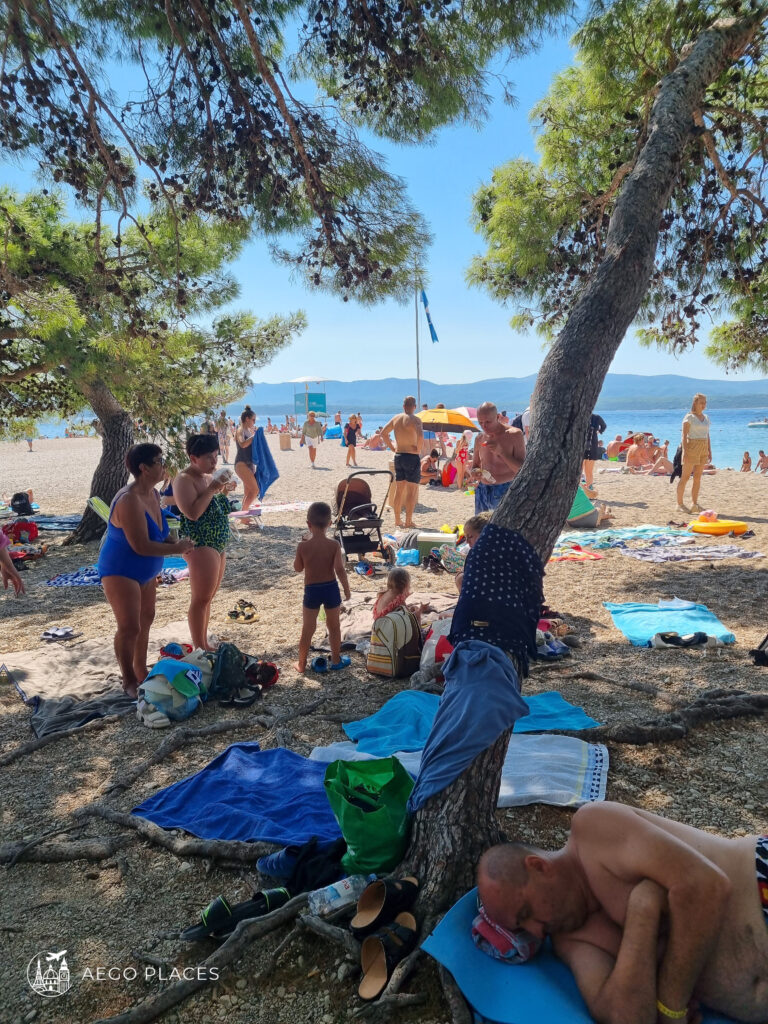
Opposite Omiš lies the island of Brač, famous for its Zlatni Rat (Golden Horn) beach, one of the most popular in Croatia. Boat trips were offered from Omiš, and we booked ours a day or two in advance. Traveling to Brač, we saw the Dalmatian coast from the water, where it looked even more beautiful. After about a 2-hour journey and lunch on the boat, we docked at the beautiful village of Bol. From there, we walked to the famous beach along a wide path lined with many shops and food and drink stalls. To be honest, we were disappointed with the beach and realized it looks much more beautiful from above. The umbrellas and sunbeds were quite expensive (over 30 euros), and the only option was to either lie in the open or hide in the nearby grove, which was incredibly crowded. After realizing this place wasn’t great for a beach day, we found a small cove along the path to Bol and settled there. We then took a short walk in Bol, got back on the boat, and returned to Omiš, quite tired. Overall, the last beach was a letdown, but we’re glad we at least visited the island. This was also our last full day in Croatia; the next day we were leaving for Kotor with a stop in Dubrovnik.
Tip: If you have limited days in Croatia, think carefully before deciding on a day trip to Bol. The beaches on the mainland are nicer and much more easily accessible.
Day 6: Dubrovnik
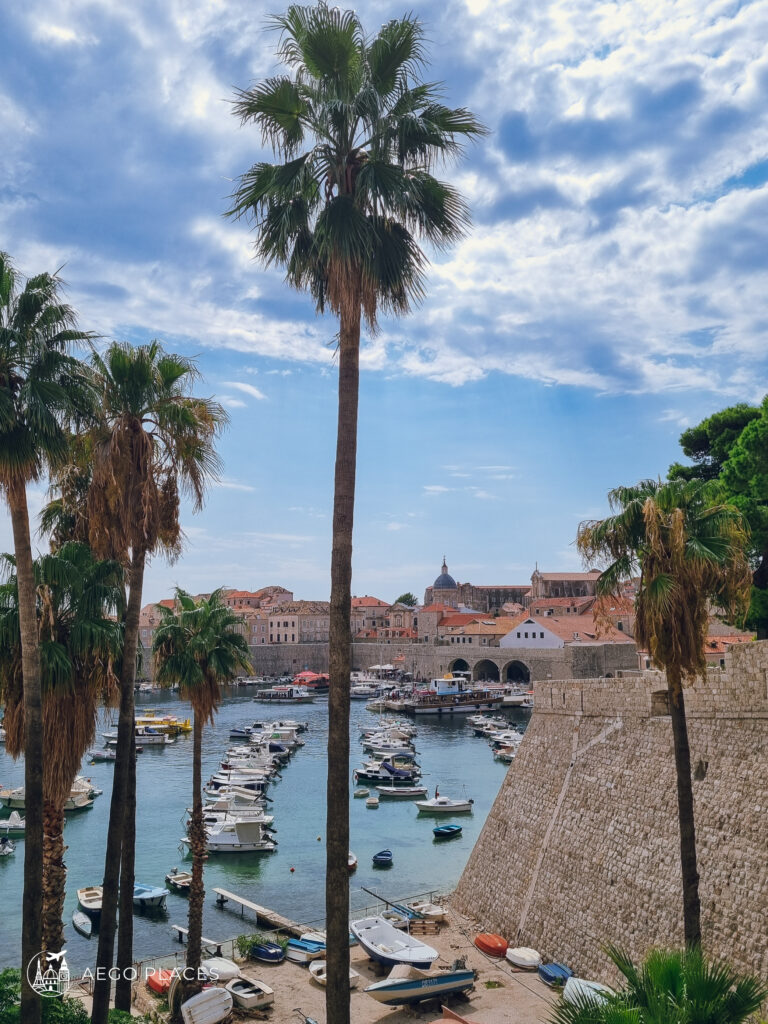
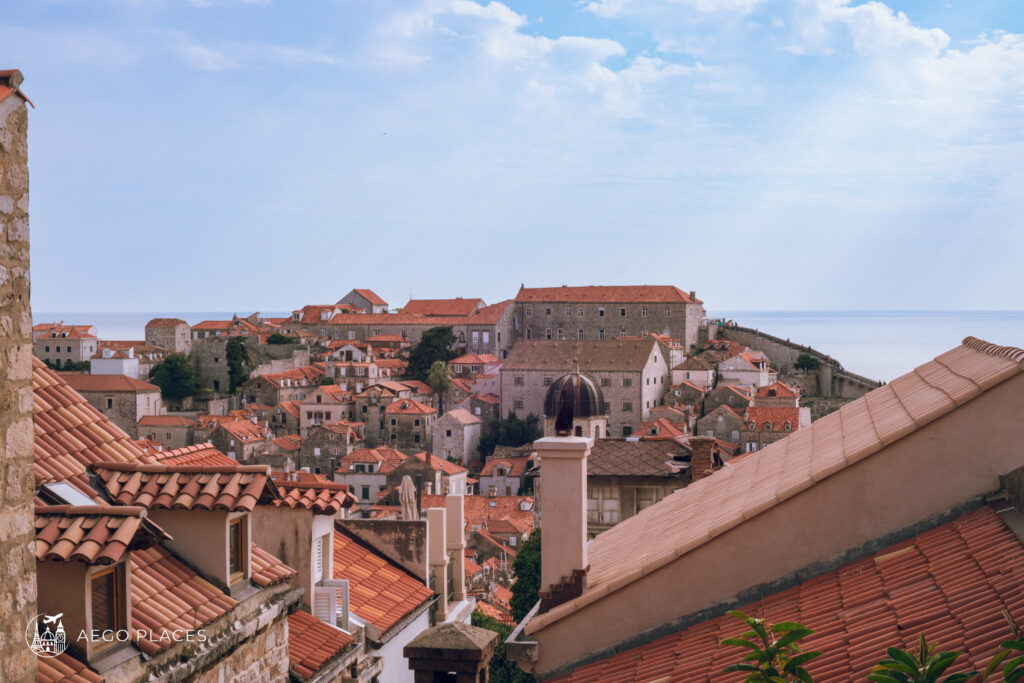
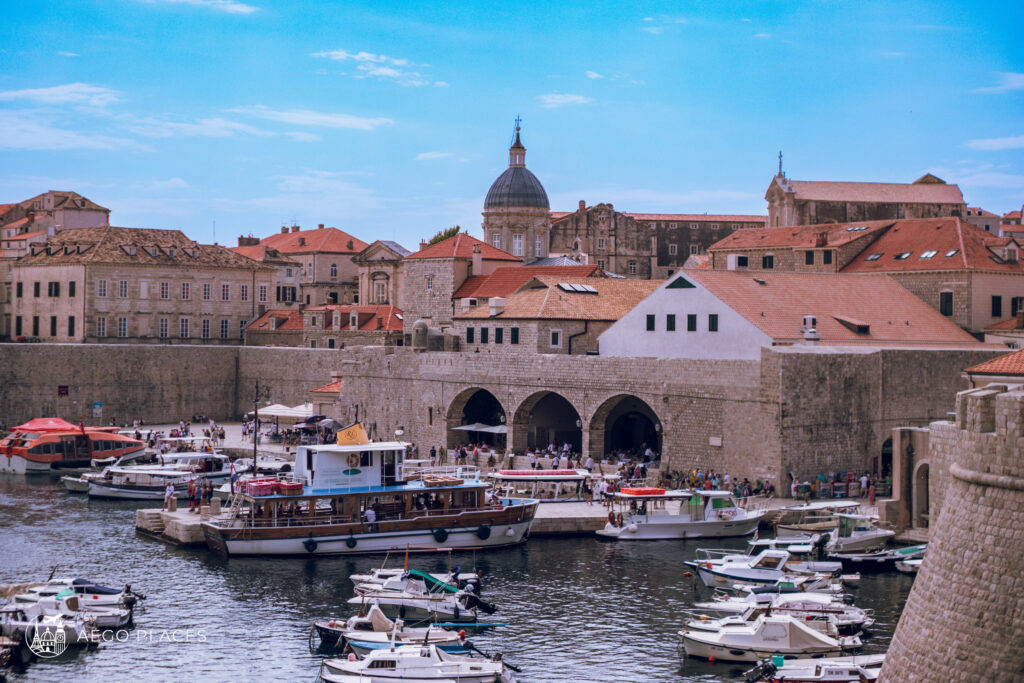
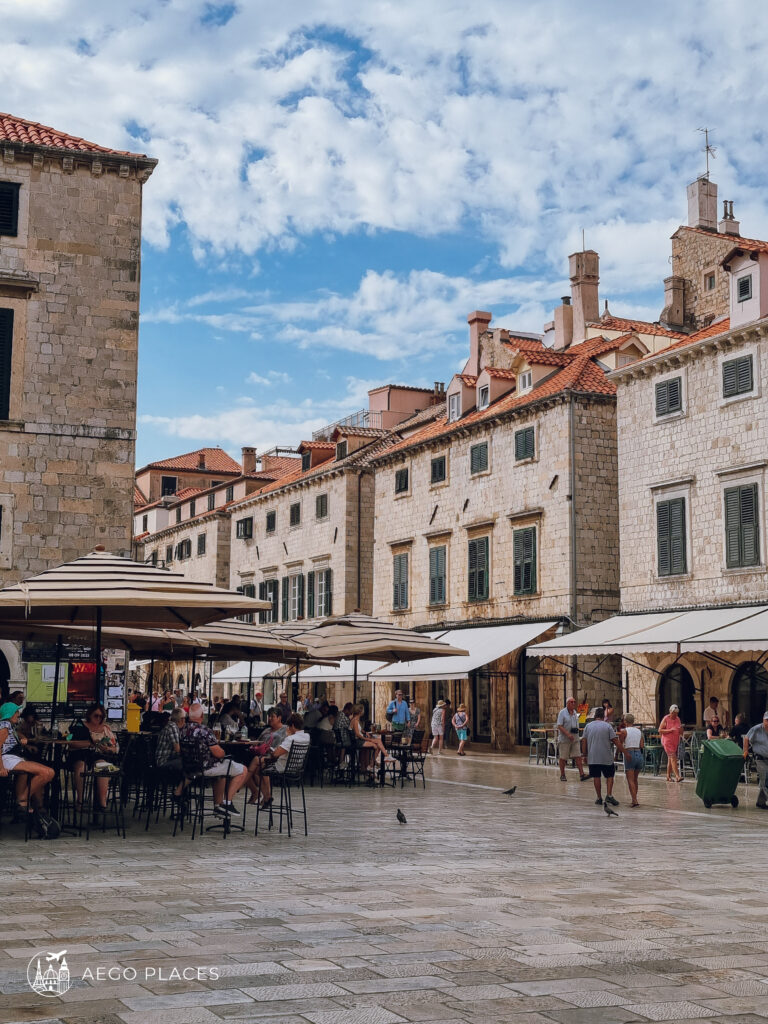
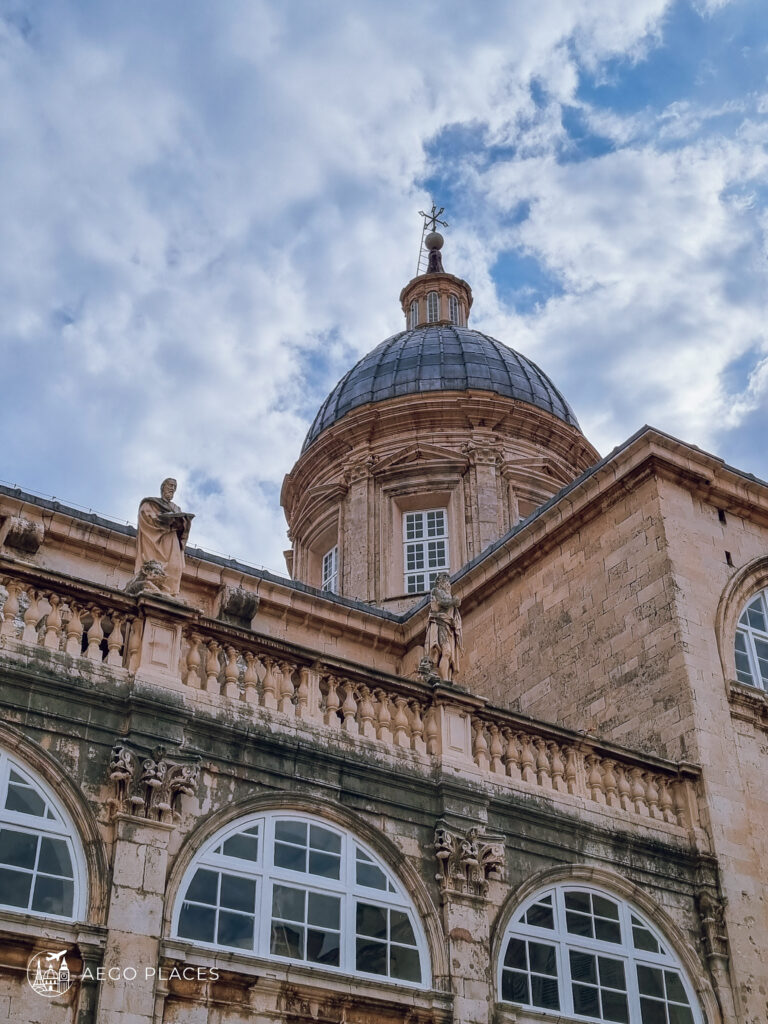
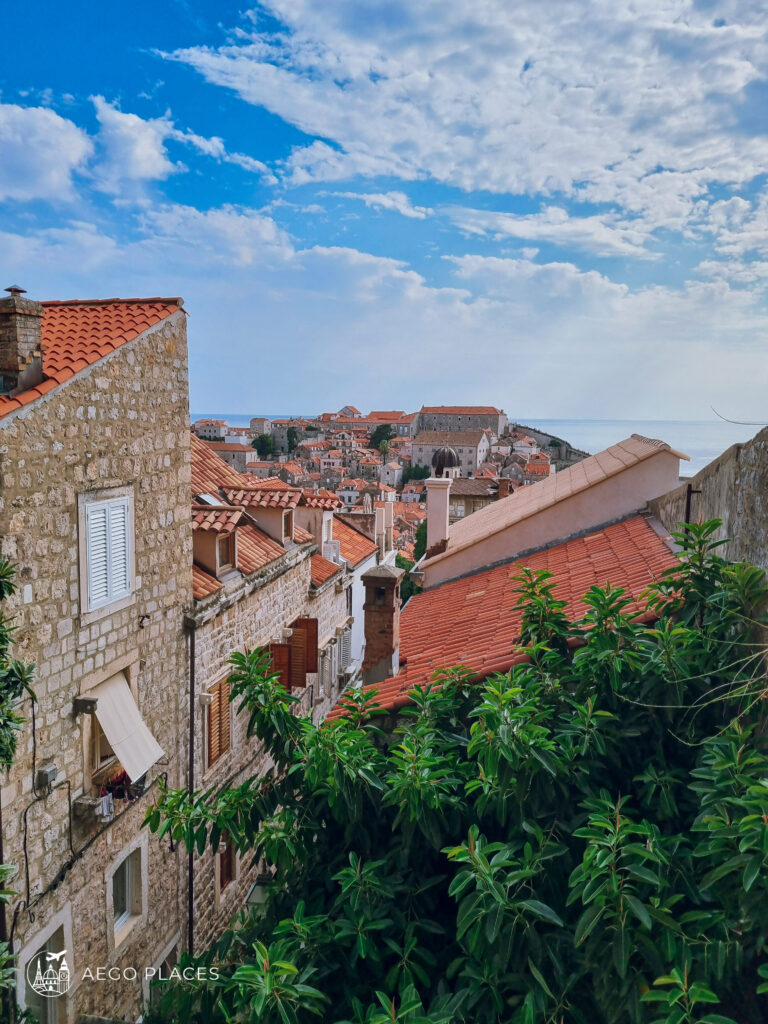
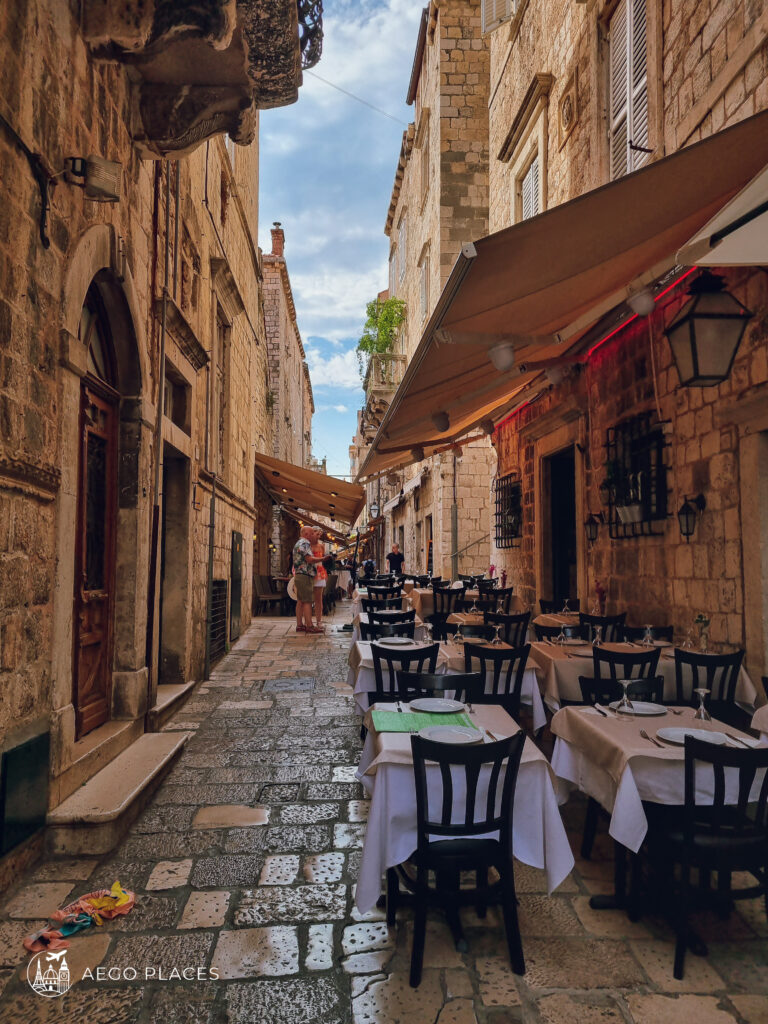
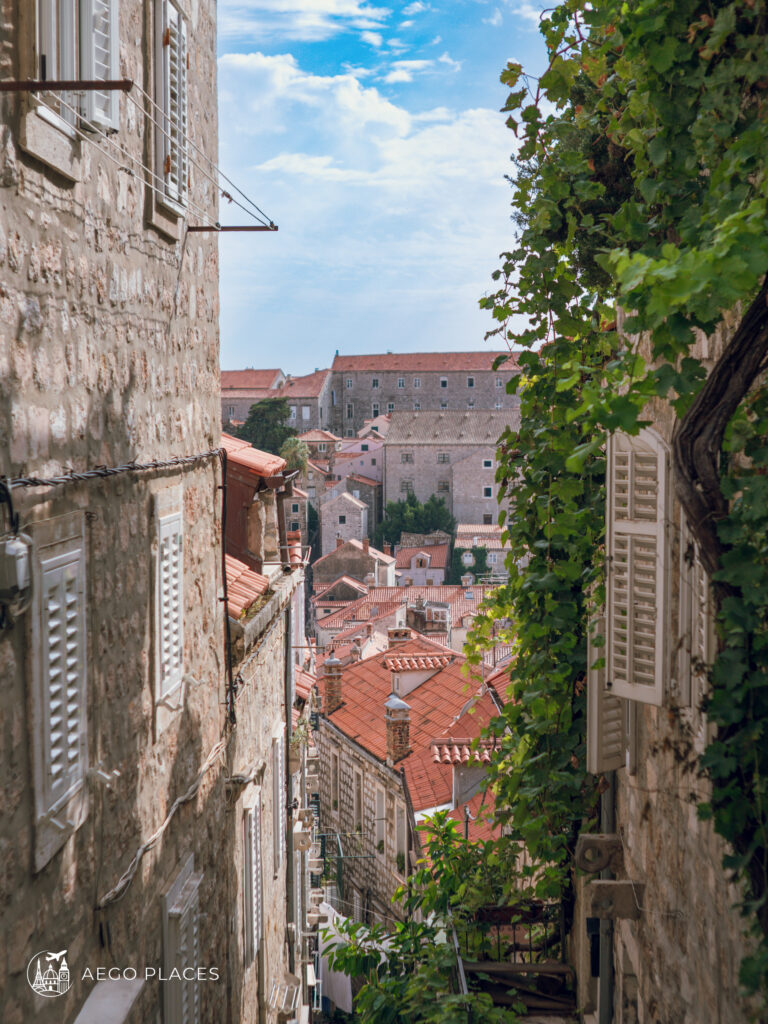
Due to our disappointment with the last beach, we wanted to end our seaside vacation on a high note. We got up early to visit Punta Rata beach, which we had loved so much and was on our way. From there, we headed to our next stop, Croatia’s most famous destination: Dubrovnik. We reached Dubrovnik in about 2-3 hours, hitting heavy traffic jams upon entering the city. Before that, we had read online that parking is extremely expensive (6 euros per hour and up), and on Google, I found a guy who had a few parking spots in his yard, not far from the old town, and rented them for 10 euros for the whole day. We parked and headed to the Dubrovnik fortress. Much has been written and said about it, so there’s not much I can add. Especially as a Game of Thrones fan, it was hard for me to remain indifferent to this incredibly beautiful city. Of course, as is widely known, Dubrovnik is very commercial, and the prices inside the fortress are insane, but that didn’t stop us from enjoying it. Perhaps because we were there at the beginning of September, it didn’t feel too crowded. Dubrovnik seemed quite hilly, but that made the views from its streets even more beautiful. After a few hours of walking around the old town, we headed back to the car and set off for our next destination: Kotor in Montenegro.
Kotor: Beautiful Nature and Historical Heritage, but Balkan Chaos
Day 1: Arrival in Kotor
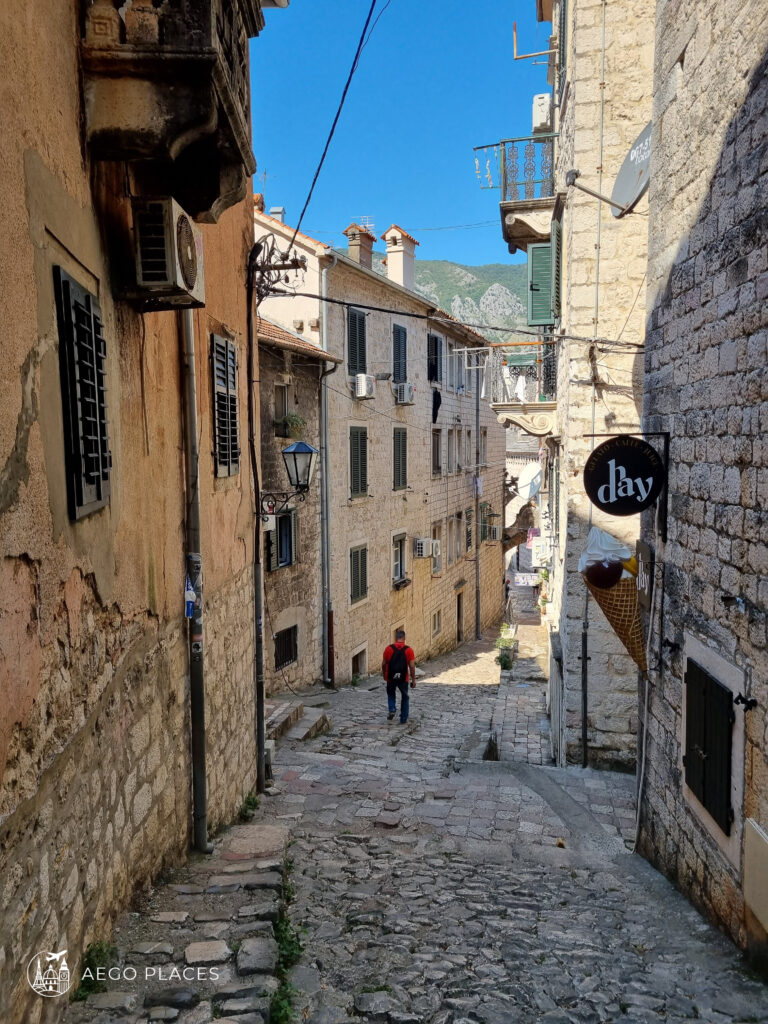
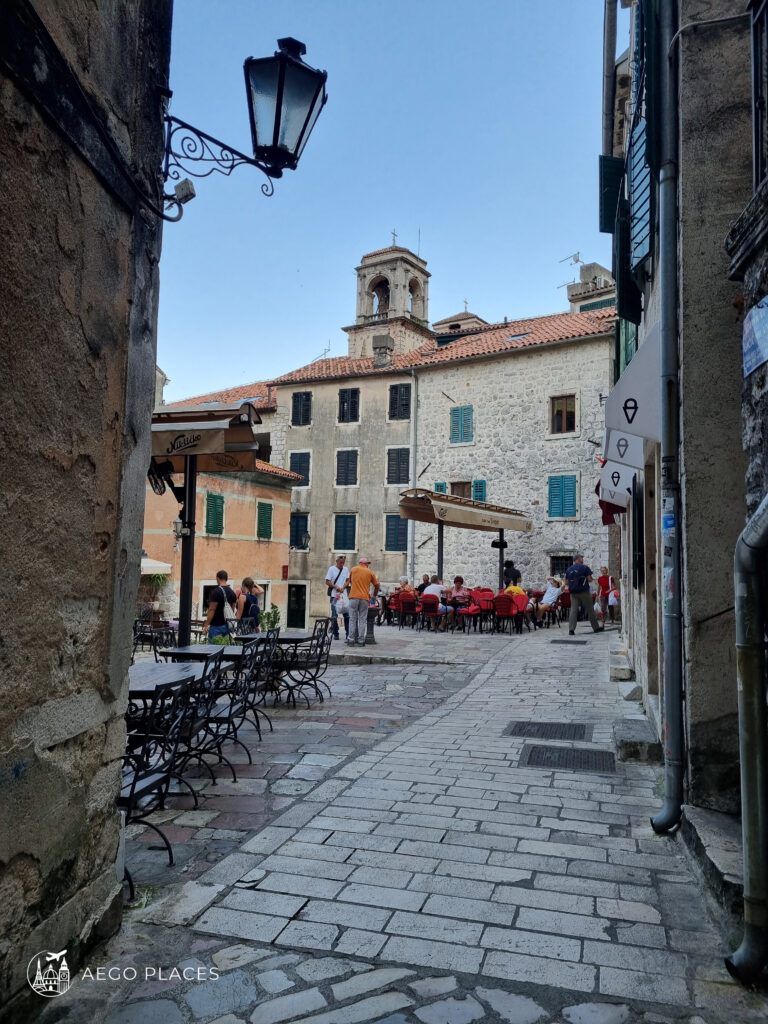
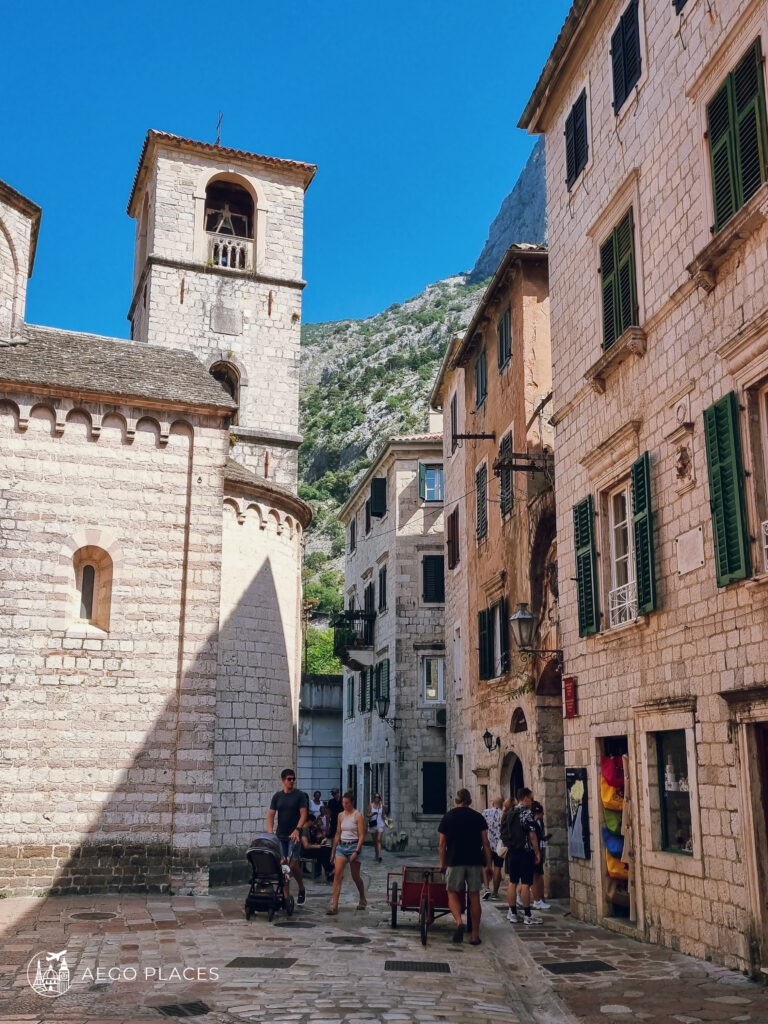
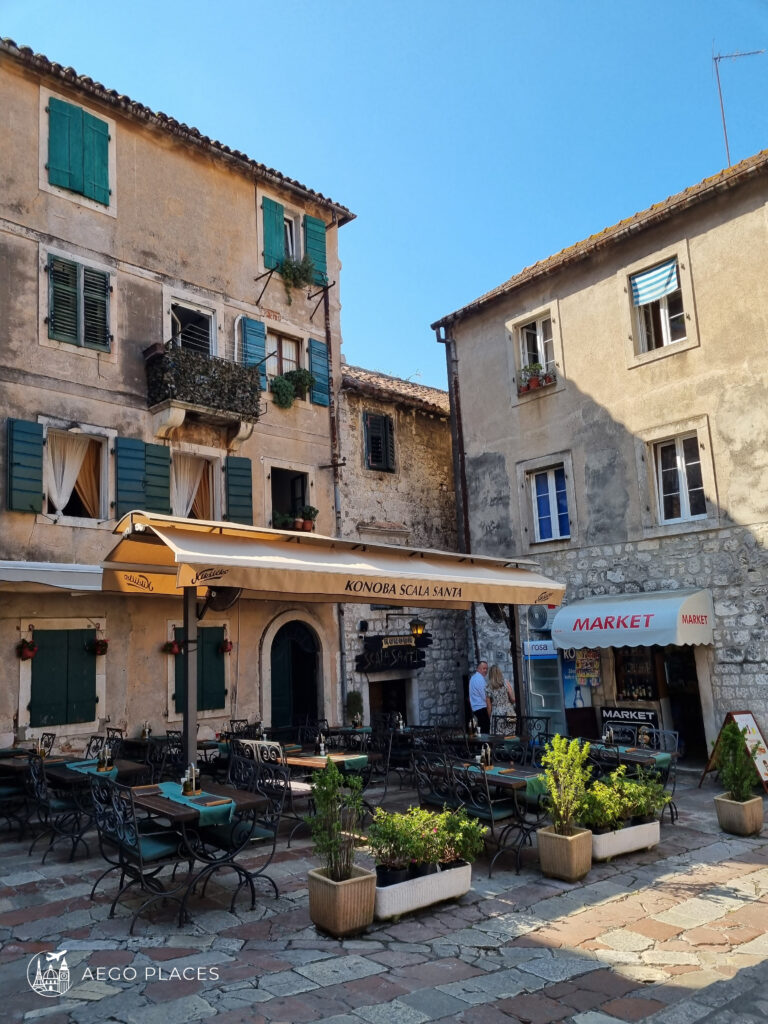
Entering Montenegro from Croatia is quite an interesting experience. After the border crossing, everything suddenly starts to look poorer and more chaotic. It was already starting to get dark, and we decided we didn’t have time to explore Herceg Novi, the first town after entering Montenegro, so we headed directly to Kotor, where we had two nights booked. Driving through the resort towns of Montenegro reminded me of popular, overdeveloped seaside destinations, with construction, ads, and lights everywhere. Despite the relative chaos on and around the road, the road to Kotor was well-paved and relatively easy to drive. We joined the panoramic road right around sunset, which made the journey very beautiful. Reaching our hotel proved to be a difficult task because of heavy traffic jams in Kotor, which cost us about 30 minutes. In the evening, we took a walk to the old town, which turned out to be very well-preserved and maintained, with a labyrinth of small streets between ancient stone buildings.
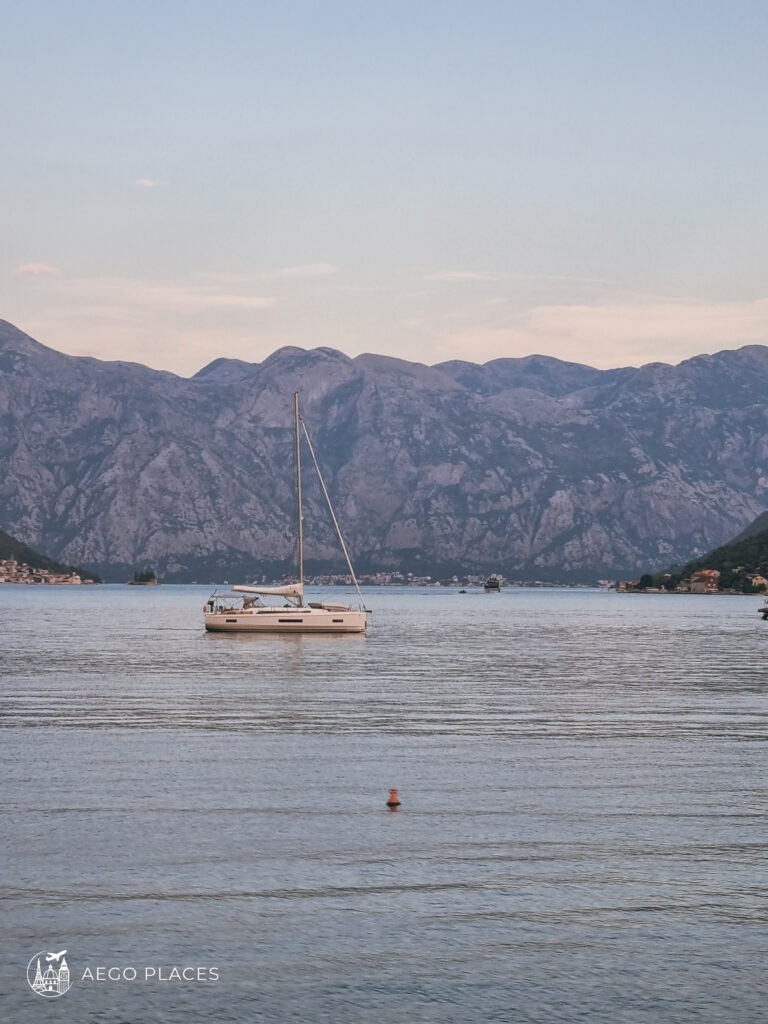
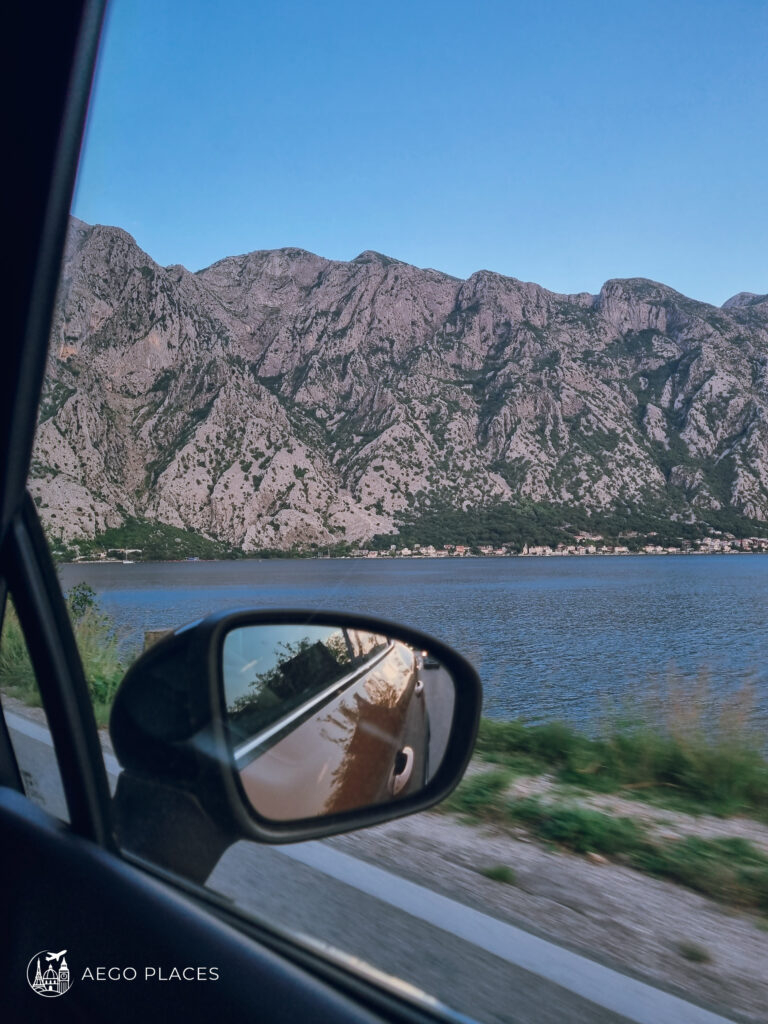
Day 2: The Fortress of Kotor
The next day we got up early, had breakfast, and headed to the fortress of Kotor, which offers the most beautiful view of the city and the bay. You get there through the old town. At the ticket counter, a guy in shorts and flip-flops was handing out tickets for 15 euros per person, not even looking at people while playing casino games on his phone. We started up the stairs, and with each level, the views became more and more beautiful. Unfortunately, despite the rather expensive tickets, the fortress didn’t seem well-maintained at all, and there were quite a few dangerous spots. We reached the highest possible point, enjoyed the incredible panoramic views and took some photos.

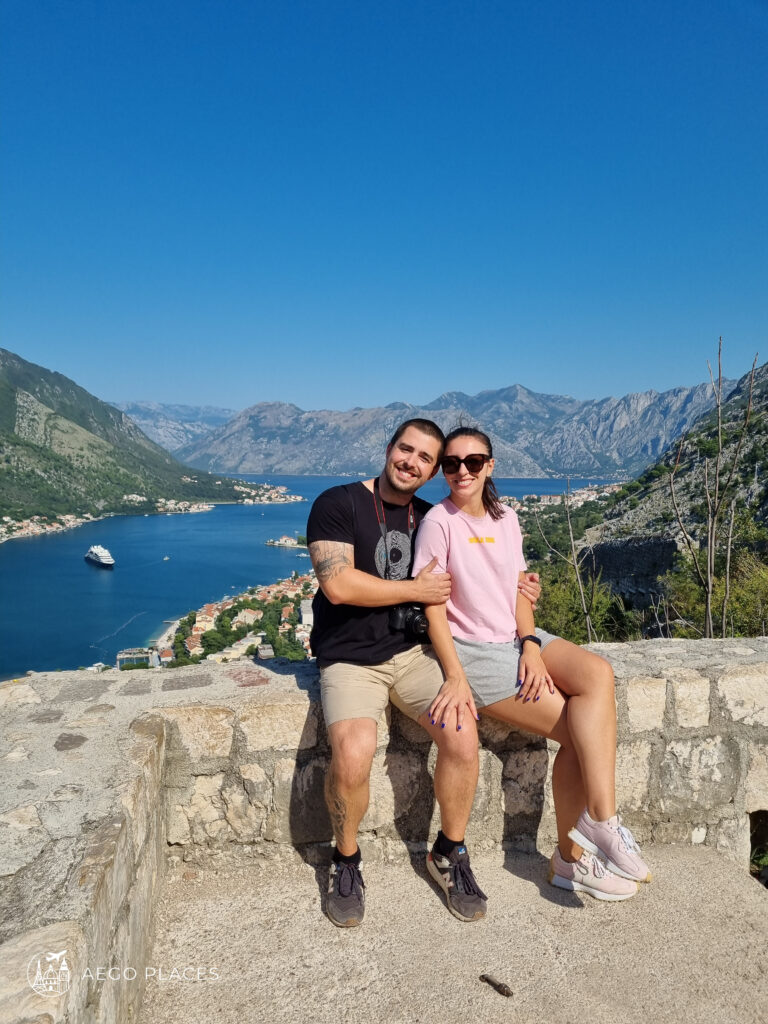
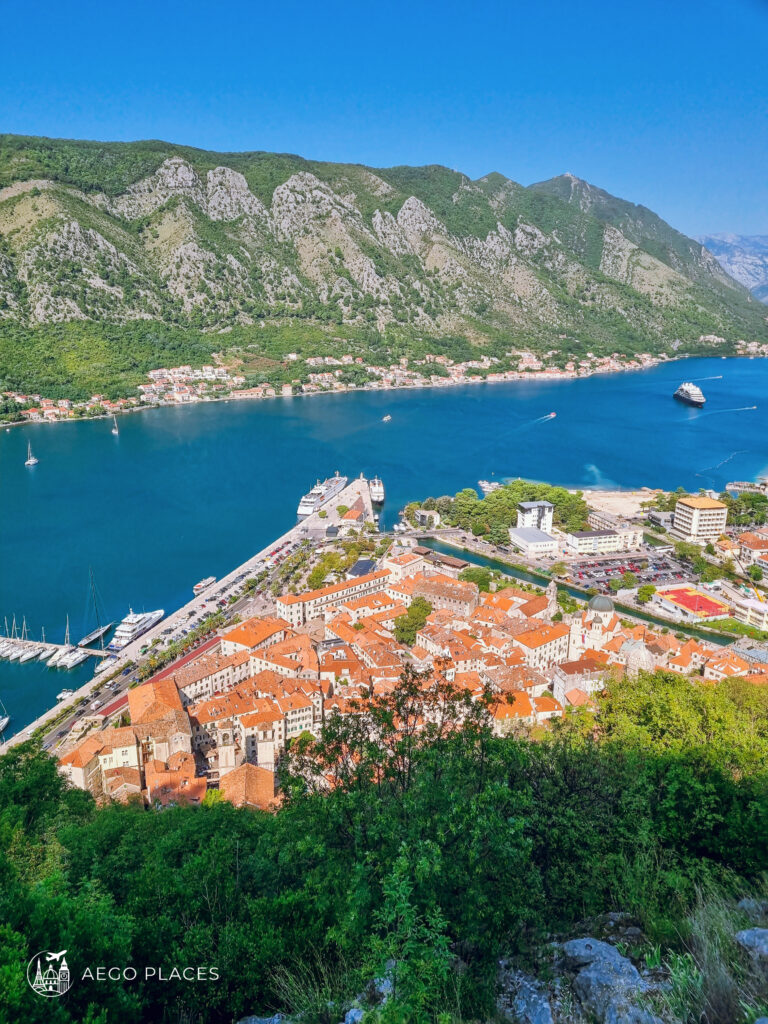
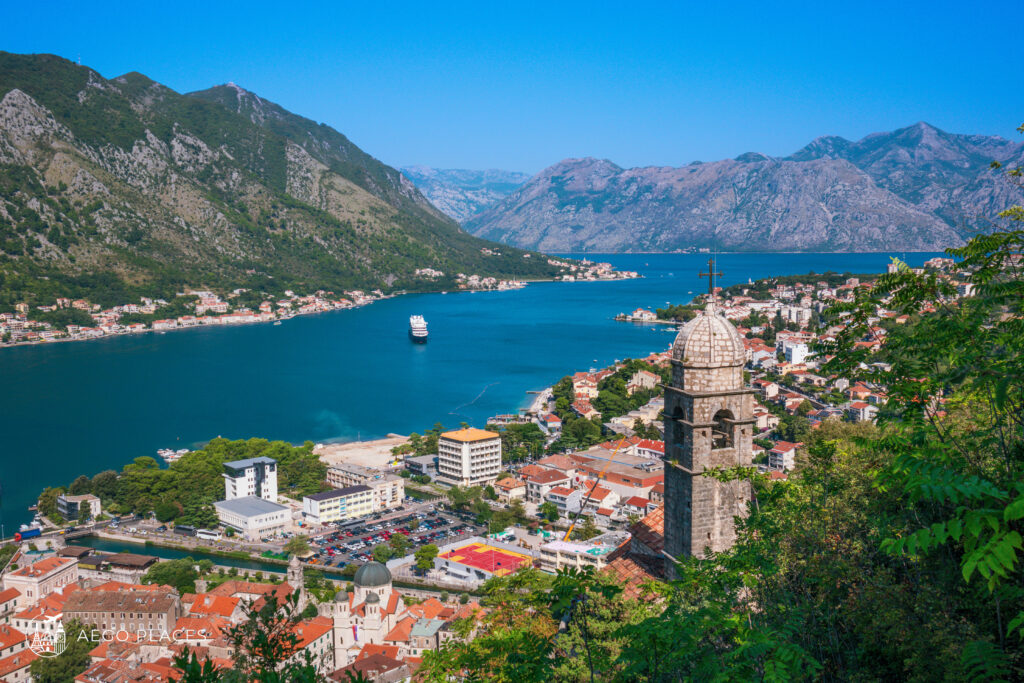
After that, we headed back to the old town, where we had coffee and lunch. We initially expected that since it was Montenegro, the prices would be lower, but in Kotor, they seemed the same as in Croatia: high. The food didn’t particularly impress us either.
The Journey Home
For the return journey eastward, there are a couple of main options. One route heads north from Montenegro into Serbia, passing near Novi Pazar towards Niš and then onward. Another option is to travel south along the coast through Albania and then across Kosovo and North Macedonia. We opted for the Serbian route as it involved fewer border crossings and more familiar roads.
On the way, we passed by Budva and hesitated whether to visit, but frankly, the Montenegrin chaos was a bit much for us. We saw the city only from above and decided to continue directly toward home, possibly making the drive in one go.
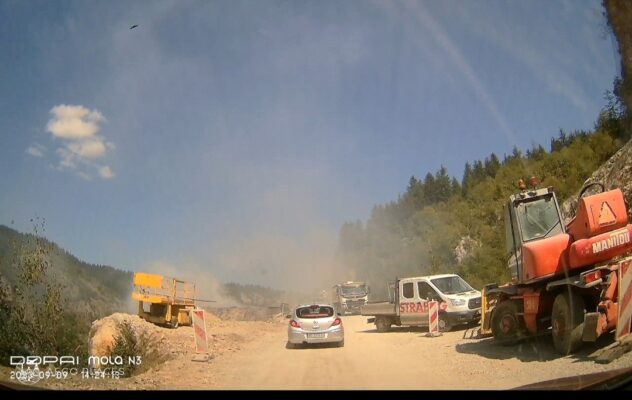
After Podgorica, the capital of Montenegro, we got on a good highway that reaches not far from the Serbian border, but from there the real nightmare began. The entire road was in terrible condition, parts of it were under repair, and we were constantly stuck in traffic. Although we had started at a good pace, we lost another two precious hours. However, after entering Serbia, the roads were in very good condition, there wasn’t much traffic, and by early evening we approached Niš, where we got on the highway. The drive from Kotor back to our starting point was a long one, taking about 12 hours. It was our longest single drive to date, but we saved ourselves an overnight stay in Serbia and had an extra day to rest.
Related posts
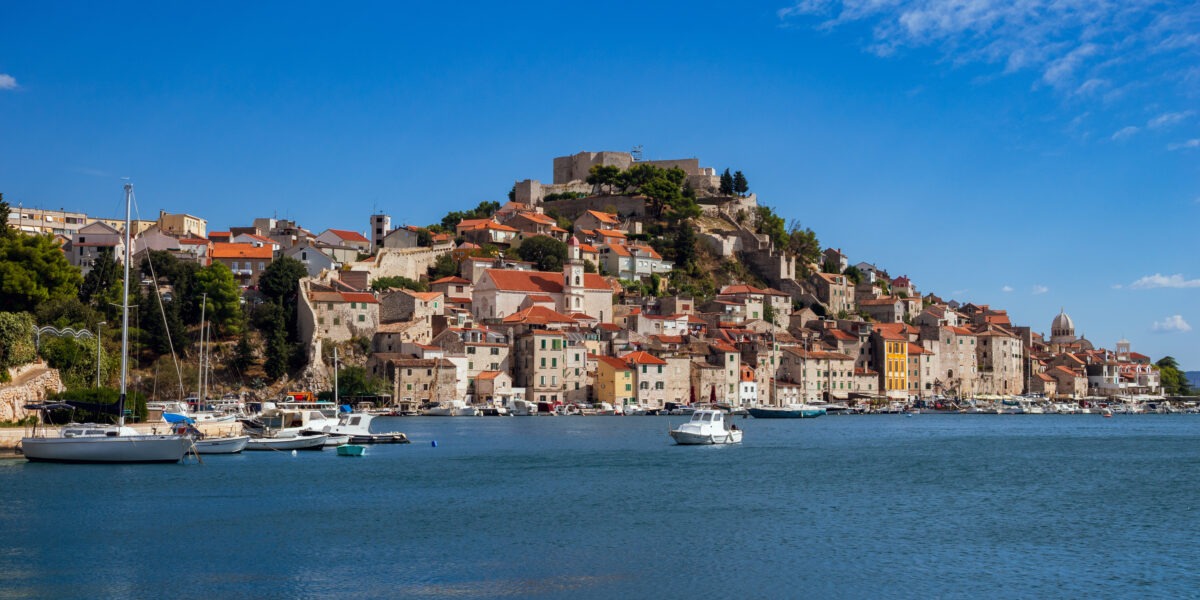
Dalmatia is a coastal region in southern Croatia, home to many of the country’s best-known sights, most beautiful beaches, islands and seaside resorts. We visited Croatia as part of a wider Balkan roa…