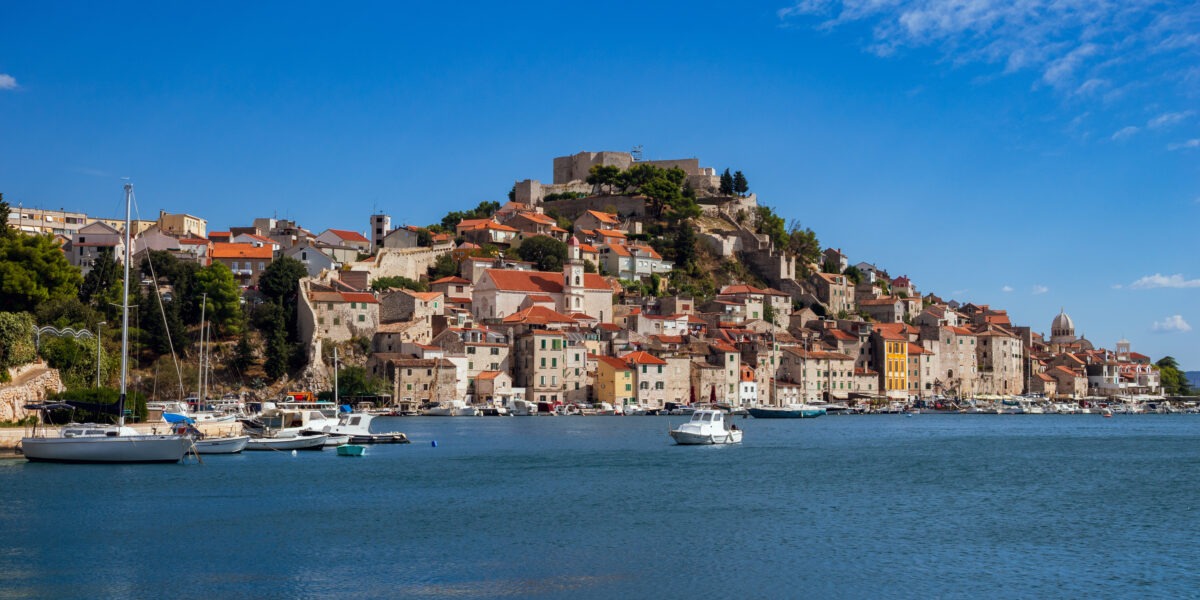
Dalmatia is a coastal region in southern Croatia, home to many of the country’s best-known sights, most beautiful beaches, islands and seaside resorts. We visited Croatia as part of a wider Balkan road trip that also included Montenegro and Bosnia and Herzegovina, and it was Croatia that impressed us the most.
During our time in Dalmatia, we managed to visit extraordinary beaches and world-famous destinations such as Dubrovnik and Split. Every place left us with a different impression. In this travel guide, we share our experience in Dalmatia: the Croatian beaches and sights we visited, our honest thoughts on each destination, and ideas for planning a beach holiday in Croatia.
This is a travel guide, itinerary and travelogue for Dalmatia, Croatia. It follows our six-day journey along one of the Adriatic’s most beautiful coastlines. We share our real impressions of each place, including the beaches we loved most, destinations that exceeded our expectations, and a few that were less impressive in reality than in photos. Use this Croatia itinerary to plan your own Dalmatian road trip, beach holiday or sightseeing adventure, with practical ideas for where to stay, how to get around and which places are worth adding to your route.
Getting around Dalmatia
In our opinion, having a car is almost essential when visiting Dalmatia. Public transport can take you to the major destinations, but the real charm of the region lies in its small towns and villages, scenic coastal roads, and the countless interesting places where you can stop along the way.
A road trip gives you much more freedom to explore the Dalmatian coast at your own pace. If you are not travelling with your own vehicle, hiring a car is the most practical way to follow a similar Dalmatia itinerary.
When renting a car, we compare prices on the DiscoverCars platform, where you can directly see indicative prices:
Where to stay in Dalmatia
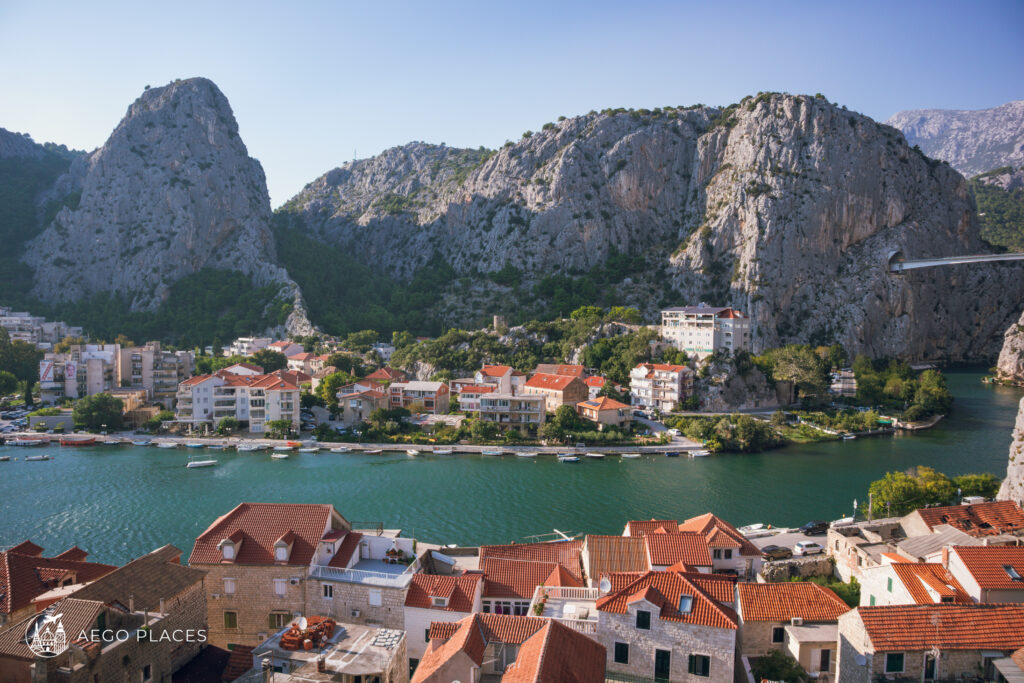
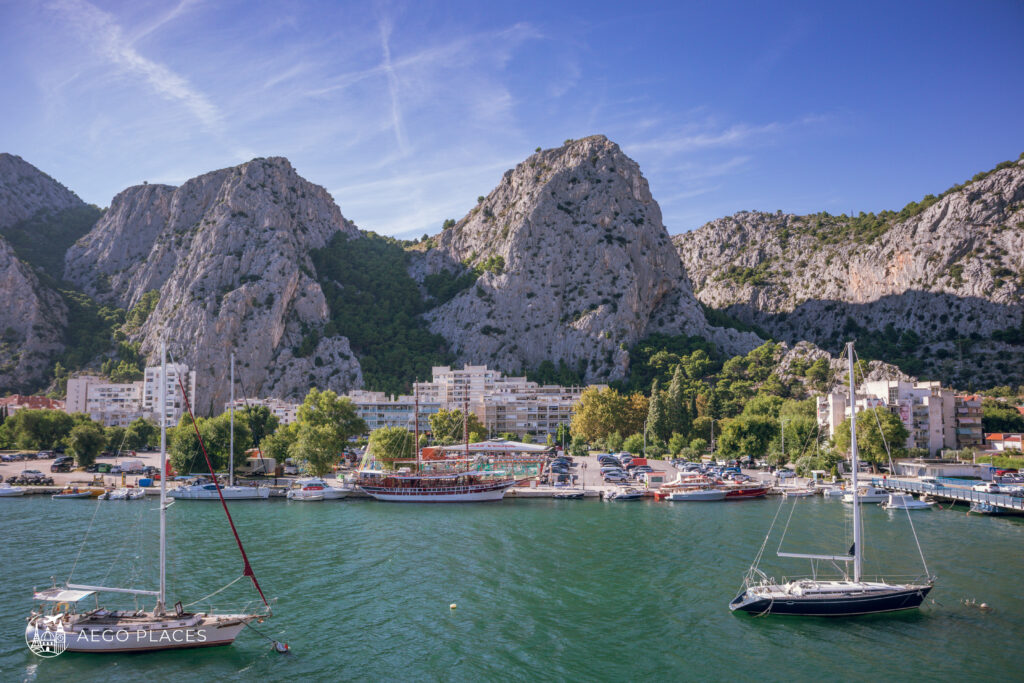
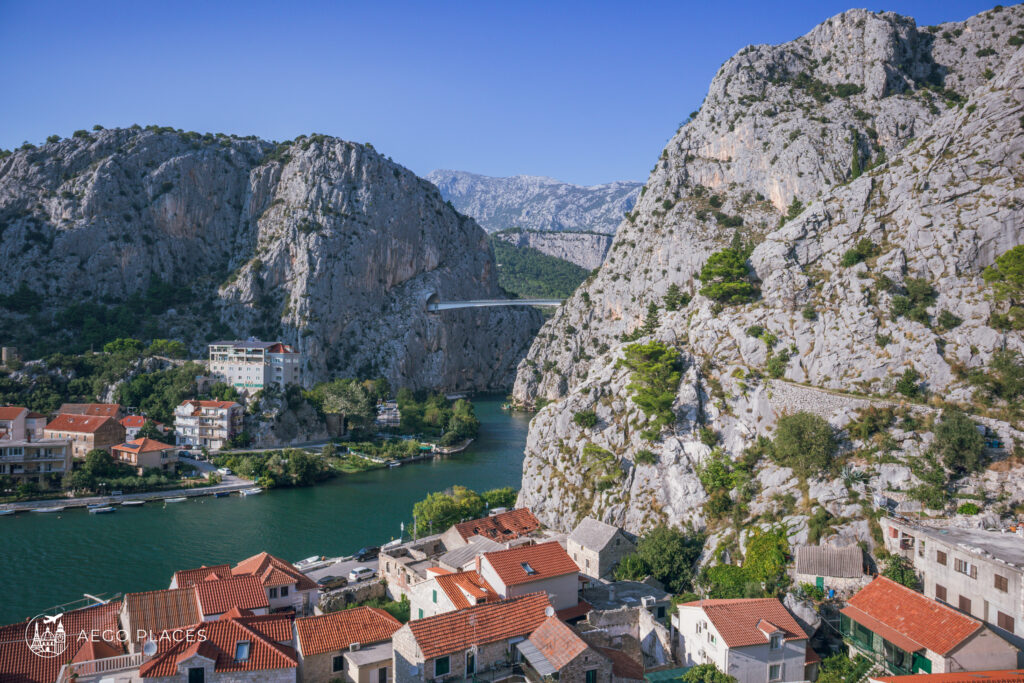
Where you stay in Dalmatia depends largely on what you want from your trip. We chose the small town of Omis, located close to Split, on the Adriatic coast at the mouth of the Cetina River.
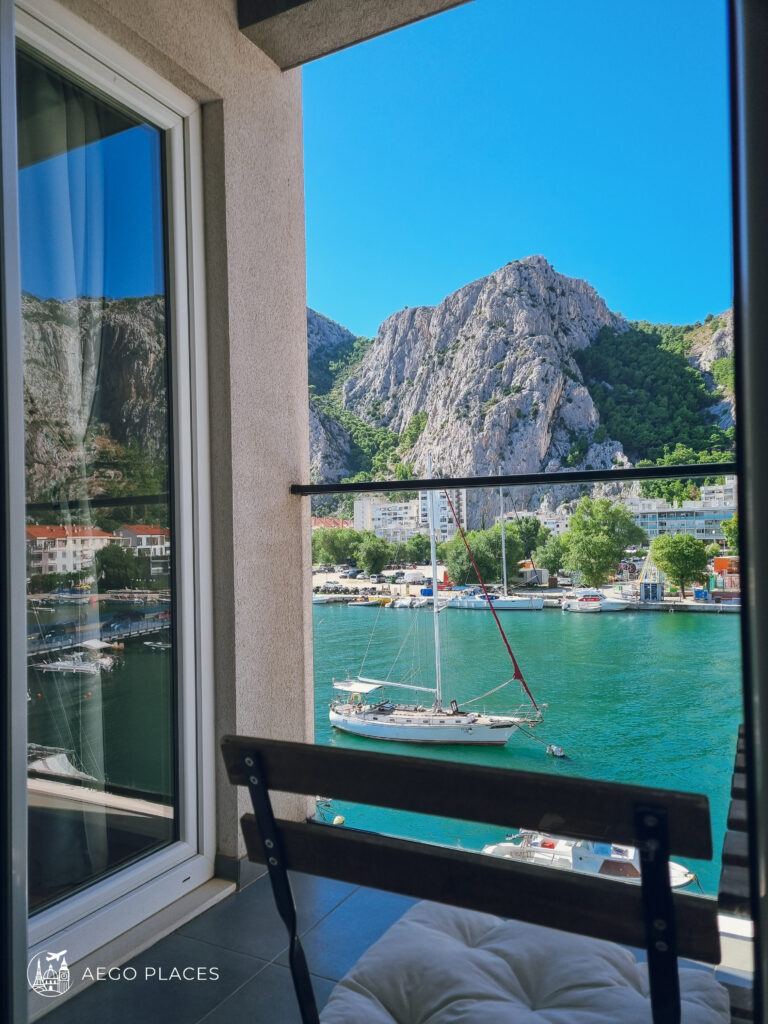
The river meets the sea here, with walking paths along its banks and dramatic mountains rising around it like a huge wall. We chose Omis for two reasons: its convenient location for many of the beaches and towns we wanted to visit, and its own appealing mix of a good beach, striking scenery, panoramic views and a historic centre.
In our view, some of the best beaches in Dalmatia are around Makarska and Brela, so this area is an excellent base if your priority is a classic Croatian beach holiday
Full Itinerary for Croatia – One Week in Dalmatia
Day 1: Arriving in Omis
We arrived in Omis after staying in Mostar, Bosnia and Herzegovina, an excellent city that is only around two hours from the Dalmatian coast. The journey was easy, and the transition from the mountain landscape to the Mediterranean was striking. After passing through a long tunnel in the mountains, the scenery changed almost instantly and we found ourselves on the Adriatic coast.
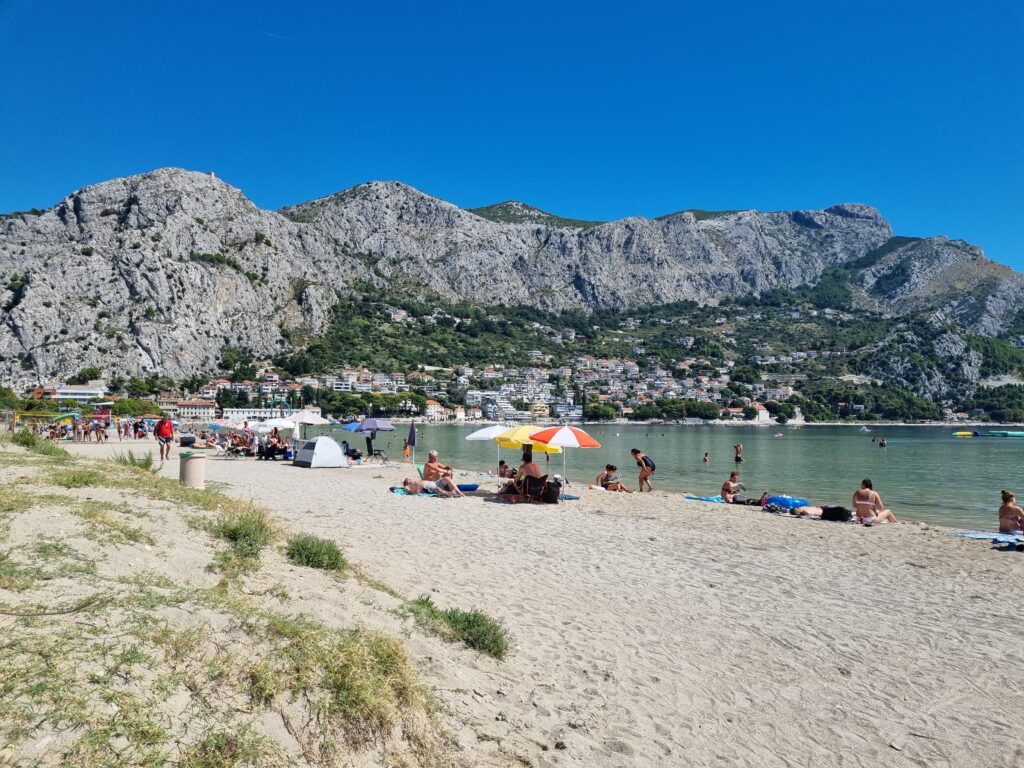
After arriving in Omis, we checked into our accommodation. The view of the river from the terrace was beautiful. We then visited the town beach, which was popular with families and full of children playing in the shallow water.
We rested, took a short walk through the centre, and quickly noticed that restaurant prices were considerably higher than in other Balkan countries, including Greece.

Day 2: Mimice Beach and Split
Our plan for the following day was to visit the nearby village of Mimice, which has a beautiful beach, before heading to Split in the late afternoon. The beach was indeed wonderful and still relatively quiet in the morning.
Most Croatian beaches are pebbly, so we came prepared with water shoes. They are well worth bringing if you are planning to spend time on Dalmatia’s beaches.
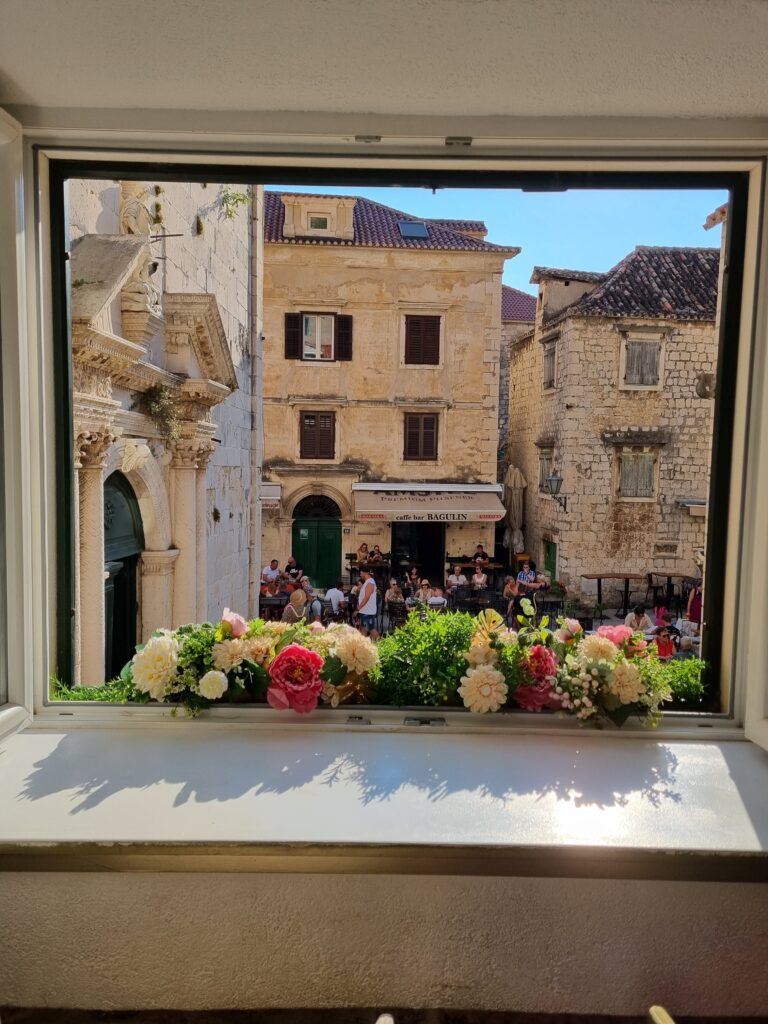
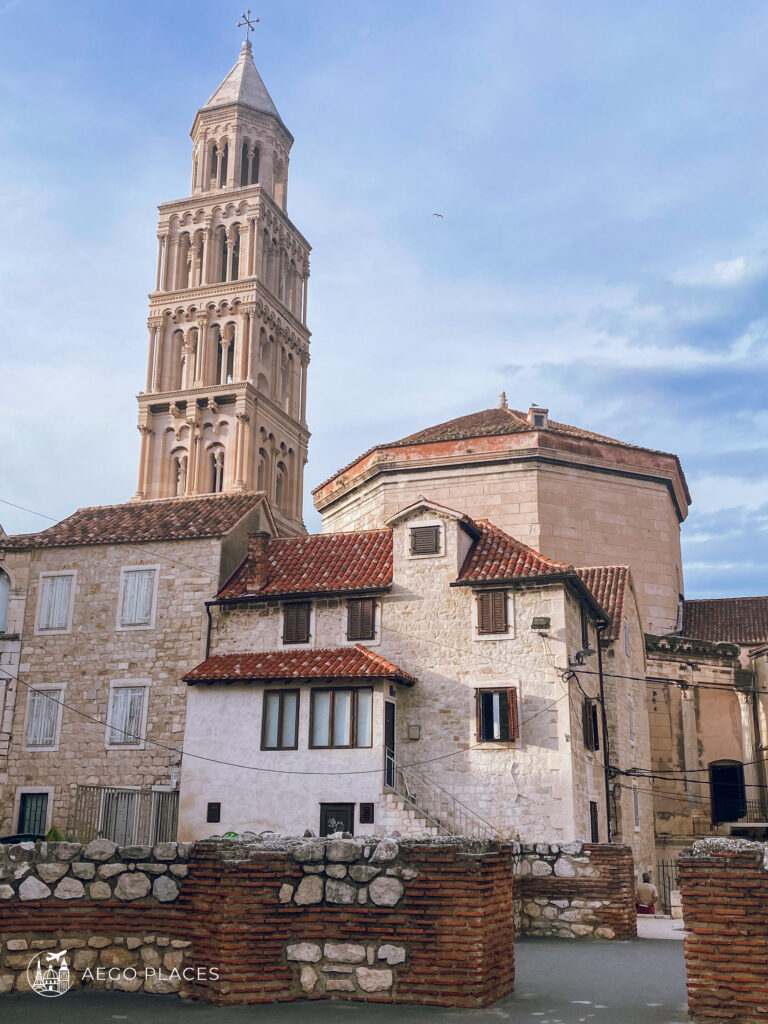
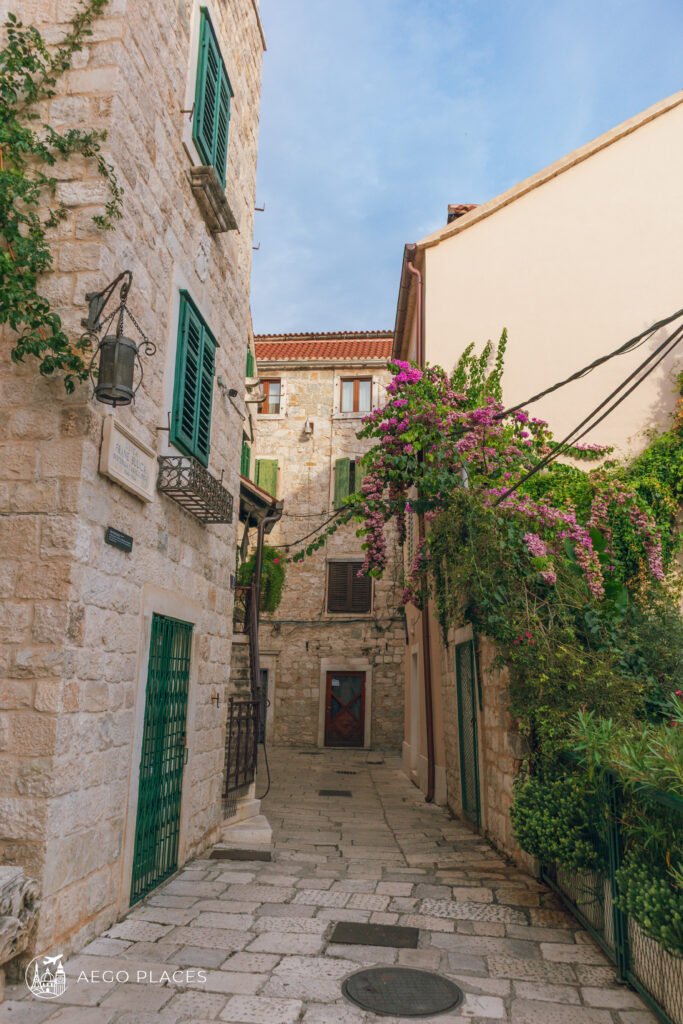
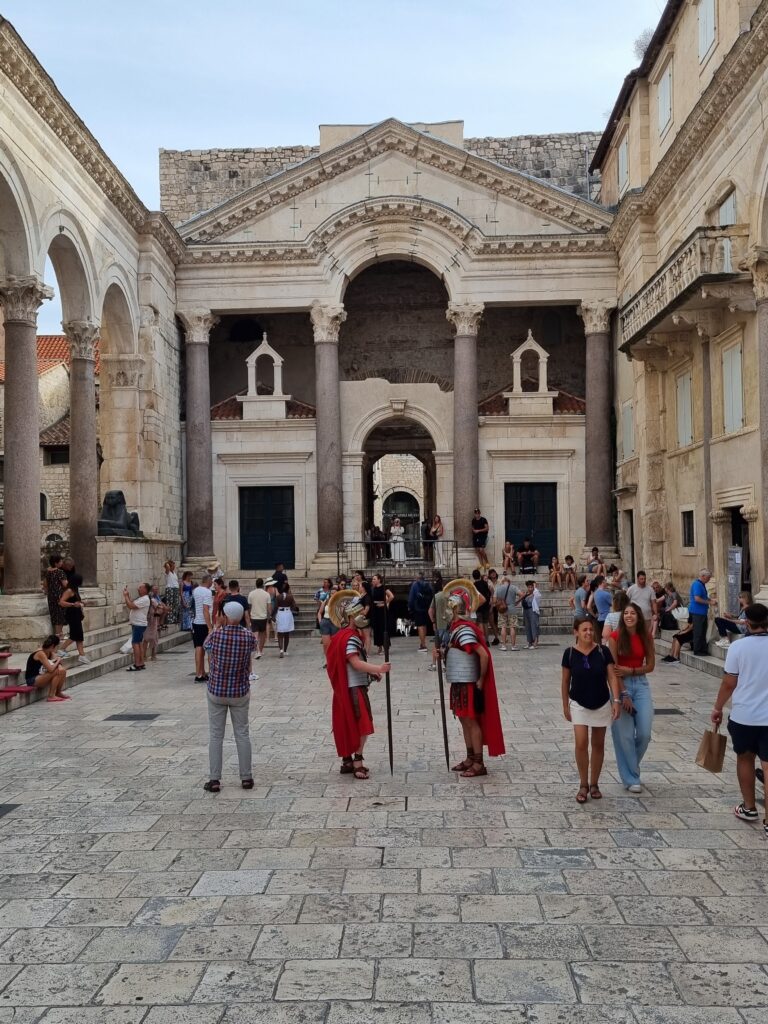
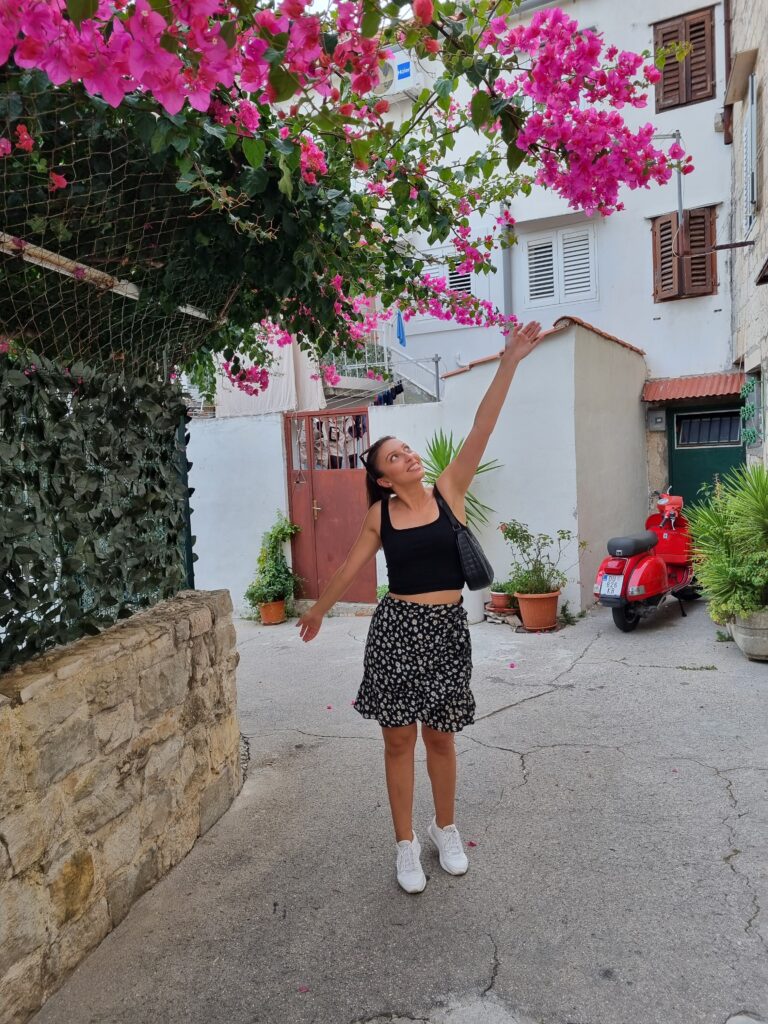
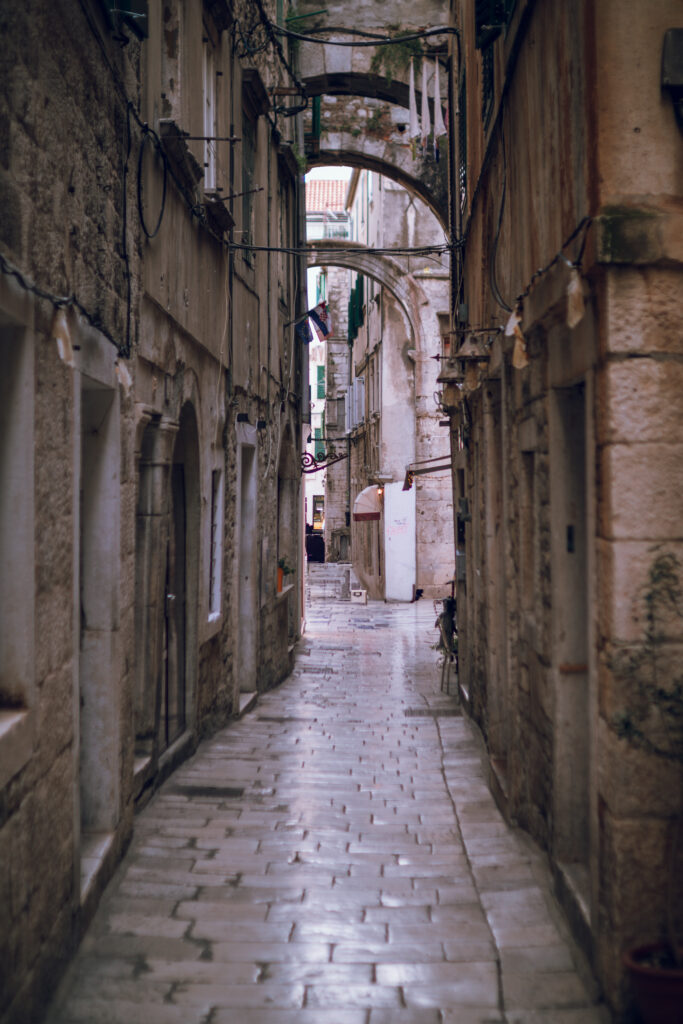
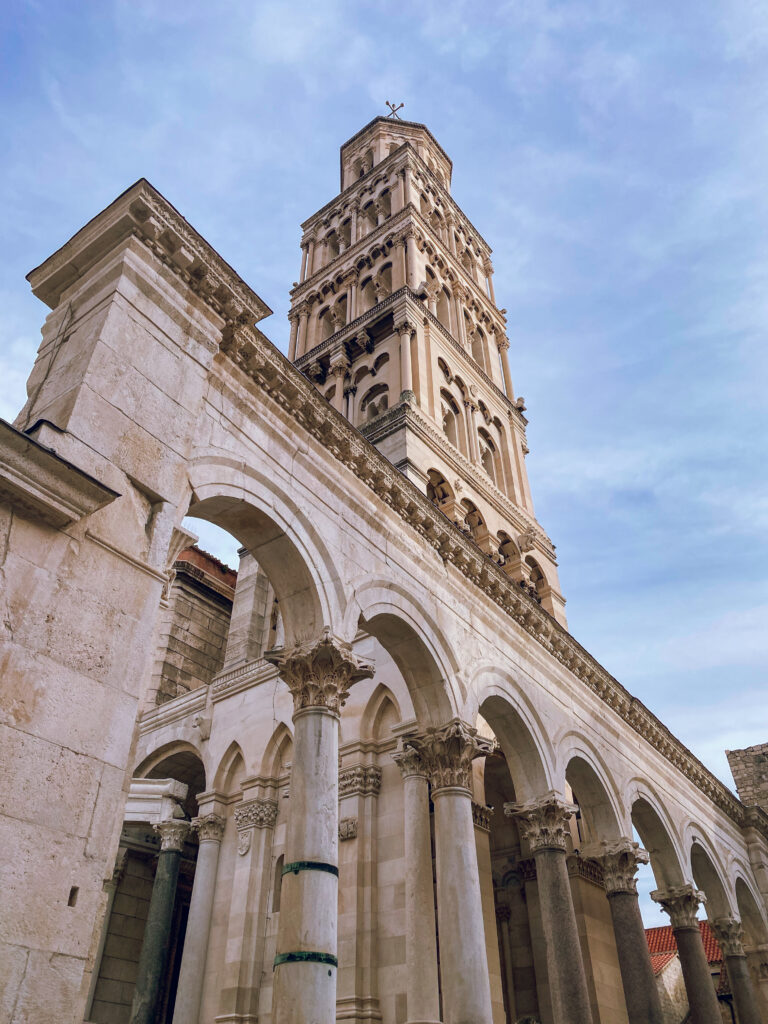
After lunch and some rest, we drove to Split. We can confidently say that Split is one of the most beautiful Mediterranean cities we have visited. Its centre was exceptionally clean and well maintained, and it was easy to lose ourselves in the maze of narrow streets in the Old Town, which developed within the former palace of the Roman emperor Diocletian.
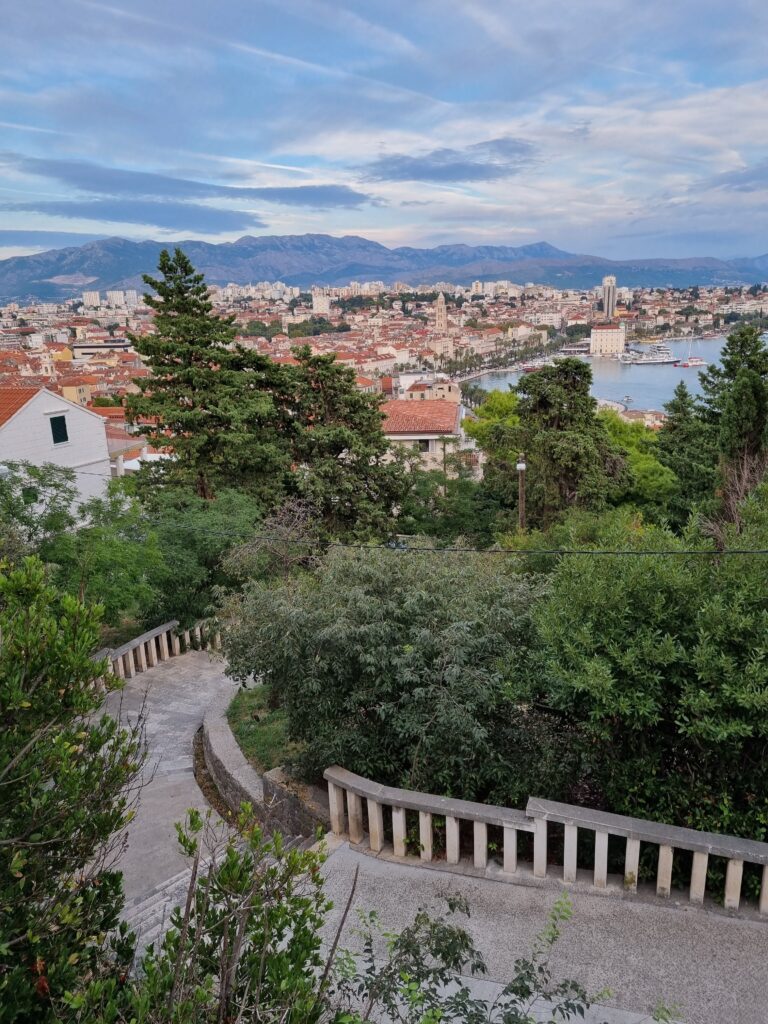
From there, we followed the bright stone streets to the Marjan viewpoint, where we enjoyed wide views across Split and its coastline.
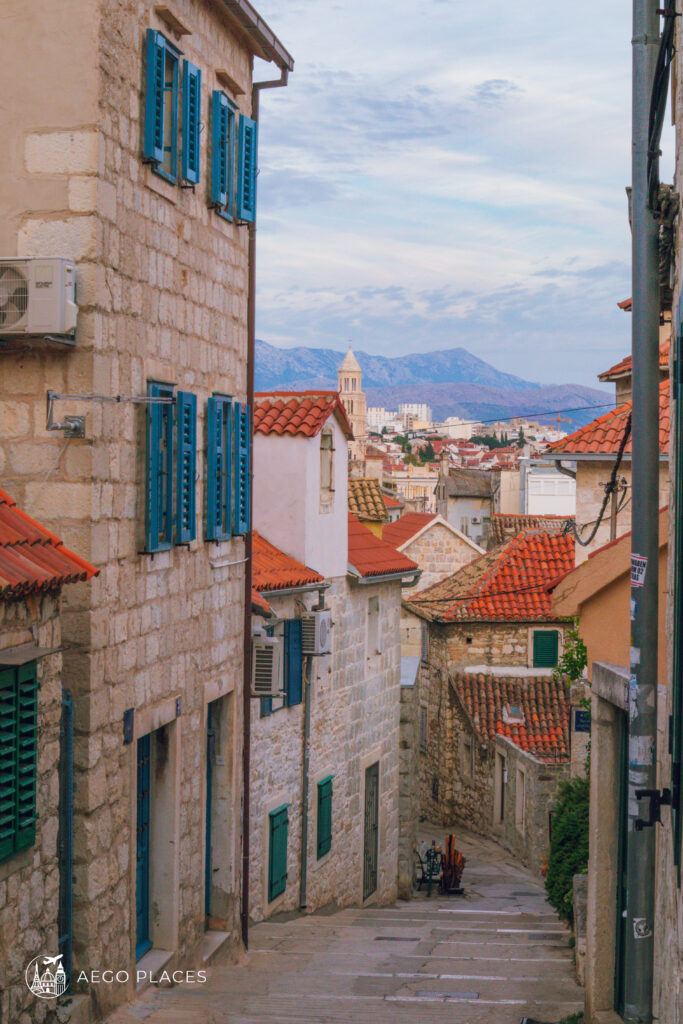
Day 3: Visit to Sibenik and Trogir – Charming Seaside Towns in Croatia
The next day, we had planned to return to Mimice, but although it was sunny, the weather was windy and not ideal for a beach day. We decided instead to visit two nearby historic towns, where the wind would not matter.
About an hour and a half away by car is Sibenik, a beautiful coastal town with a very well-preserved old quarter. We knew almost nothing about it beforehand, but we liked it enormously. Its atmosphere reminded us of Italy, and beyond its attractive narrow streets, the town has plenty of restaurants and cafés.
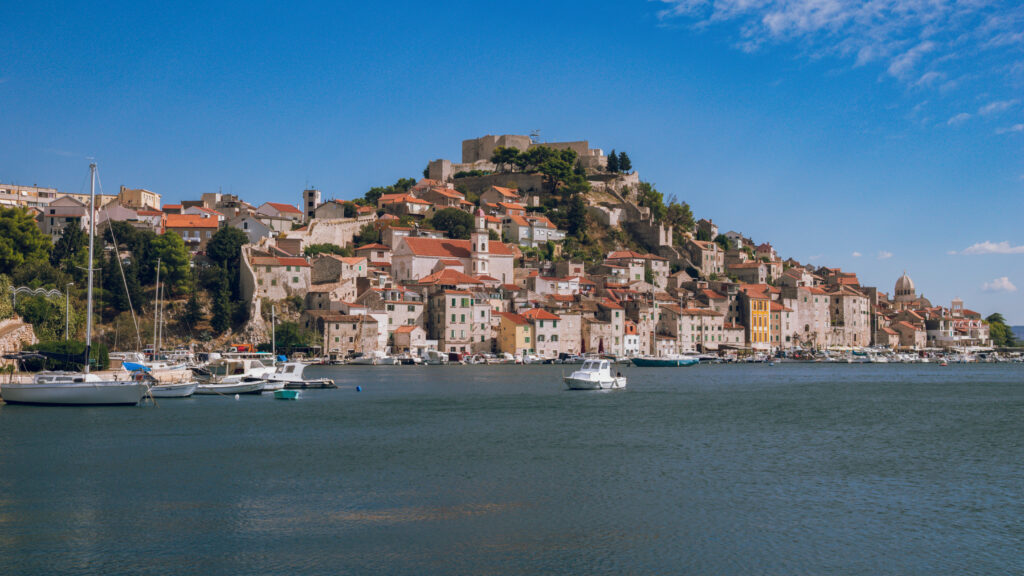
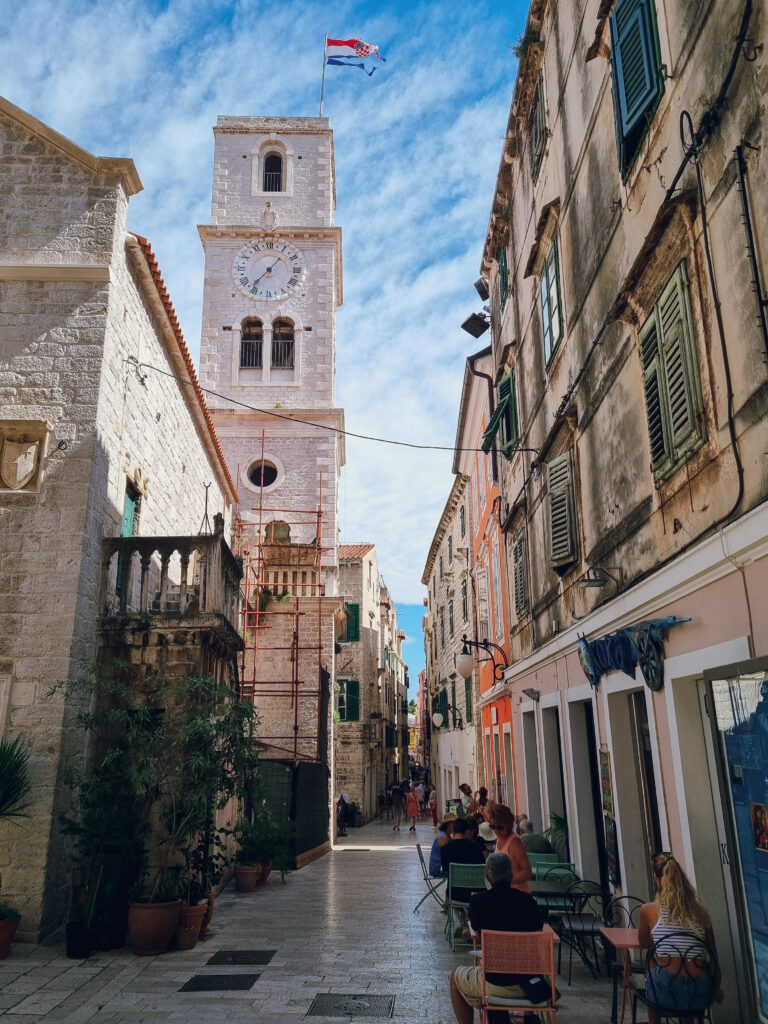
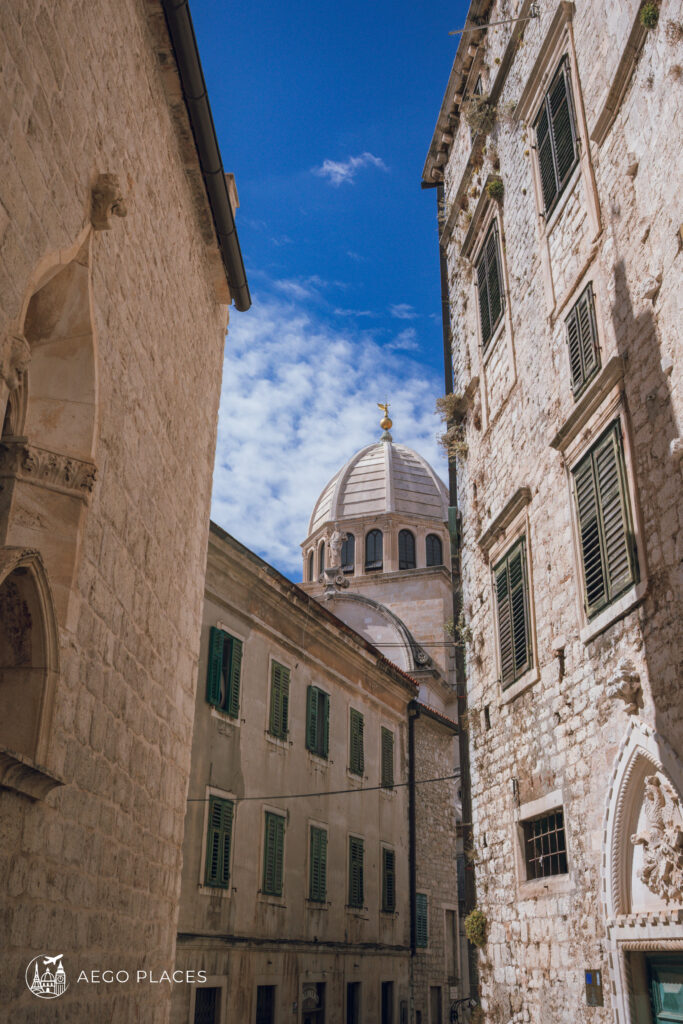
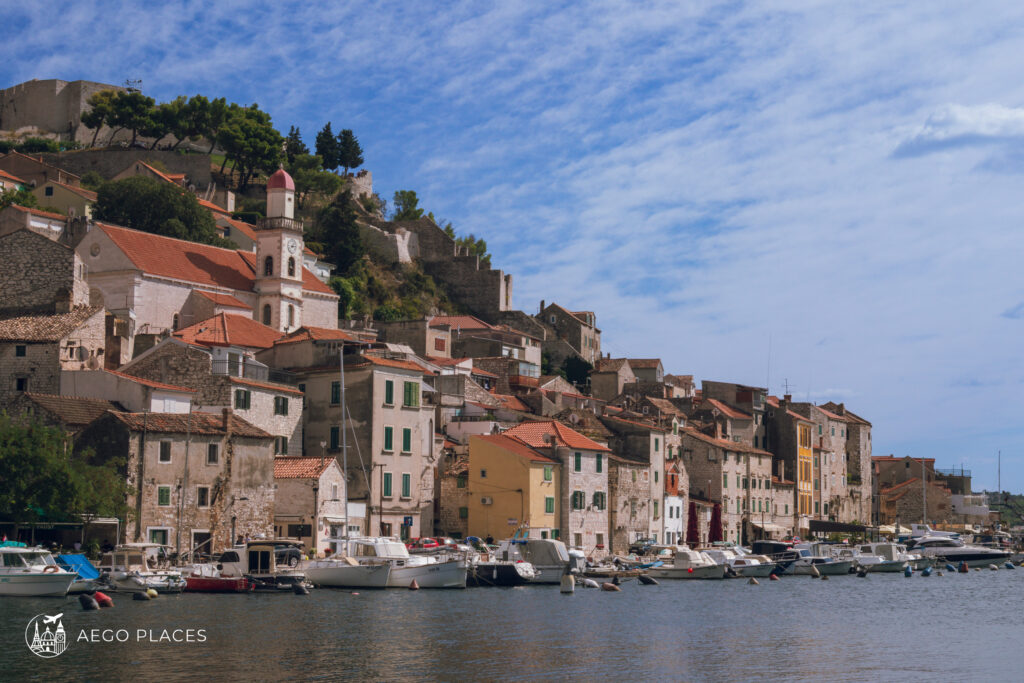
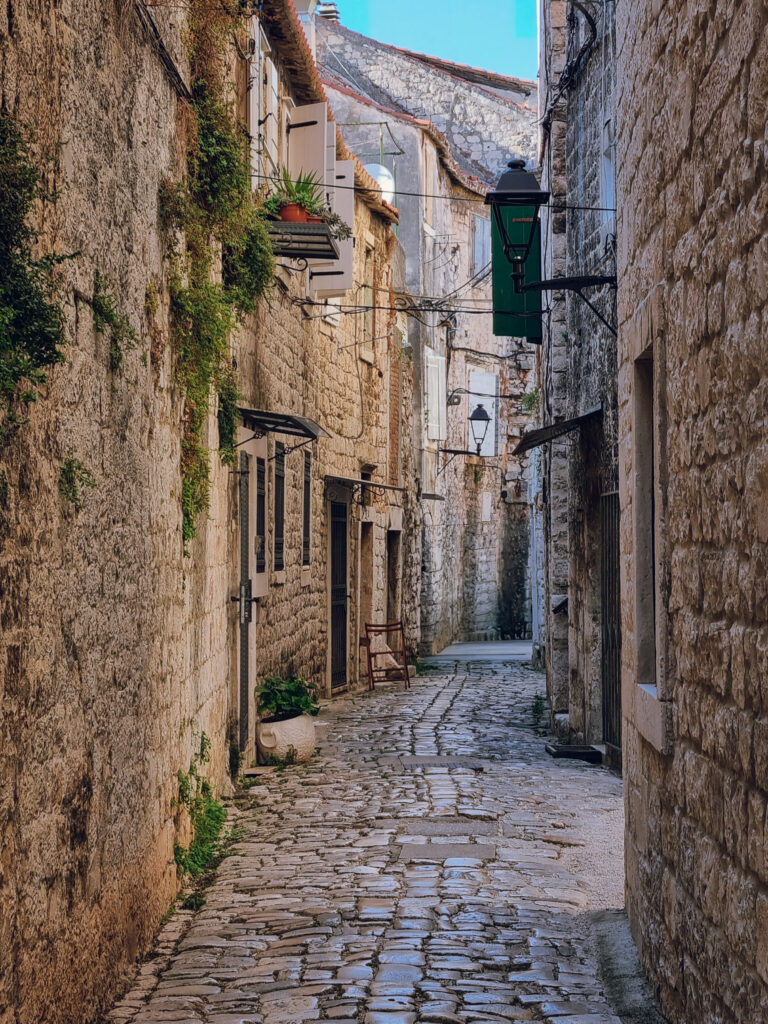
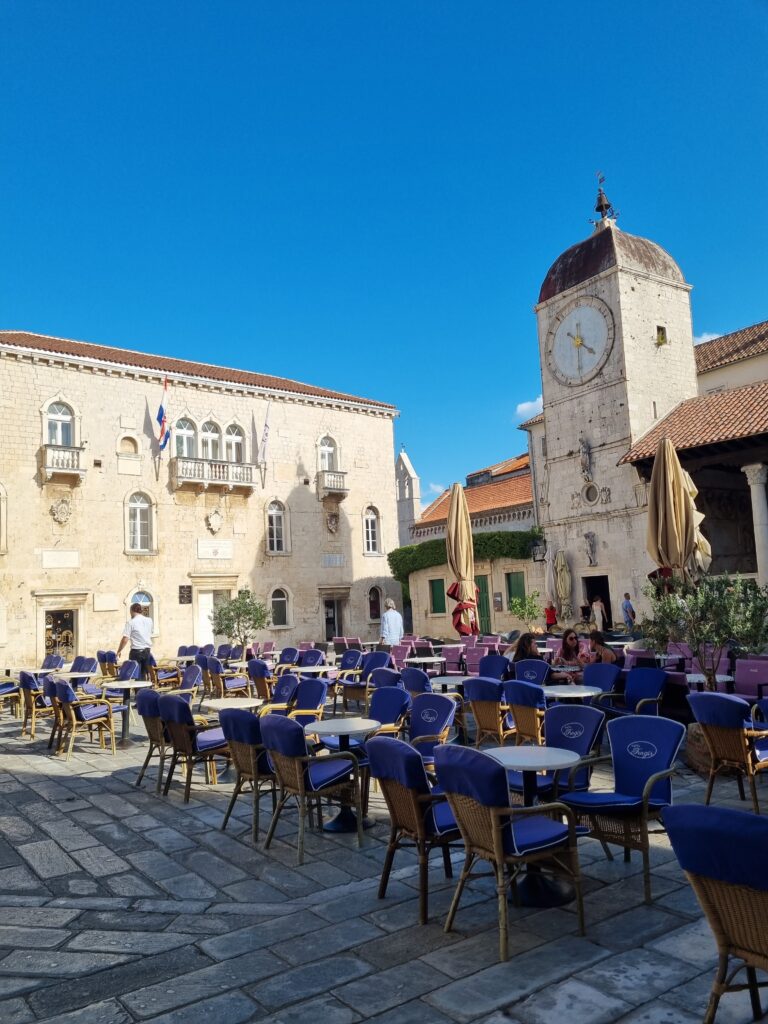
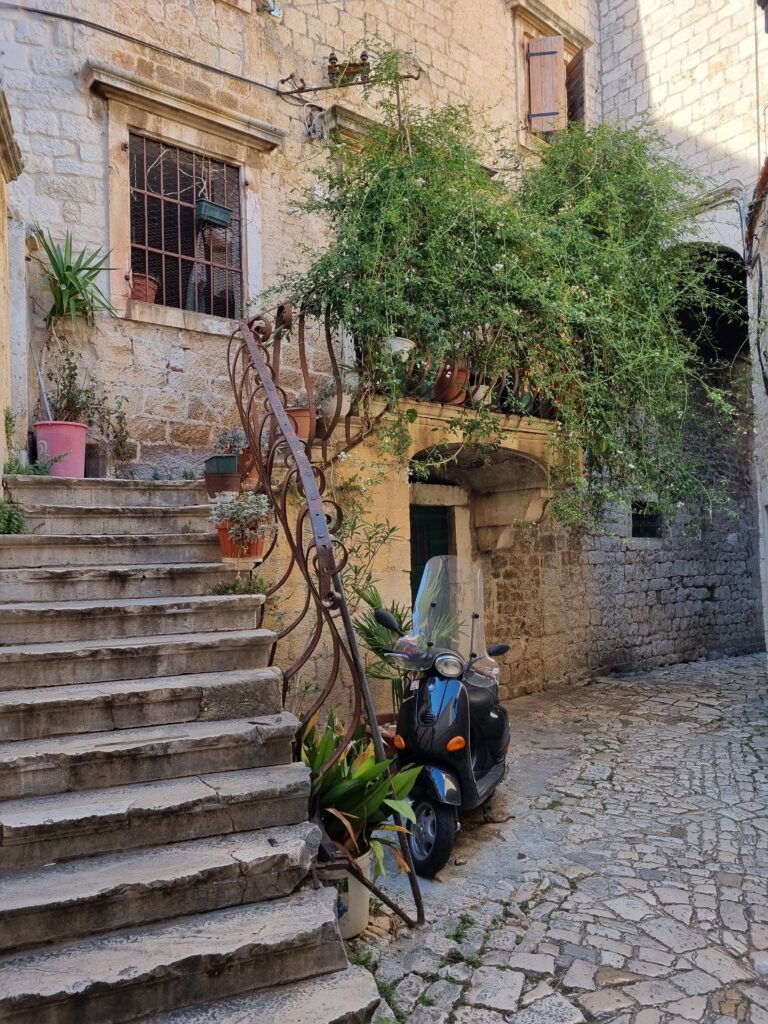
After exploring Sibenik’s Old Town and having a late lunch, we chose our next destination: Trogir. This small historic town is surrounded by well-preserved stone walls. We reached it via a scenic coastal road with lovely views of small bays and islands.
Trogir felt busier and more touristy than Sibenik, but that did not stop us from enjoying it. At the end of our visit, we climbed one of the towers in the town walls for a panoramic view over the historic centre.
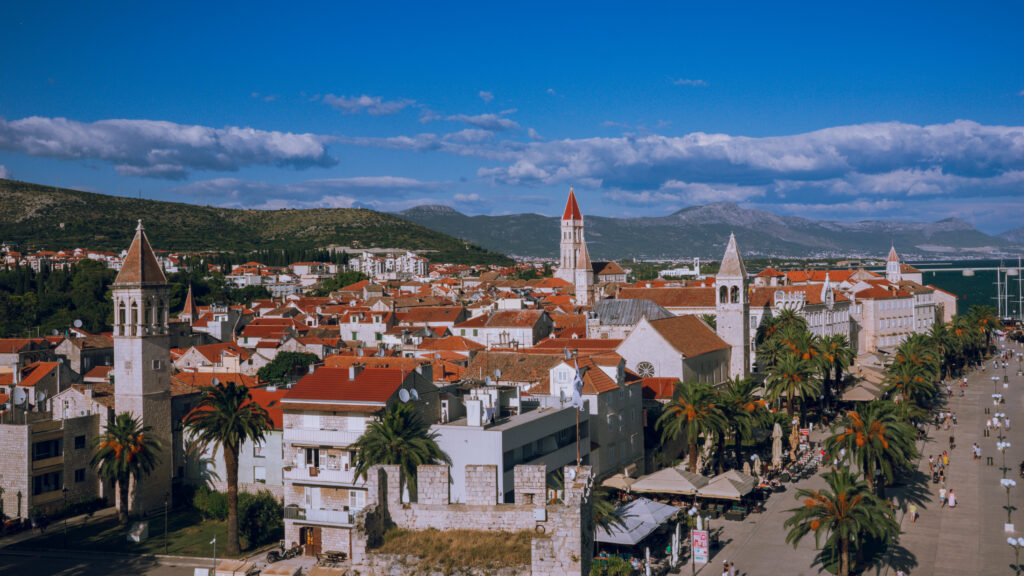
Day 4: Punta Rata Beach – Our Favorite Beach in Croatia
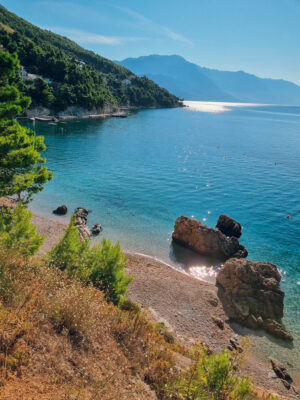
The next day brought perfect weather, so we chose to visit Punta Rata Beach, not far from Omis. Punta Rata is a white-pebble beach that forms part of a longer stretch of coastline, with a walking path connecting the beaches along the shore.
Tall pine trees line the path, their wide canopies providing welcome shade over much of the beach. Because of the pale seabed, the water appears a vivid blue. Together with the high mountains behind the beach and the rich green pine trees, it creates an unforgettable landscape.
The water was full of small fish, making Punta Rata one of our favourite places in Dalmatia for snorkelling as well as swimming.
If you are staying in the region of Makarska, Brela or Baška Voda, visiting Punta Rata beach is a must!
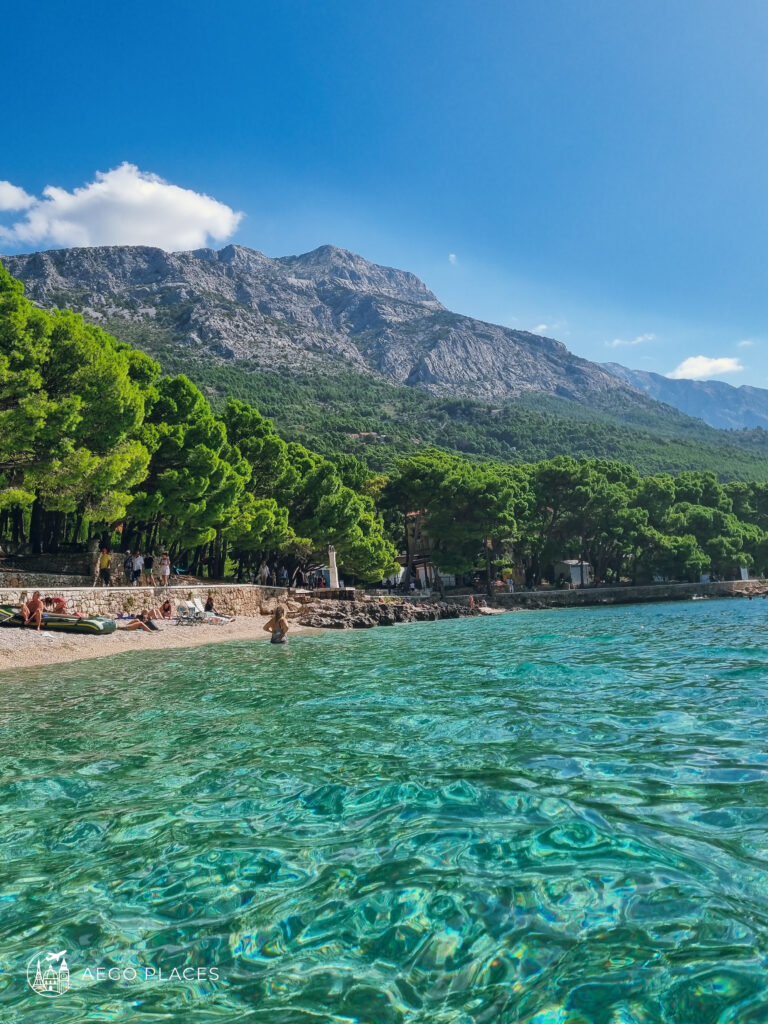
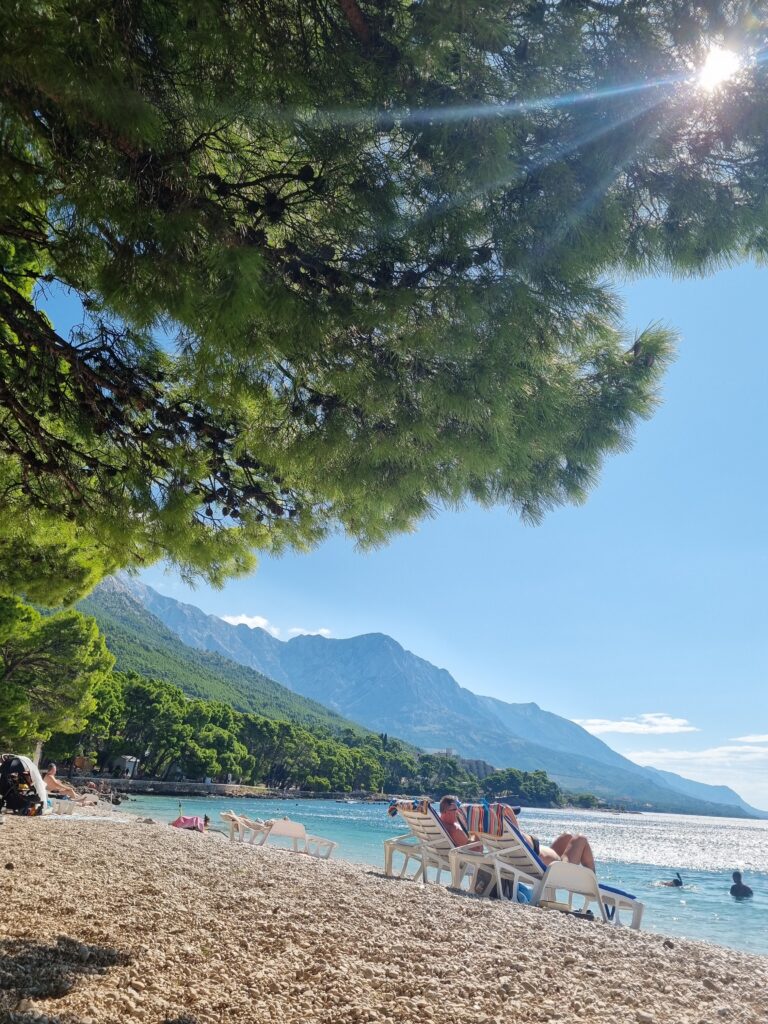
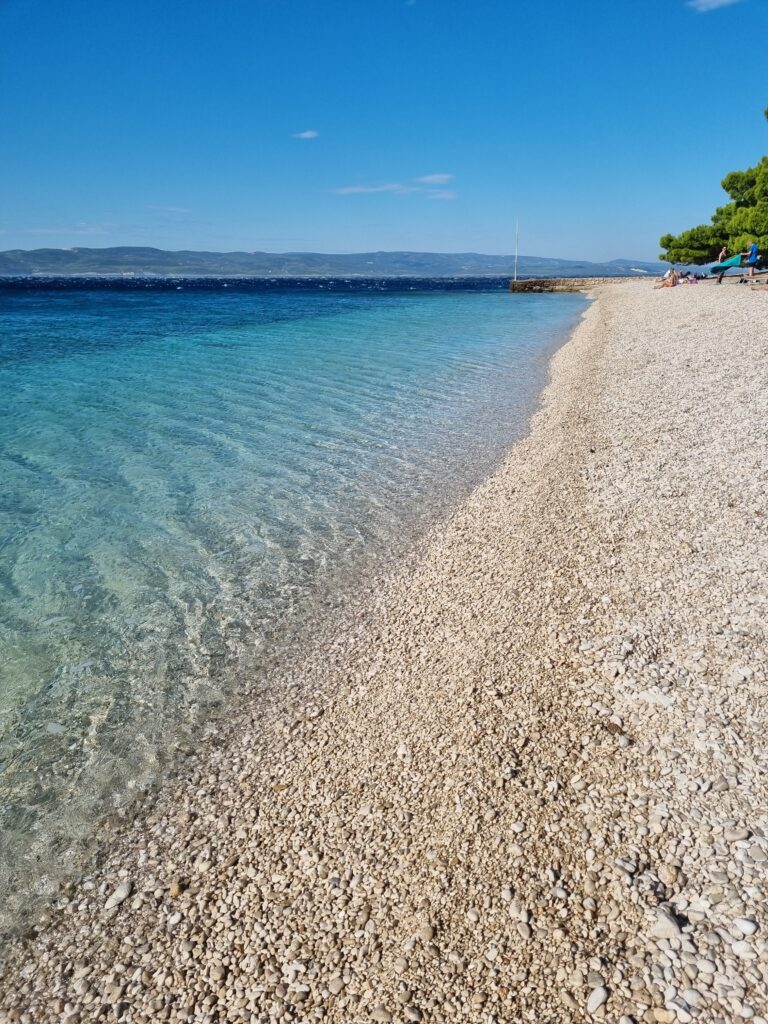
In the afternoon, we climbed to the Omis Fortress, which offers another beautiful view over the town, the sea and the Cetina River flowing into it.
That evening, we visited a restaurant in a mountain village that our host in Omis had recommended. Because it was popular, we booked a table in advance. The food and atmosphere were both excellent – we highly recommend Konoba Palacio if you are visiting the area.
Day 5: Brac Island and Zlatni Rat Beach
Opposite Omis lies Brac Island, famous for Zlatni Rat, also known as the Golden Horn, one of Croatia’s best-known beaches. Boat excursions to the island are available from Omis, and it is a good idea to reserve tickets at least a day or two before departure.
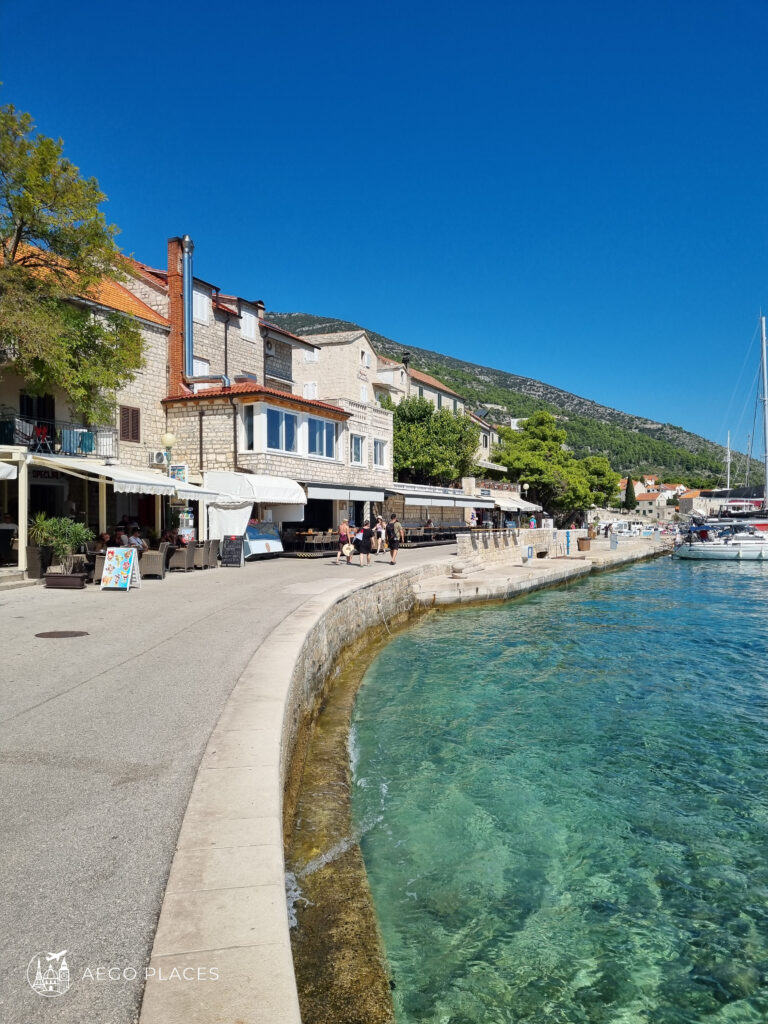
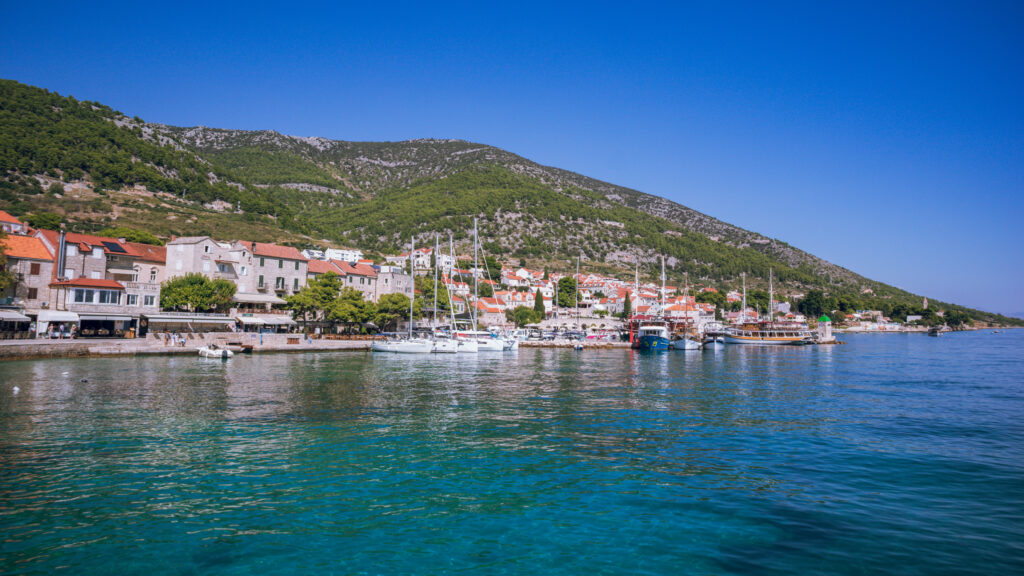
Seeing the Dalmatian coastline from the water made it look even more beautiful. After around two hours of sailing and a pleasant lunch on board, we arrived in the attractive village of Bol. From there, we walked to Zlatni Rat along a broad promenade lined with shops and food and drink stalls.
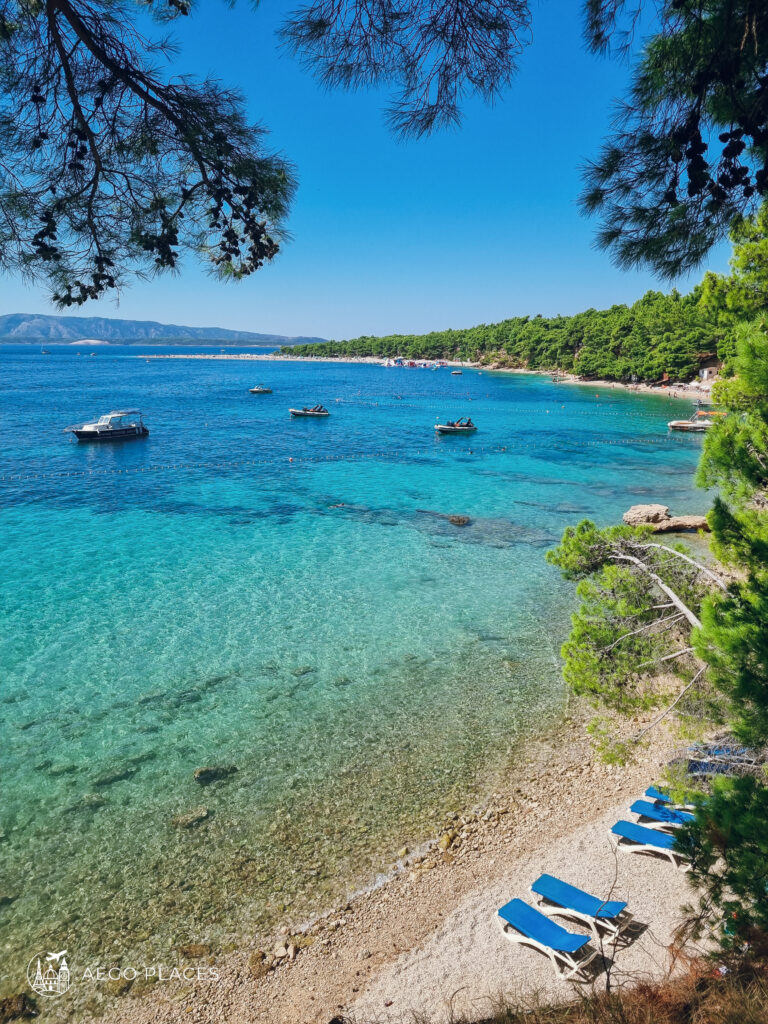
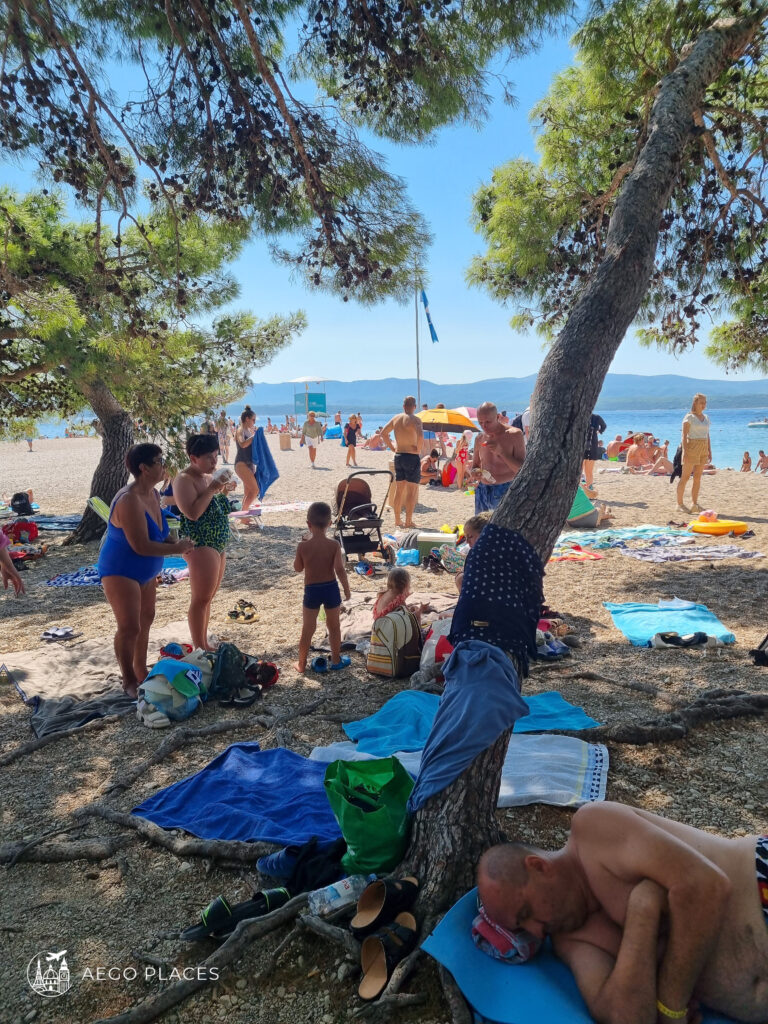
To be honest, Zlatni Rat Beach disappointed us. It looks much more impressive in aerial photographs. Sunbeds and umbrellas were expensive, costing more than 30 euros, and the alternatives were either sitting fully exposed to the sun or finding a place in the nearby woodland, which was also extremely crowded.
Once we realised that the beach was not ideal for us, we found a small cove along the path towards Bol and settled there instead. We then took a short walk around the village before returning by boat to Omis, tired after a long day.
Overall, the final beach stop was disappointing, but we were still glad to have visited Brac Island.
Tip: If you have limited time in Croatia, think carefully before choosing a day trip to Bol and Zlatni Rat. We found the beaches on the mainland more attractive and far easier to reach.
Day 6: Dubrovnik
After our disappointment at Zlatni Rat, we wanted to end our beach holiday properly. We woke up early and returned to Punta Rata Beach, which we had enjoyed so much a few days earlier.
From there, we continued to Croatia’s most famous destination: Dubrovnik. The drive took around two to three hours, but we encountered heavy traffic as we entered the city. Parking in Dubrovnik can be very expensive, especially near the Old Town, so it is worth researching options in advance.
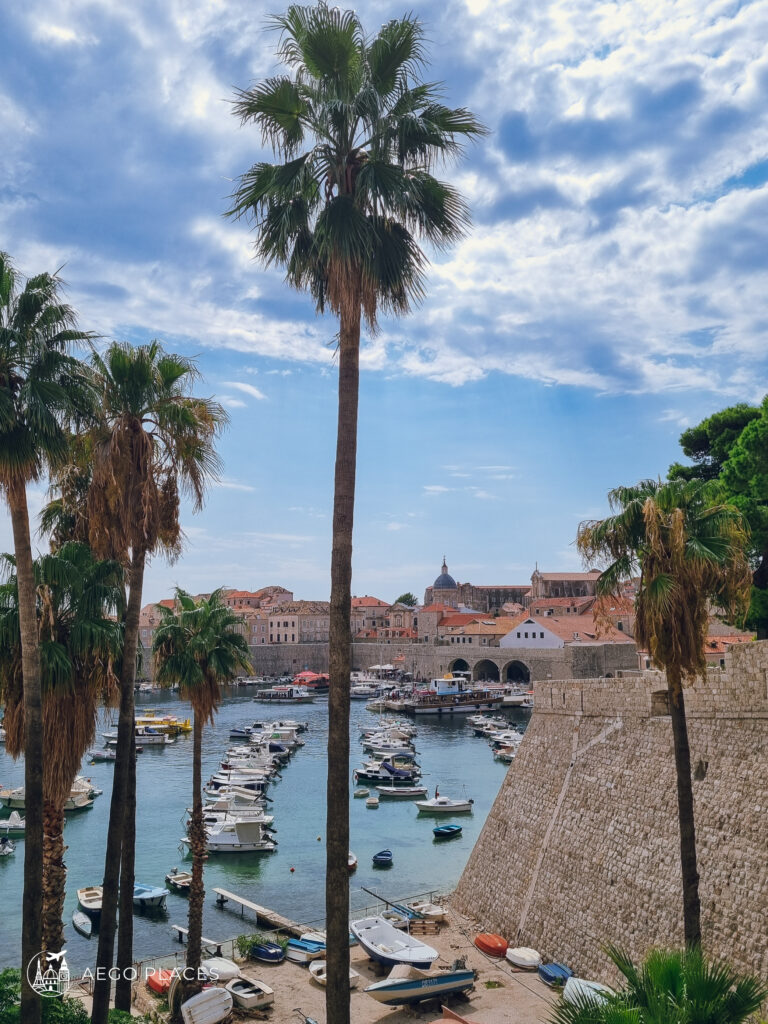
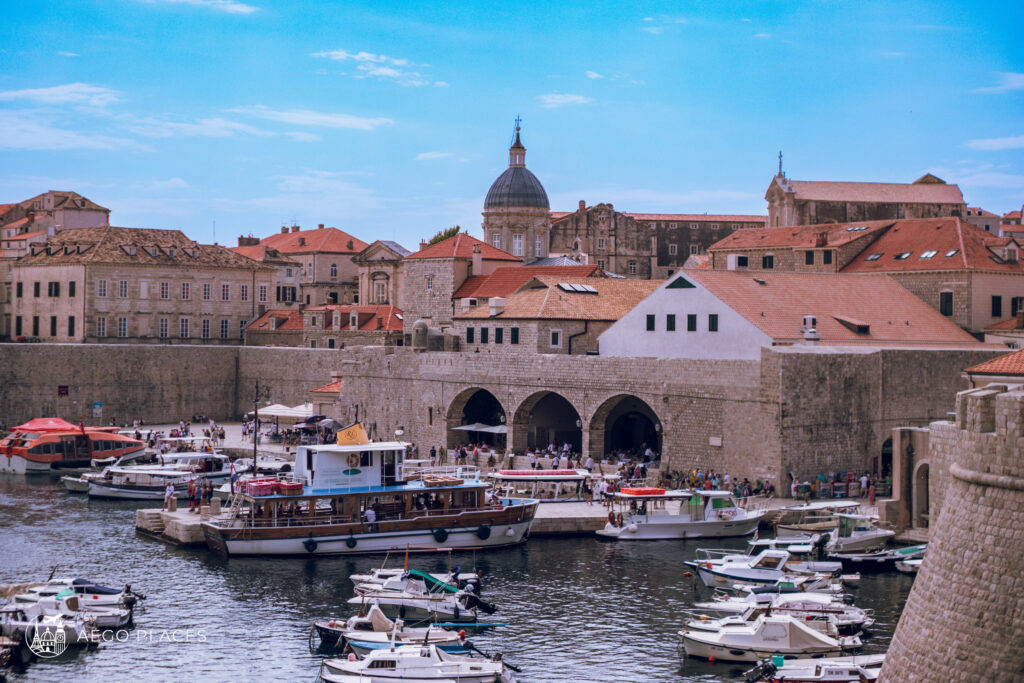
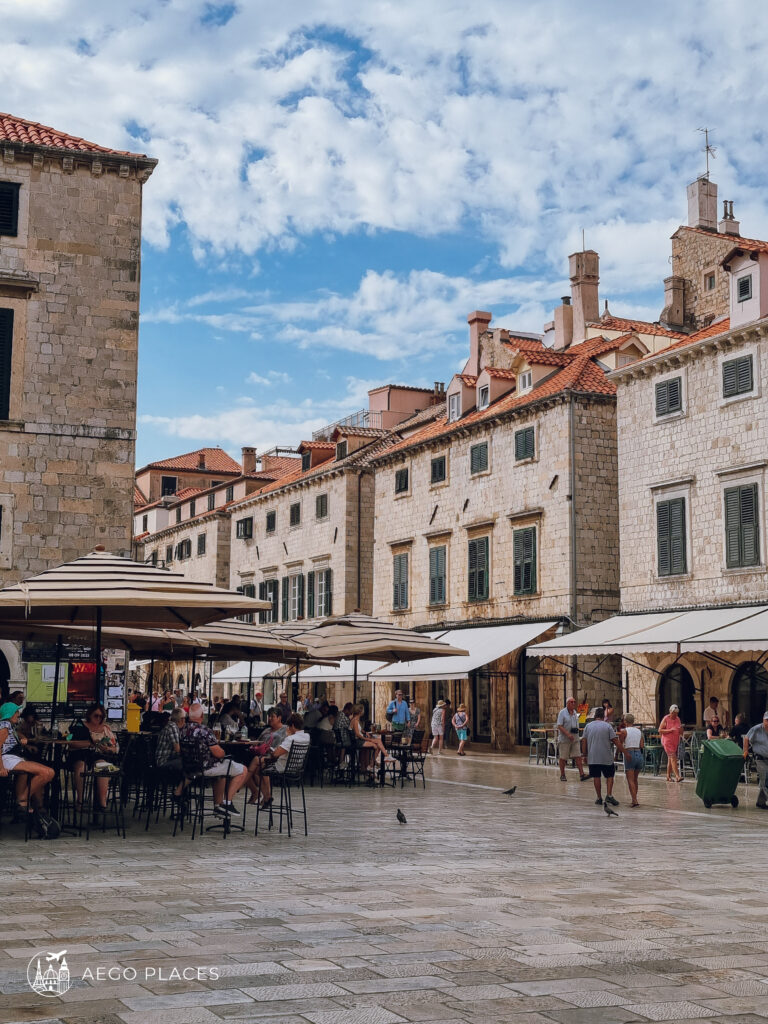
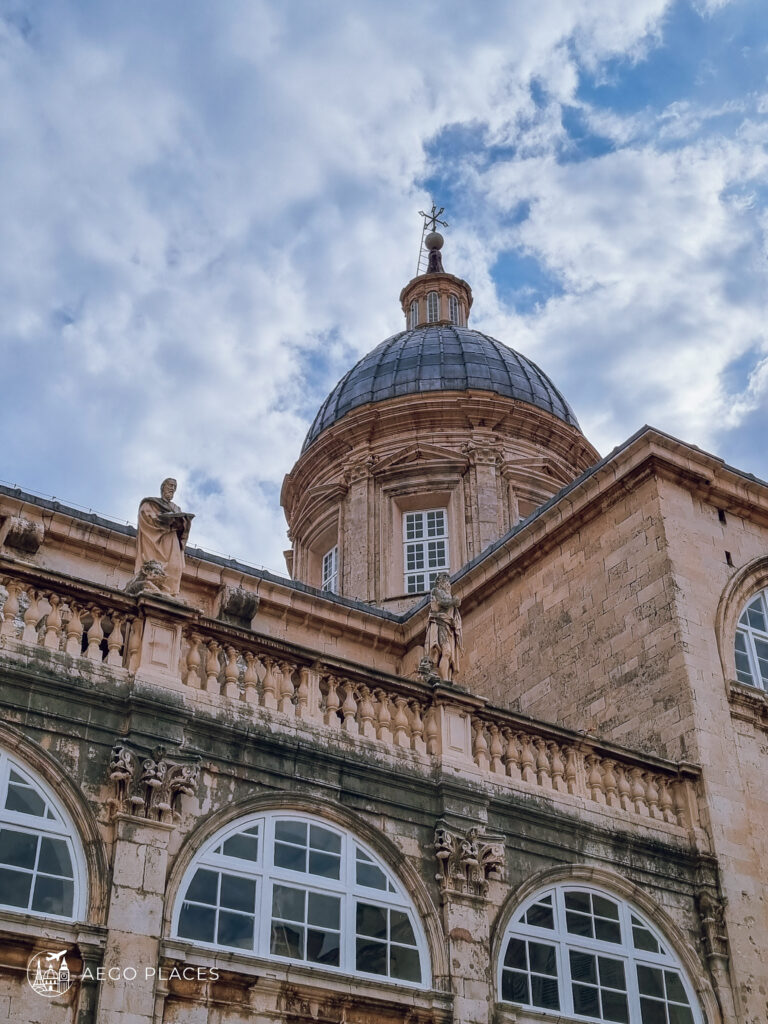
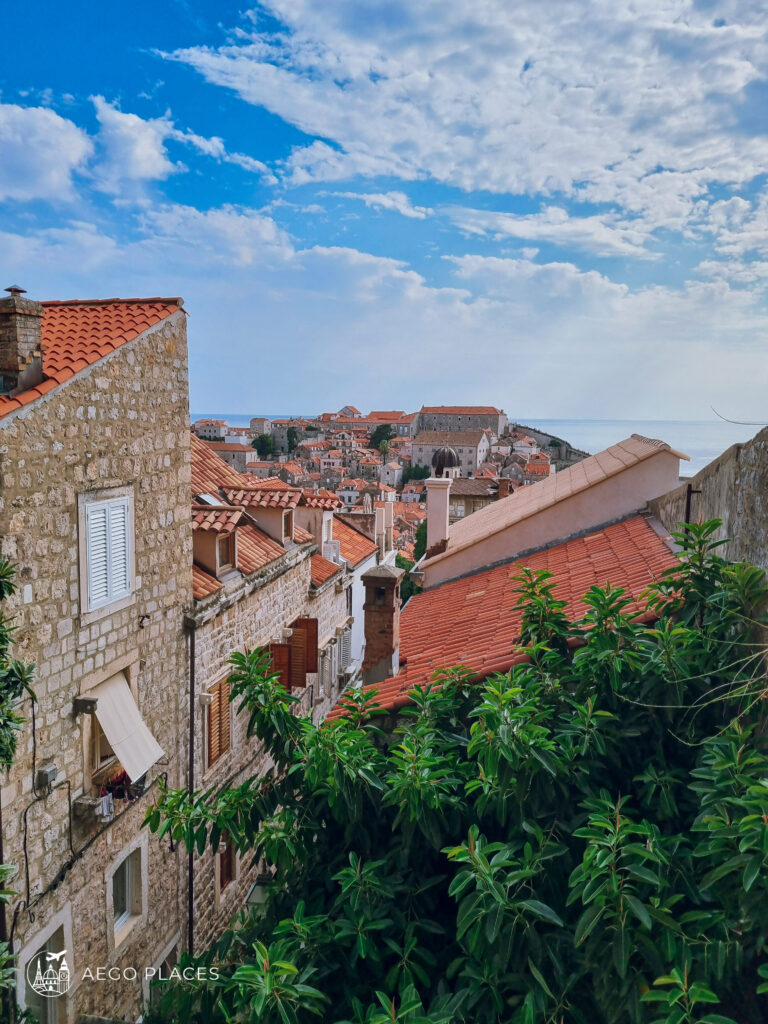
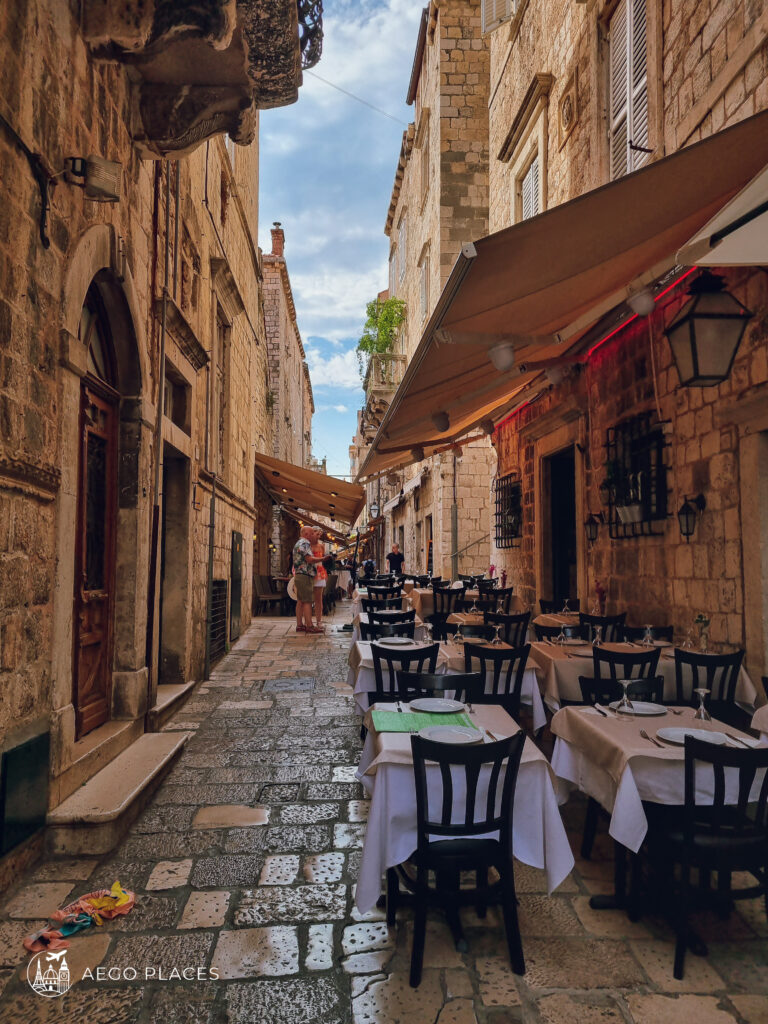
We parked outside the historic centre and walked towards the old walls. Much has already been written about Dubrovnik, and it is difficult to add much to its reputation. As a Game of Thrones fan, I found it impossible to remain indifferent to such a beautiful city.
As is widely known, Dubrovnik is highly commercialised and prices inside the Old Town are very high. Still, that did not stop us from enjoying it. We visited in early September, and it did not feel overwhelmingly crowded.
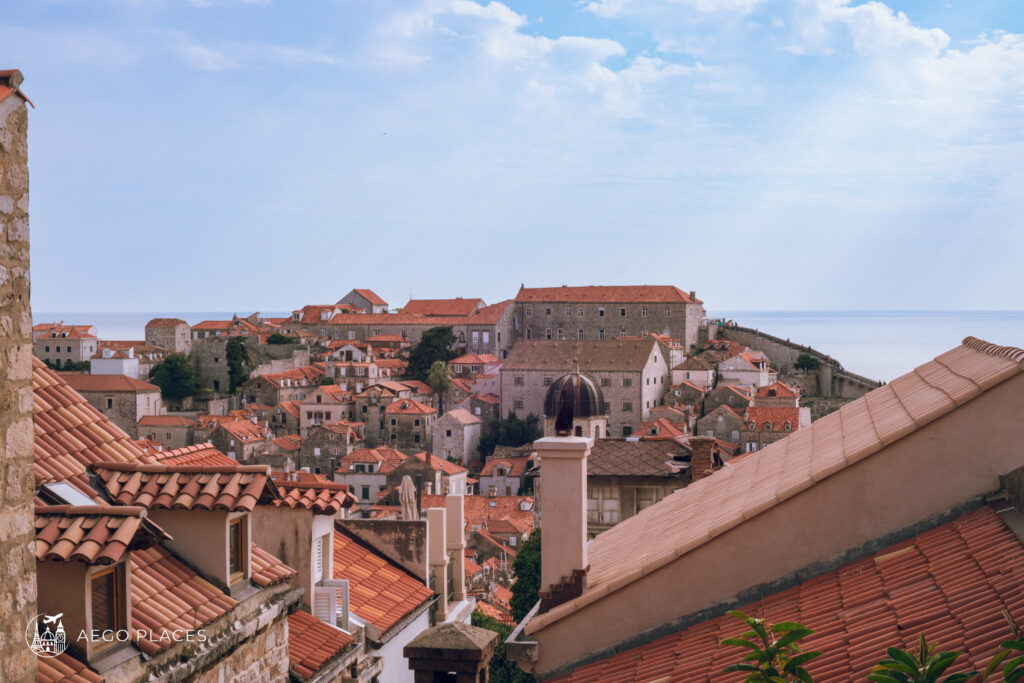
Dubrovnik is also very hilly, so be prepared for plenty of stairs. However, the city’s elevation makes the views from its narrow streets even more spectacular. After several hours wandering through the Old Town, we returned to the car and continued to our next destination, Kotor in Montenegro.
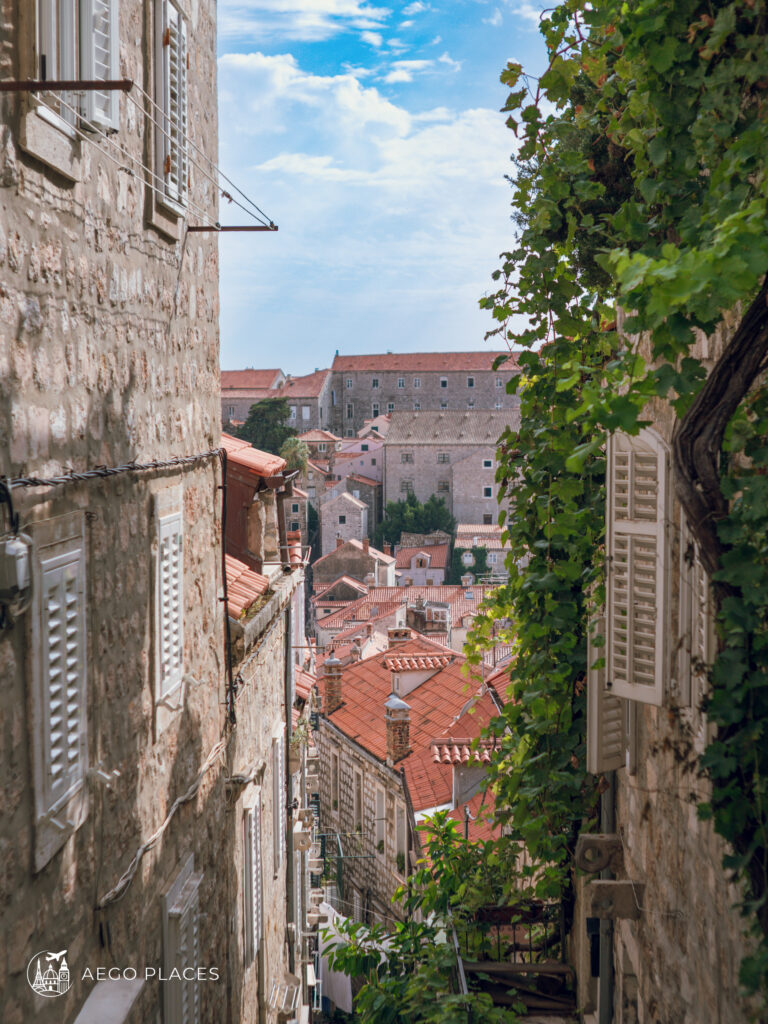
Related posts

Milan is one of the most popular European destinations for travelers – the destination is easily accessible, there are often cheap flights and the region is very rich in interesting places – from the …
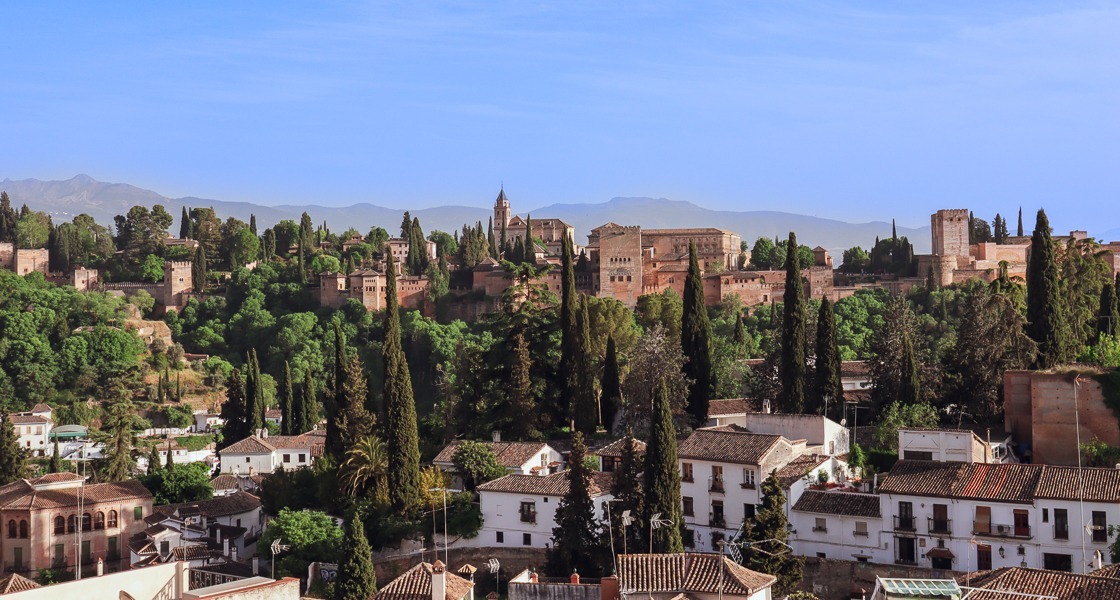
In the spring we organized a week-long tour of Andalusia, Spain and it remains one of our most unforgettable trips. This southernmost region of Spain is exceptionally rich in things to do and see — st…

In recent years, Bari has become a popular destination among travelers, thanks in part to convenient direct flights operated by European low-cost airlines such as Ryanair. As the capital of Puglia, ho…
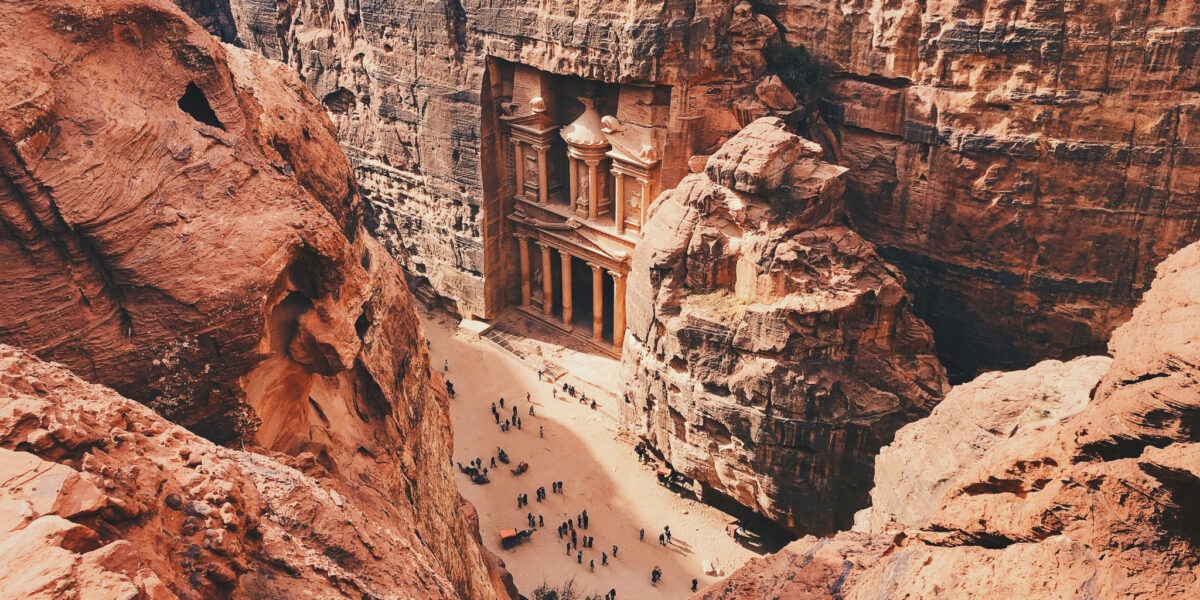
Jordan is one of the most incredible places we have ever visited. Despite being a relatively small country, it’s packed with fascinating historical sites – from the ancient Nabataean city of Petra, t…

Last autumn, we stumbled upon cheap flights to Basel for November and decided to take advantage of them for a 4-day trip to the Alsace region of France. Although I had visited the area before, this tr…
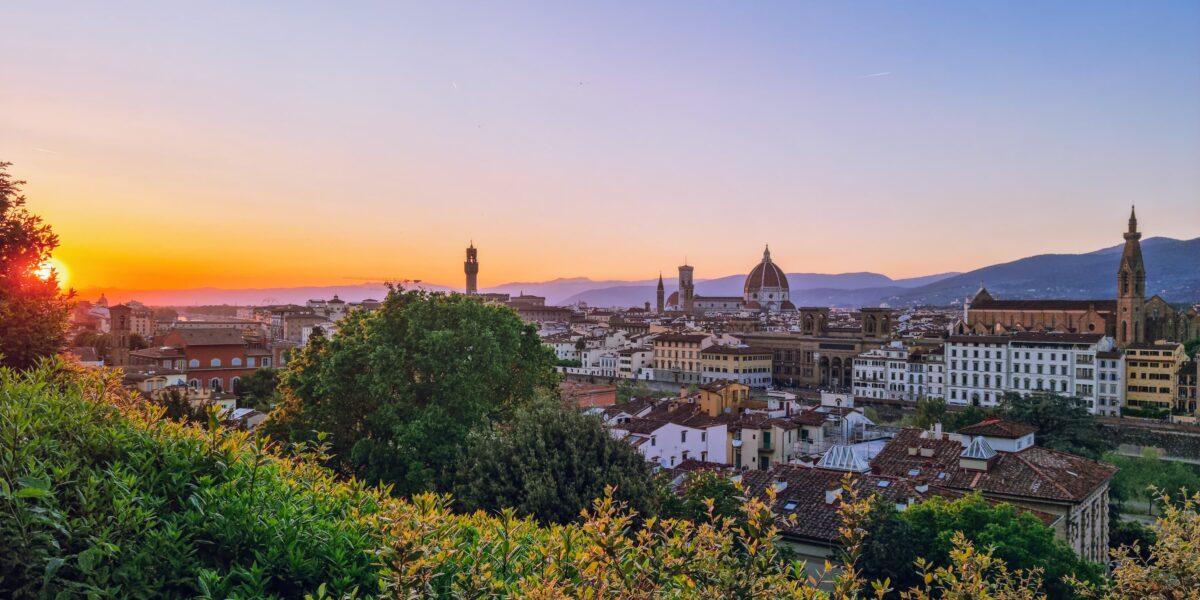
Planning a 5-day Pisa itinerary or looking for the best Tuscany and Liguria day trips? Pisa, Italy is an ideal base for exploring Northern Italy’s must-see destinations, not just for its iconic Leanin…
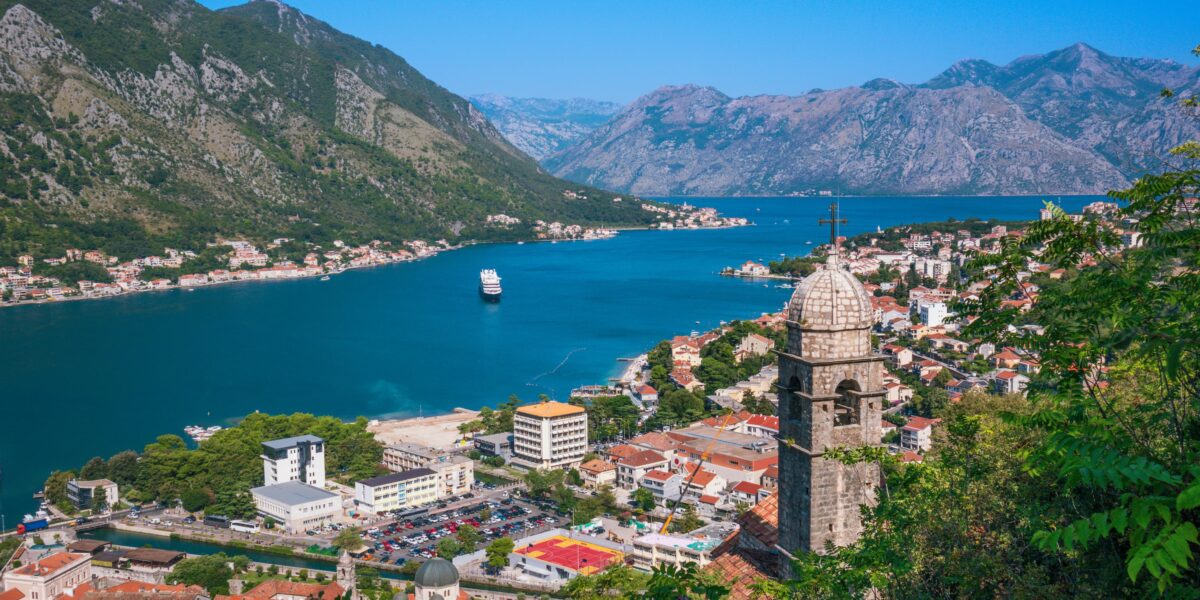
In this article, we’ll share the story of our incredible road trip through the Western Balkans, complete with plenty of tips and recommendations for organizing your own journey.
We spent about 10 d…
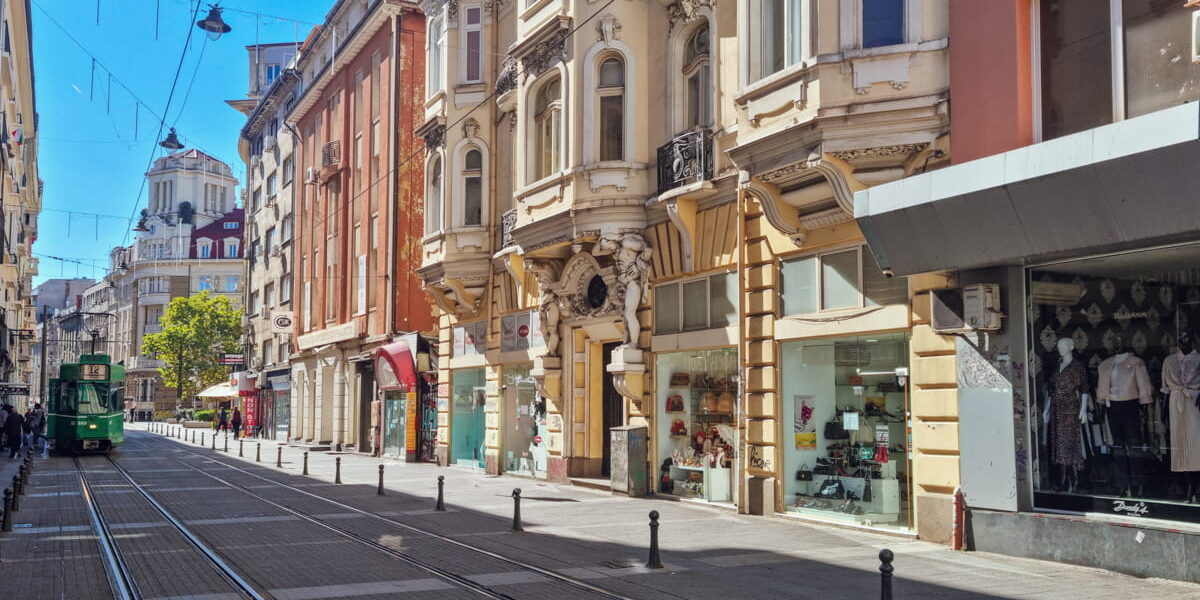
Sofia, Bulgaria’s capital and largest city, is one of Eastern Europe’s most interesting and underrated destinations. Its appeal lies in its mix of ancient ruins, impressive churches, lively streets an…